Our Location
304 North Cardinal St.
Dorchester Center, MA 02124

304 North Cardinal St.
Dorchester Center, MA 02124
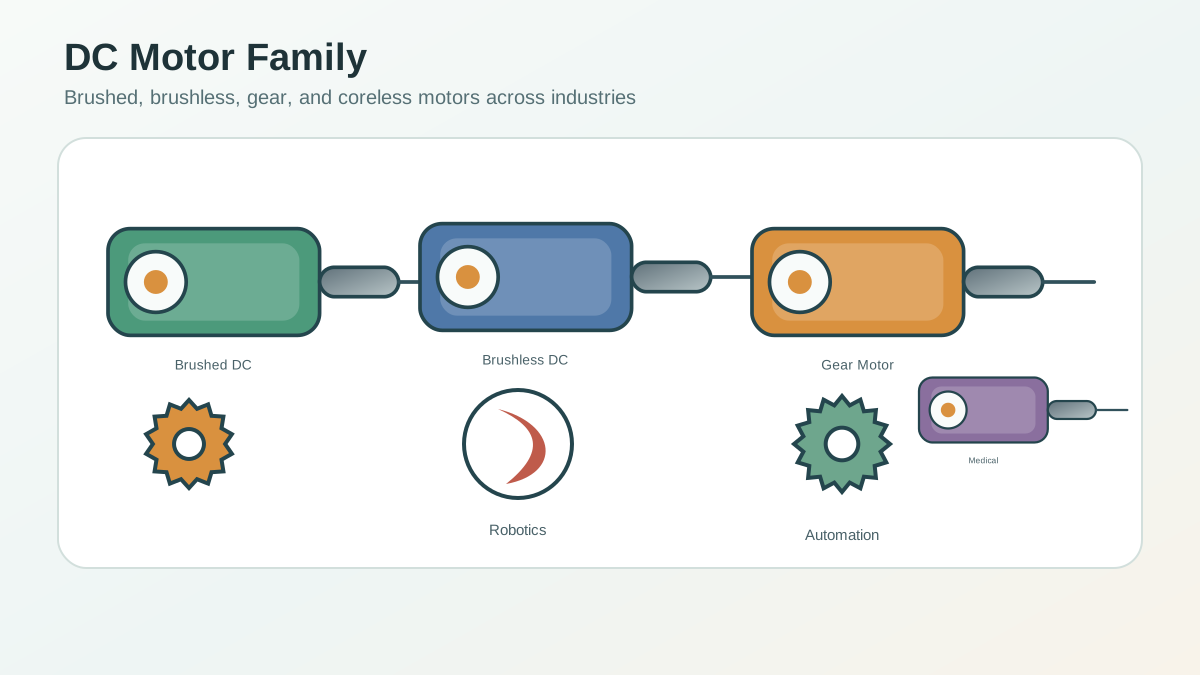
Electric motors are one of the most important technologies in modern industry. They power everything from household appliances and automotive systems to industrial machinery, medical equipment, robotics, and aerospace applications.
Among the many types of electric motors available today, DC motors are valued for their simple control, excellent speed regulation, high starting torque, and wide operating range. Because they operate using direct current (DC), they are widely used in battery-powered devices, automation systems, electric vehicles, and countless electromechanical products.
Although many people use the term DC motor as if it refers to a single type of motor, it actually describes a large family of motors that share the same power source but differ significantly in their internal construction, operating principles, control methods, and performance characteristics.
This guide provides a comprehensive introduction to DC motors, including their working principles, major types, technical specifications, applications, selection methods, and maintenance considerations.
(Illustration: A modern collage showing various DC motors, including brushed DC motors, brushless DC motors, gear motors, and coreless motors used across different industries.)
A DC motor (Direct Current Motor) is an electric motor that converts direct current (DC) electrical energy into mechanical rotary motion.
When DC electrical power is supplied to the motor, electromagnetic forces are generated inside the motor. These forces produce torque that rotates the output shaft, allowing the motor to drive mechanical loads.
Unlike AC motors, which operate using alternating current, DC motors are powered by batteries, power supplies, or DC power systems.
Their ability to provide precise speed control, quick response, and high starting torque has made DC motors one of the most widely used motion solutions in modern engineering.
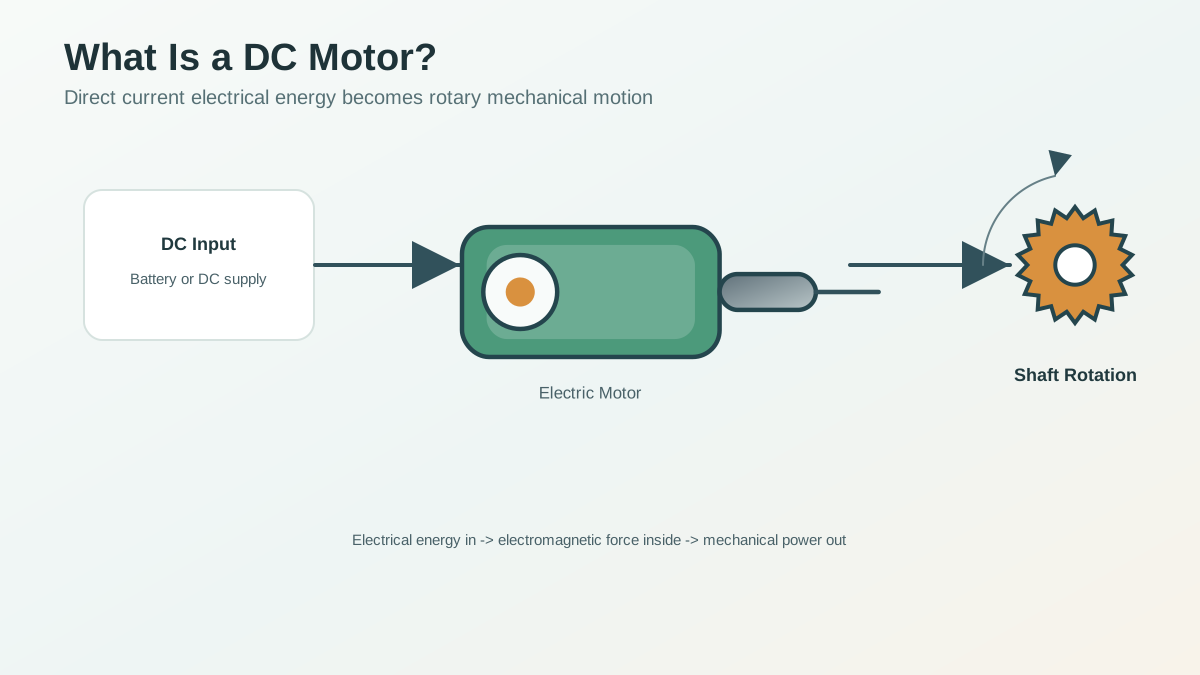
(Illustration: A simple diagram showing DC electrical energy entering a motor and mechanical rotational energy leaving through the output shaft.)
Although different types of DC motors use different internal designs, they all perform the same basic energy conversion process.
The sequence is as follows:
This process converts electrical energy into useful mechanical motion.
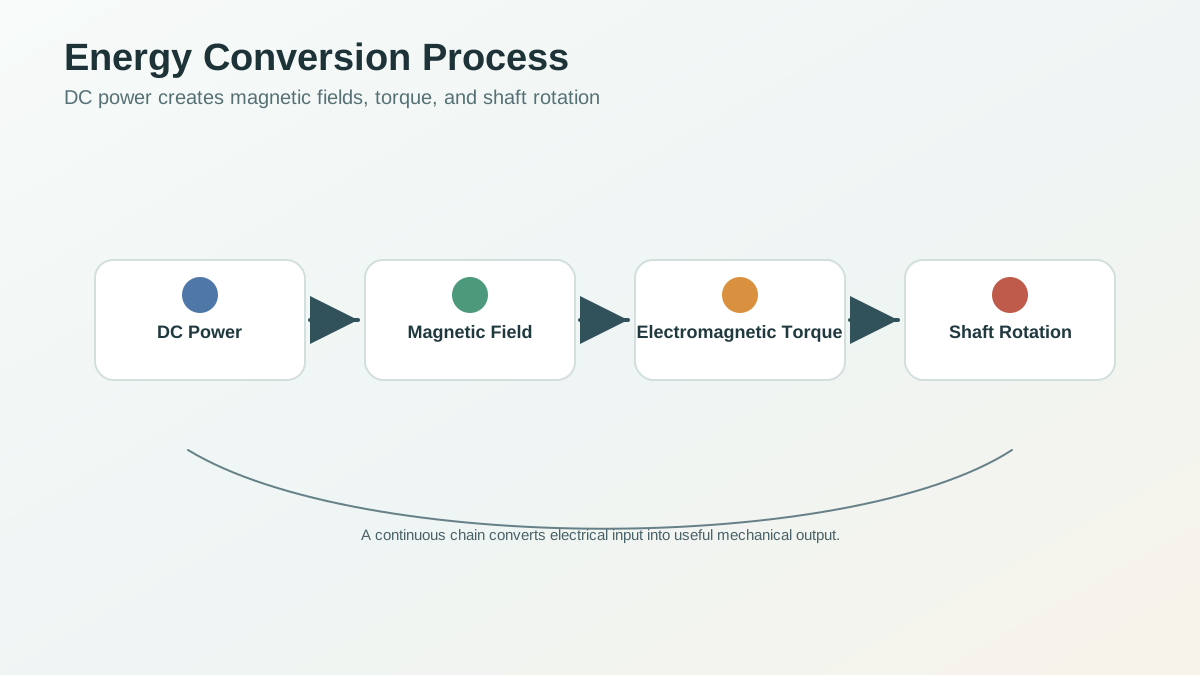
(Illustration: Flow diagram showing the energy conversion process: DC Power → Magnetic Field → Electromagnetic Torque → Shaft Rotation.)
DC motors offer several characteristics that make them suitable for a broad range of applications.
Some of their key advantages include:
Because of these advantages, DC motors are used in products ranging from miniature electronic devices to large industrial automation systems.
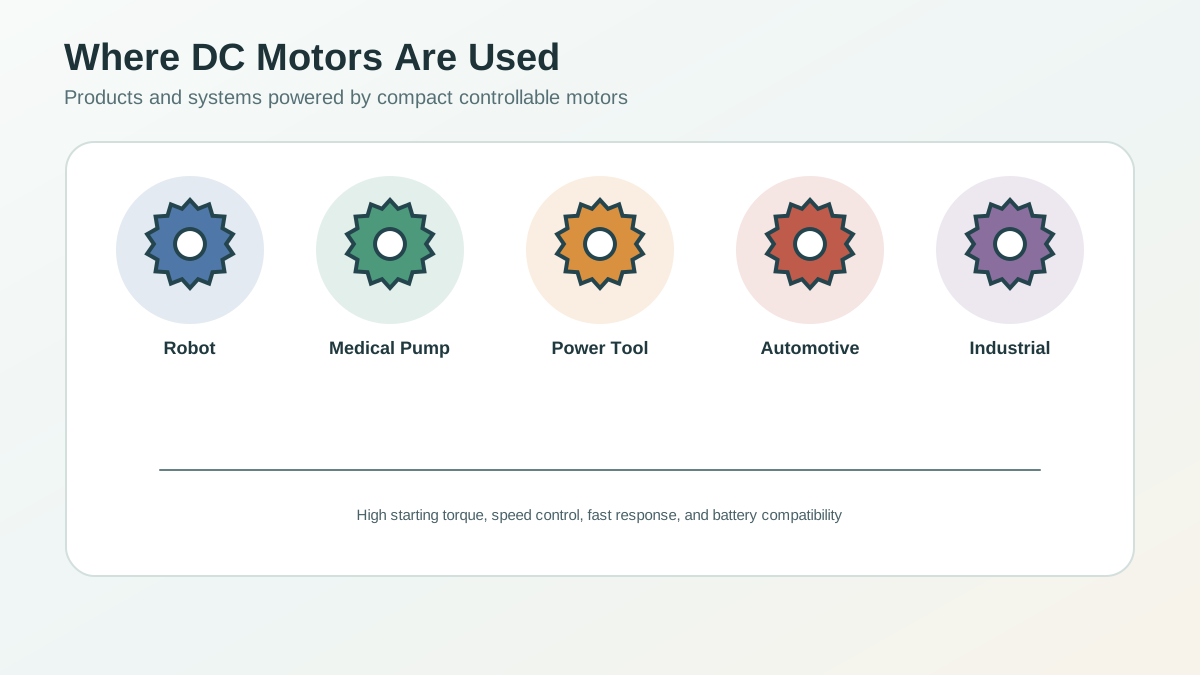
(Illustration: Various products powered by DC motors, including robots, medical devices, electric tools, automotive components, and industrial equipment.)
One of the biggest misconceptions is that a DC motor refers to a single motor design.
In reality, DC motors include several different motor technologies.
The most common types are:
Brushed DC motors use carbon brushes and a mechanical commutator to switch the current flowing through the armature.
They are known for:
Typical applications include automotive accessories, toys, household appliances, pumps, and power tools.
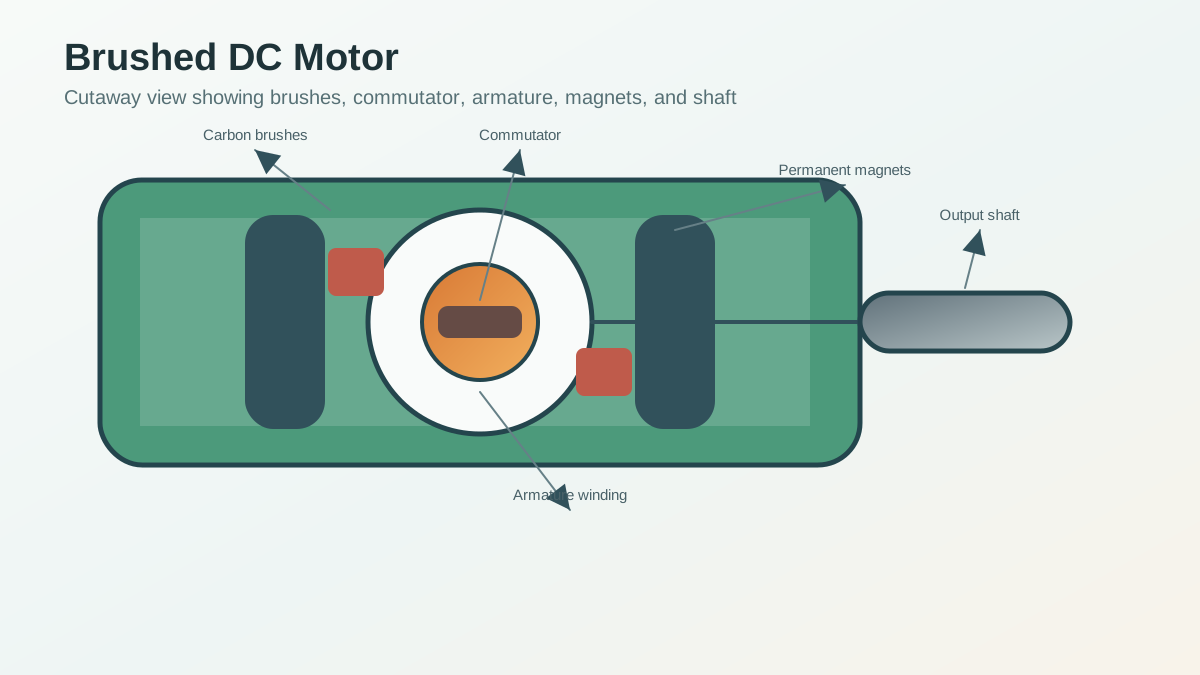
(Illustration: Standard brushed DC motor with a cutaway view showing brushes and a commutator.)
Brushless DC motors eliminate brushes and use an electronic controller to perform commutation.
Compared with brushed motors, BLDC motors generally offer:
They are widely used in drones, robotics, electric vehicles, industrial automation, and medical equipment.
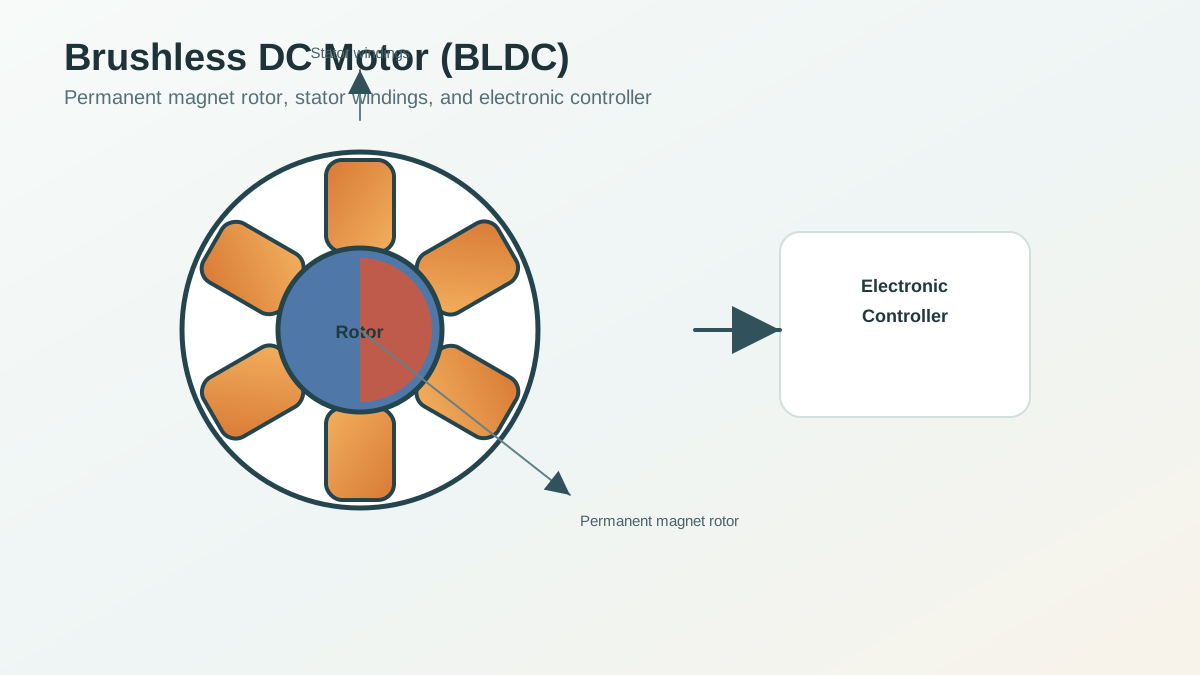
(Illustration: Brushless DC motor with labeled stator windings, permanent magnet rotor, and external electronic controller.)
A DC gear motor combines a DC motor with a gearbox.
The gearbox reduces output speed while increasing output torque.
Common gearbox types include:
Gear motors are widely used in automation equipment, smart locks, conveyors, electric actuators, and robotic systems.
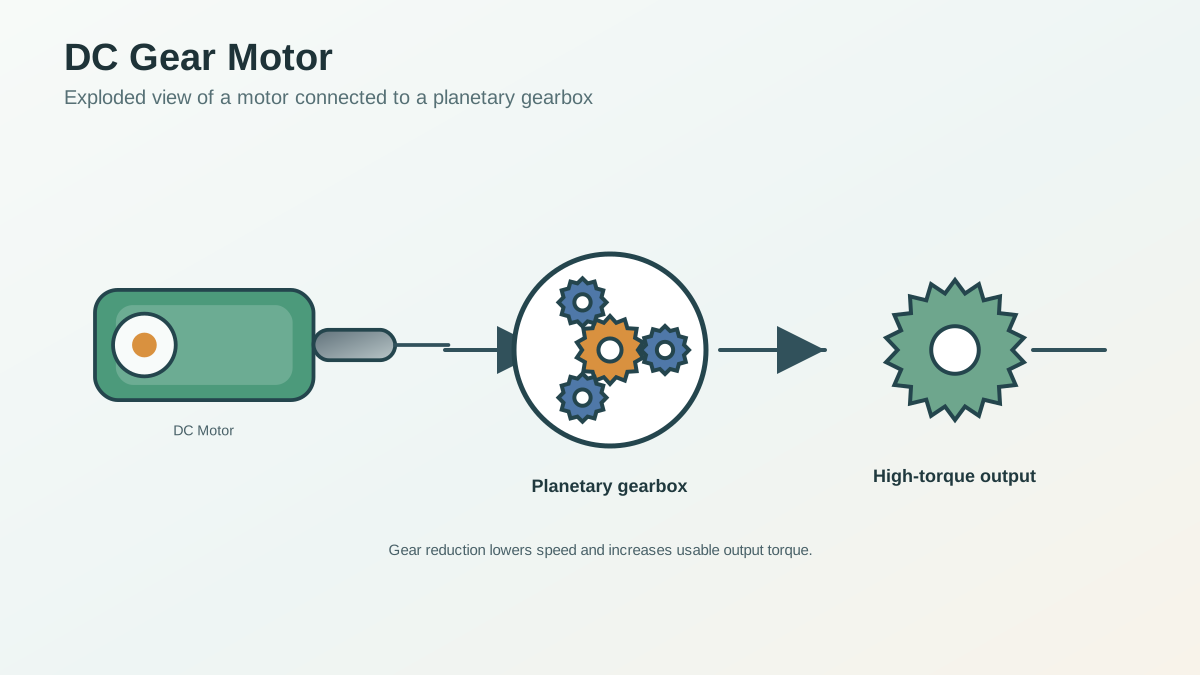
(Illustration: Exploded view of a DC gear motor showing the motor connected to a planetary gearbox.)
Coreless DC motors replace the traditional iron-core armature with a lightweight self-supporting winding.
Their advantages include:
These motors are commonly found in medical devices, precision instruments, aerospace equipment, and high-end robotics.
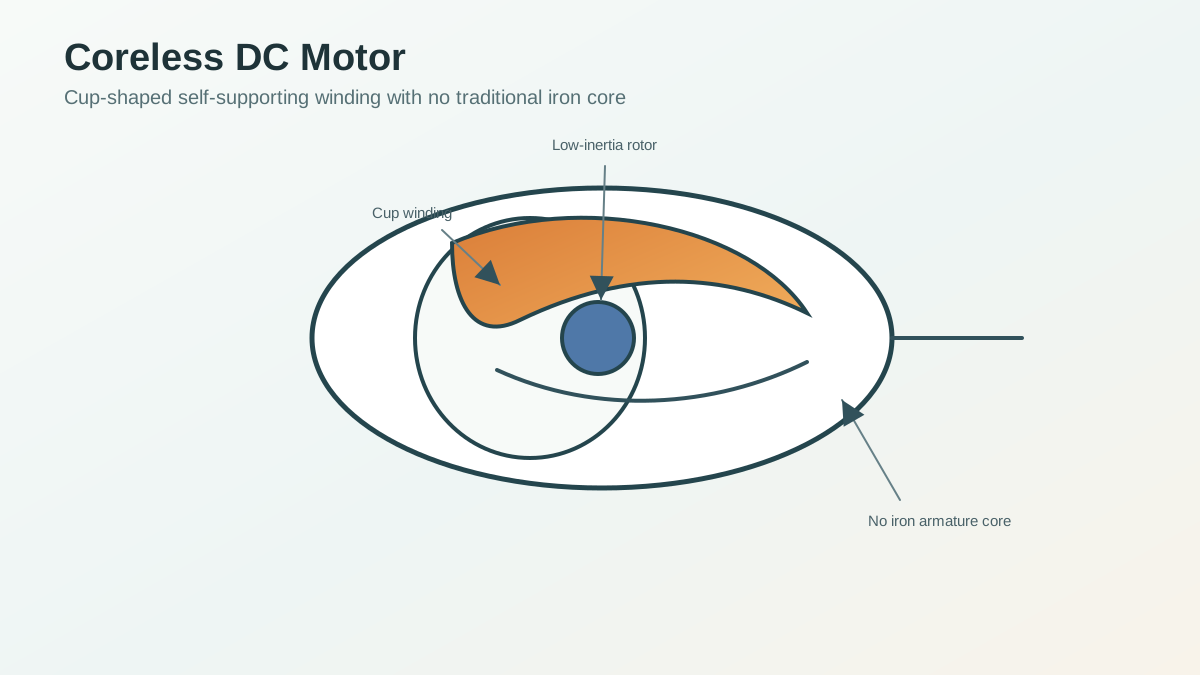
(Illustration: Coreless DC motor showing its cup-shaped winding without a traditional iron core.)
DC motors can be classified in several different ways depending on the engineering perspective.
Common classification methods include:
Understanding these classifications helps engineers compare different motor technologies and select the most appropriate solution for a specific application.
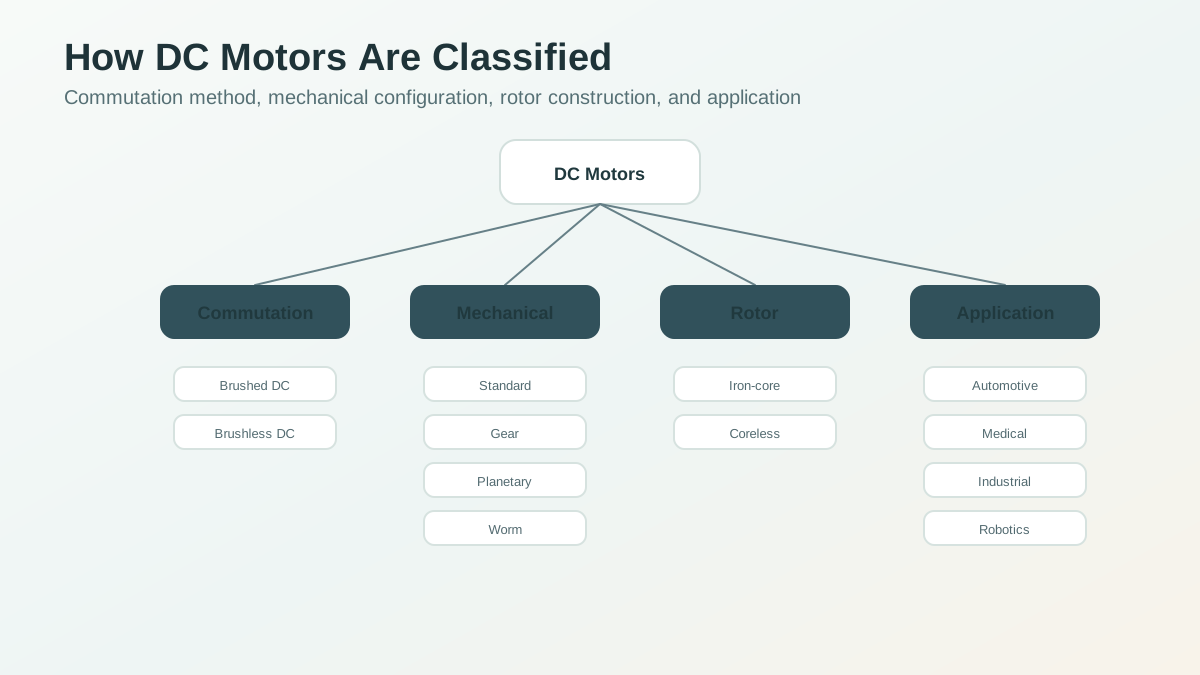
(Illustration: Tree diagram showing the DC motor family classified by commutation method, construction, and application.)
Although both DC and AC motors convert electrical energy into mechanical motion, they differ in several important ways.
| Feature | DC Motor | AC Motor |
|---|---|---|
| Power Supply | Direct Current (DC) | Alternating Current (AC) |
| Speed Control | Generally simpler and more precise | Often requires a variable frequency drive (VFD) |
| Starting Torque | Typically high | Varies by motor type |
| Battery Operation | Excellent | Requires an inverter or AC source |
| Common Applications | Robotics, automotive, portable devices | Pumps, compressors, industrial machinery |
Neither technology is universally better—the choice depends on the application’s power source, control requirements, performance goals, and cost constraints.
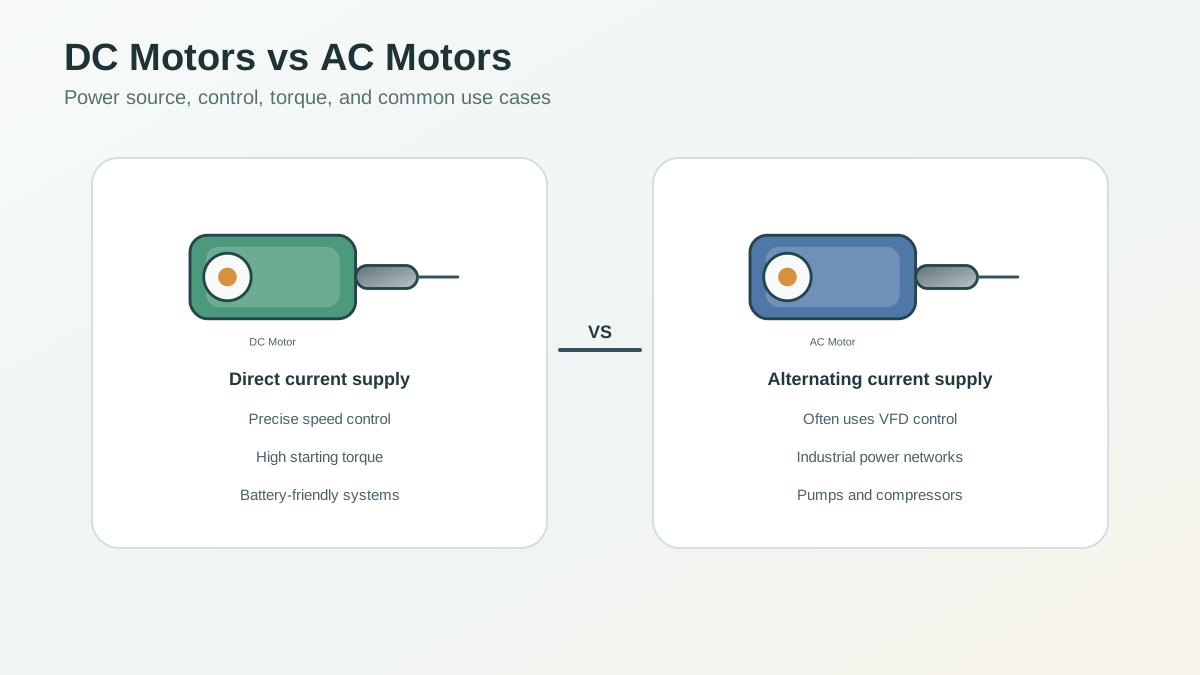
(Illustration: Side-by-side comparison of a DC motor and an AC motor with arrows highlighting key differences.)
Many people assume that “DC motor” and “brushed DC motor” are interchangeable terms.
This is incorrect.
A brushed DC motor is only one member of the broader DC motor family.
Other important DC motor technologies—including Brushless DC (BLDC) motors, DC gear motors, and coreless DC motors—operate on the same DC power source but differ significantly in their construction, commutation methods, and performance characteristics.
Understanding this distinction is the foundation for selecting the right motor for any application.
The following chapters will explore every major aspect of DC motors:
Together, these chapters provide a complete foundation for understanding, selecting, and applying DC motors across a wide range of engineering and industrial applications.