Our Location
304 North Cardinal St.
Dorchester Center, MA 02124

304 North Cardinal St.
Dorchester Center, MA 02124
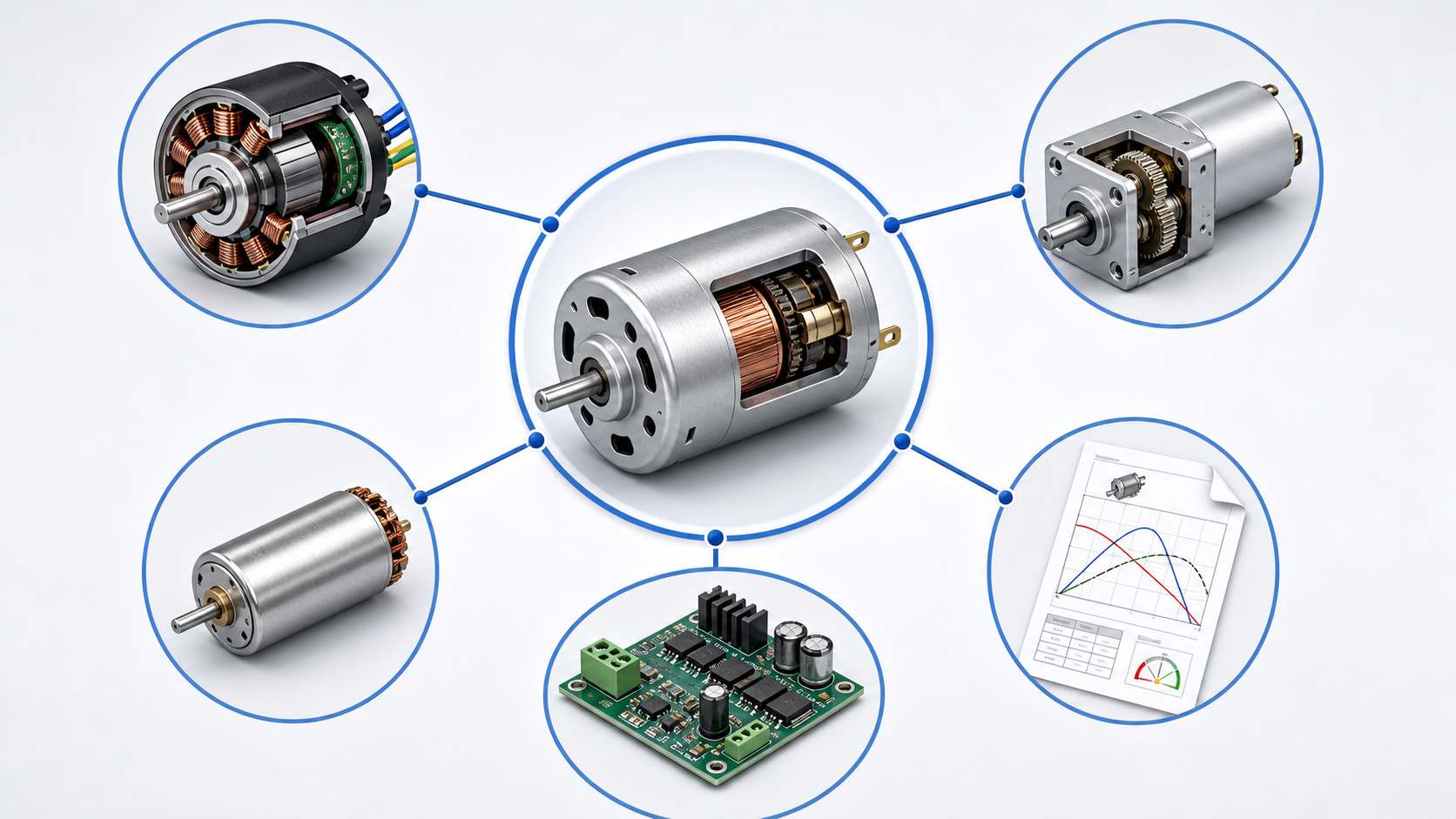
Whether you are selecting your first brushed DC motor or comparing it with a brushless alternative, many of the same questions arise repeatedly.
This chapter answers the most common questions asked by engineers, buyers, students, and product designers. The answers are based on fundamental engineering principles and common industrial practices.
If you are new to brushed DC motors, this section also serves as a quick review of the topics covered throughout this guide.
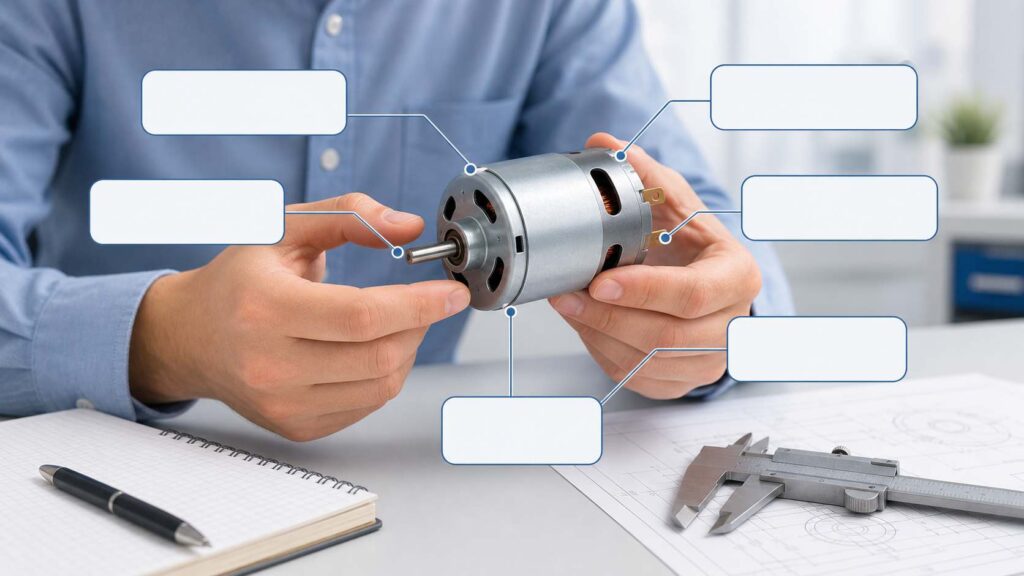
(Illustration: An engineer reviewing a brushed DC motor while common technical questions appear as callout boxes around the motor.)
A brushed DC motor is an electric motor that converts direct current (DC) electrical energy into mechanical rotary motion.
It uses carbon brushes and a commutator to mechanically switch the current flowing through the armature windings, allowing the motor to rotate continuously.
Compared with brushless motors, brushed DC motors have:
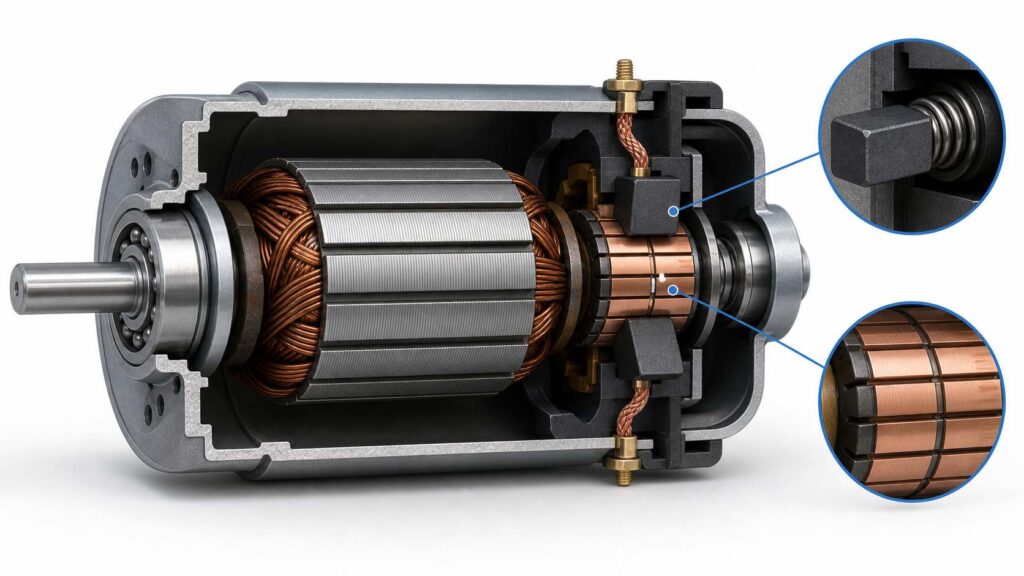
(Illustration: Cross-sectional diagram highlighting the brushes and commutator inside a brushed DC motor.)
The primary difference lies in the commutation method.
| Feature | Brushed DC Motor | Brushless DC Motor |
|---|---|---|
| Commutation | Mechanical | Electronic |
| Brushes | Required | Not required |
| Controller | Usually optional | Required |
| Maintenance | Periodic | Minimal |
| Efficiency | Moderate | High |
| Service Life | Moderate | Long |
Brushed motors are generally preferred when simplicity and low cost are more important than maximum efficiency or maintenance-free operation.
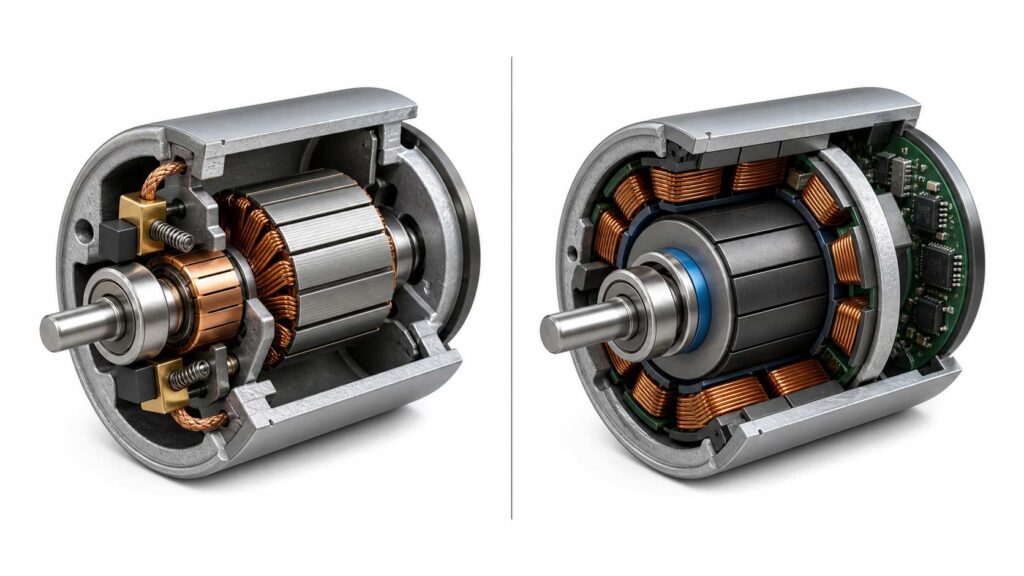
(Illustration: Side-by-side cutaway comparison of brushed and brushless DC motors.)
The brushes transfer electrical current from the stationary power supply to the rotating armature through the commutator.
Without brushes:
The brushes are essential for mechanical commutation.
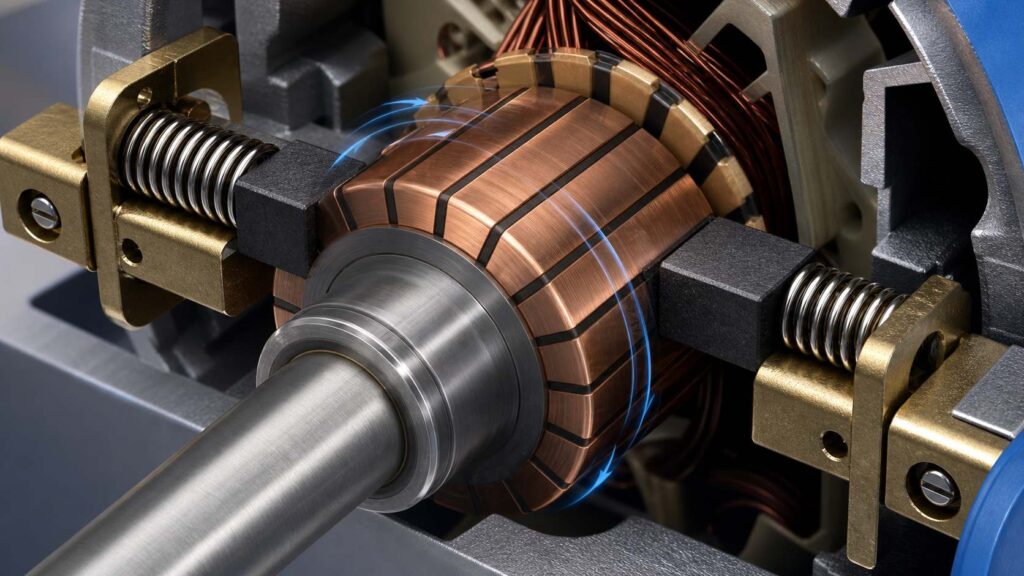
(Illustration: Close-up view showing carbon brushes contacting the rotating commutator.)
Brushes wear because they remain in continuous sliding contact with the rotating commutator.
Normal brush wear is caused by:
Brush wear is expected during normal operation and should be considered a routine maintenance item.
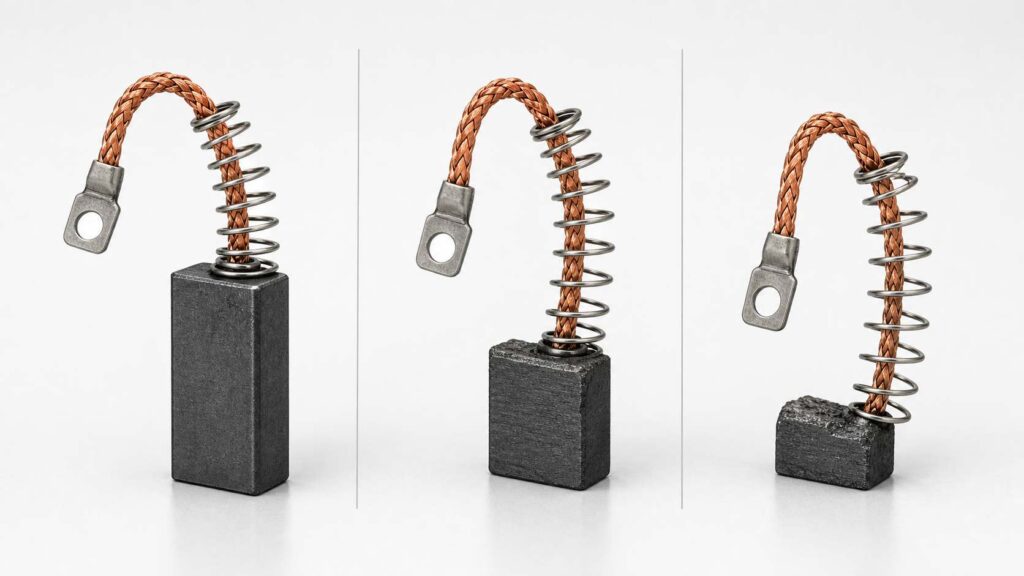
(Illustration: Sequence showing new, partially worn, and fully worn carbon brushes.)
There is no single answer because motor life depends on many operating conditions.
Typical factors include:
A properly selected and well-maintained brushed DC motor can operate reliably for thousands of hours.
However, service life varies significantly between applications and manufacturers, so users should always refer to the manufacturer’s specifications for expected lifetime data.
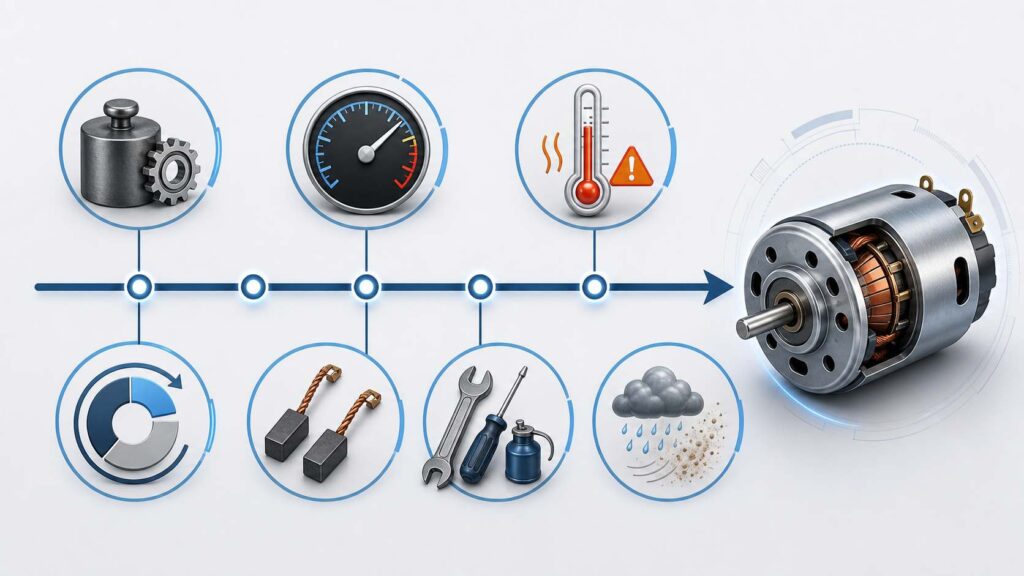
(Illustration: Timeline showing factors that influence motor service life.)
Yes—but only if it is designed and rated for continuous-duty operation.
Many small brushed motors are intended for intermittent duty, meaning they should operate for limited periods followed by cooling intervals.
Before using a motor continuously, verify:
Operating beyond the motor’s thermal limits may significantly reduce its service life.
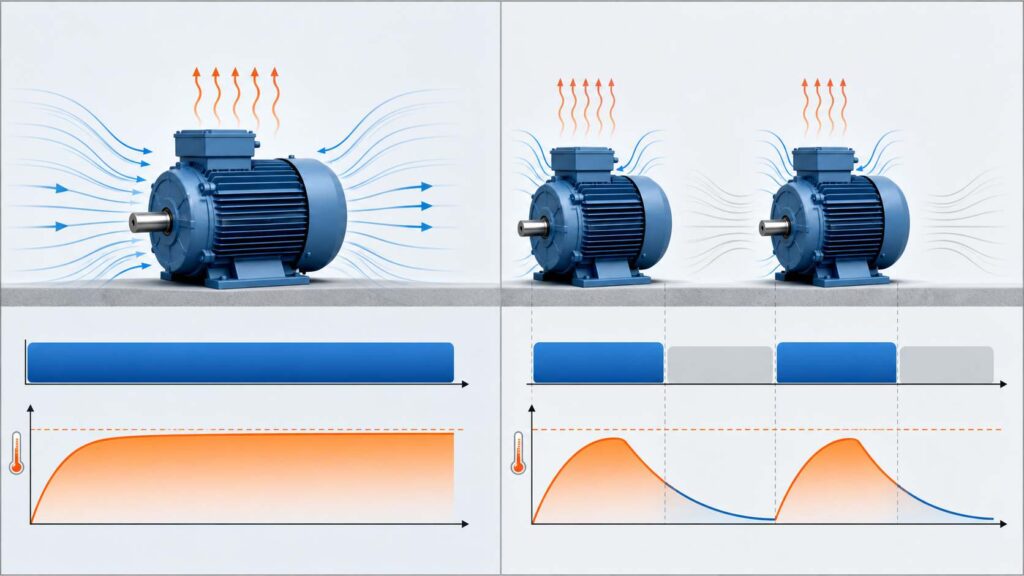
(Illustration: Comparison between continuous-duty and intermittent-duty operating cycles.)
Yes.
The most common methods include:
PWM is generally preferred because it provides efficient speed control while maintaining better torque characteristics than simply reducing the supply voltage.
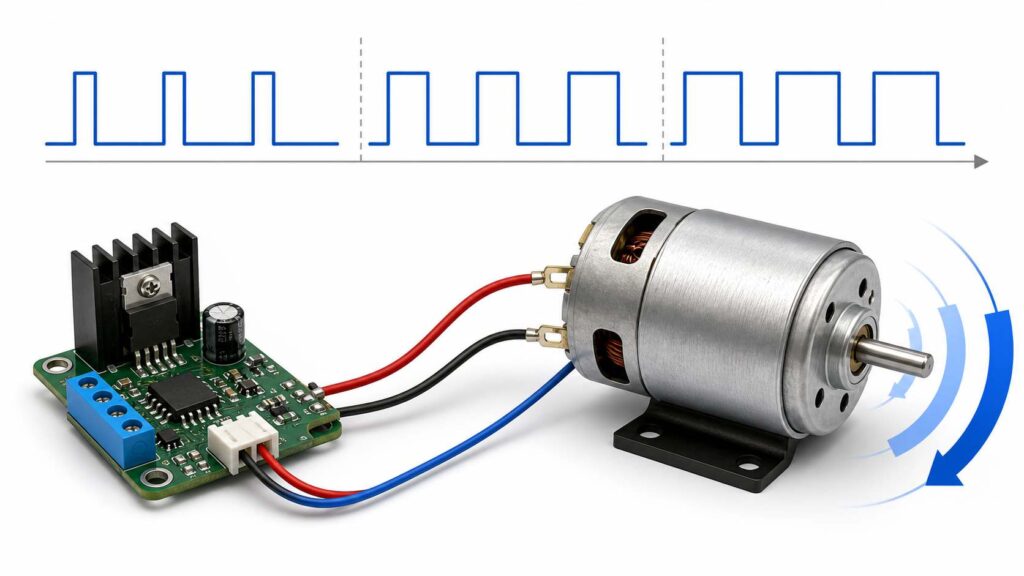
(Illustration: PWM waveform controlling the speed of a brushed DC motor.)
Yes.
Reversing the polarity of the DC power supply reverses the direction of current flowing through the armature.
As a result, the motor rotates in the opposite direction.
This simple reversal method is one reason brushed DC motors are widely used in automotive actuators, robotics, and positioning systems.
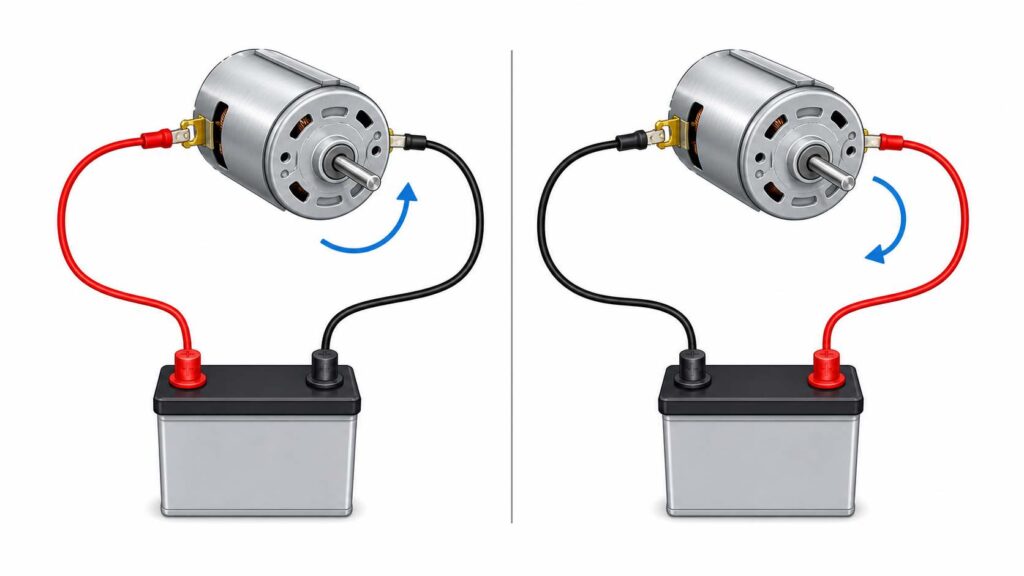
(Illustration: Wiring diagram showing forward and reverse motor rotation by changing power supply polarity.)
Yes.
Pulse Width Modulation (PWM) is one of the most common methods for controlling brushed DC motors.
Compared with simple voltage reduction, PWM offers:
PWM motor drivers are widely available and are commonly used in consumer, industrial, and educational applications.
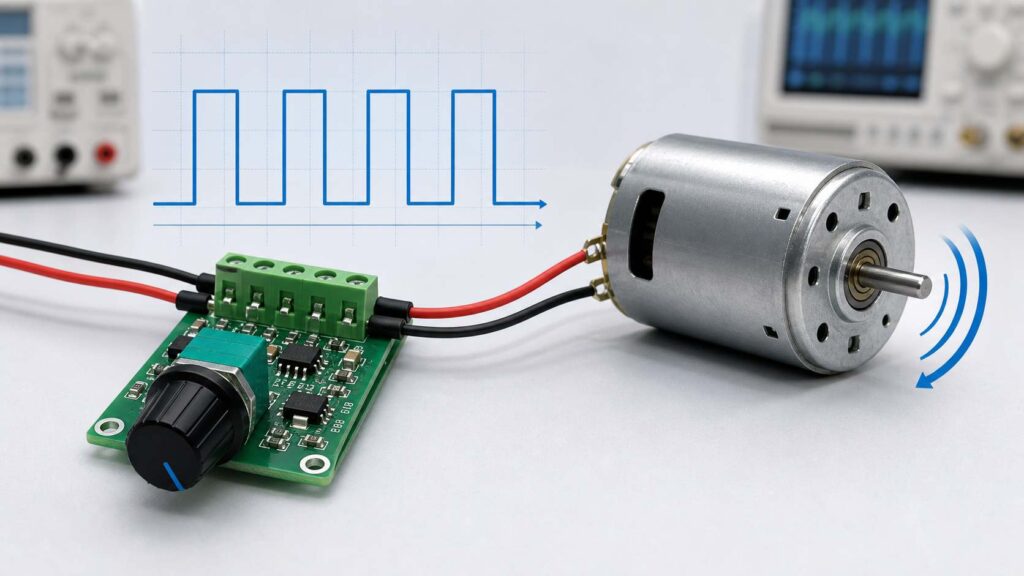
(Illustration: PWM controller connected to a brushed DC motor with adjustable speed output.)
Not necessarily.
Motor performance depends on the specific design rather than the presence or absence of brushes.
In general:
The better choice depends on the application’s requirements rather than assuming one technology is universally superior.
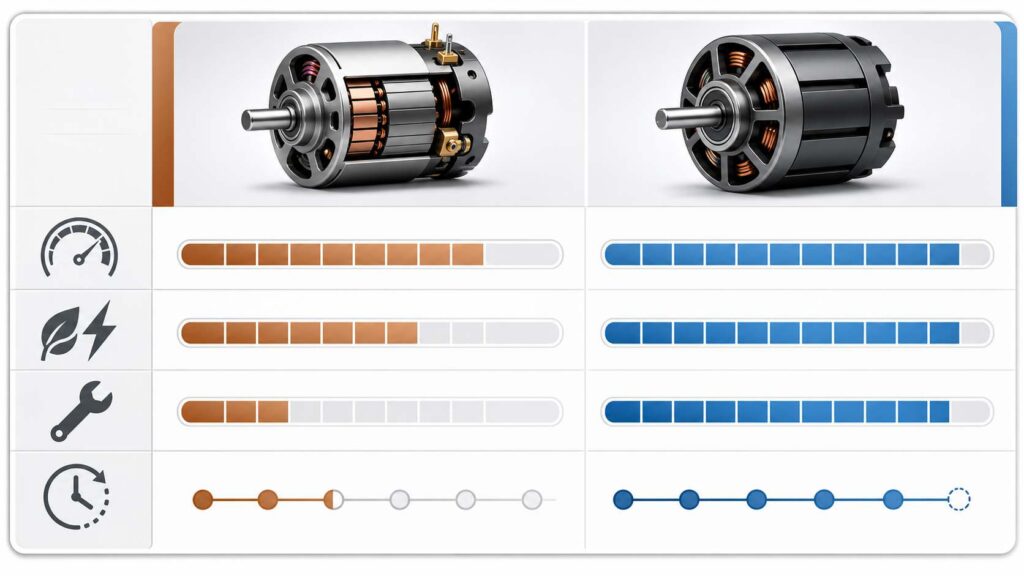
(Illustration: Comparison chart of torque, efficiency, maintenance, and service life between brushed and brushless motors.)
Yes.
Routine maintenance may include:
The required maintenance interval depends on operating conditions and motor design.
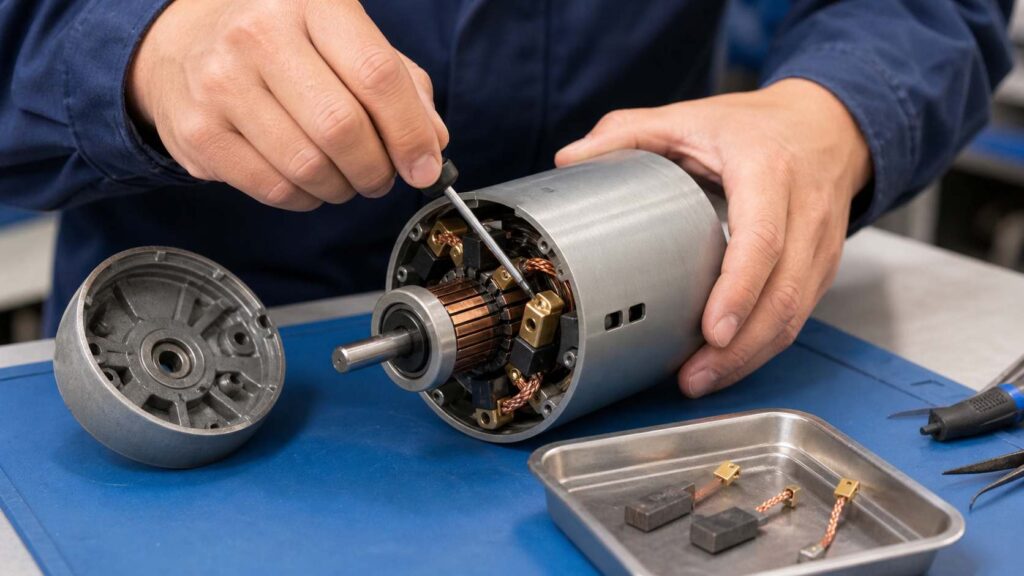
(Illustration: Technician replacing carbon brushes during routine maintenance.)
Brushed DC motors continue to be widely used in applications such as:
These applications benefit from the motor’s simple design, low cost, and high starting torque.
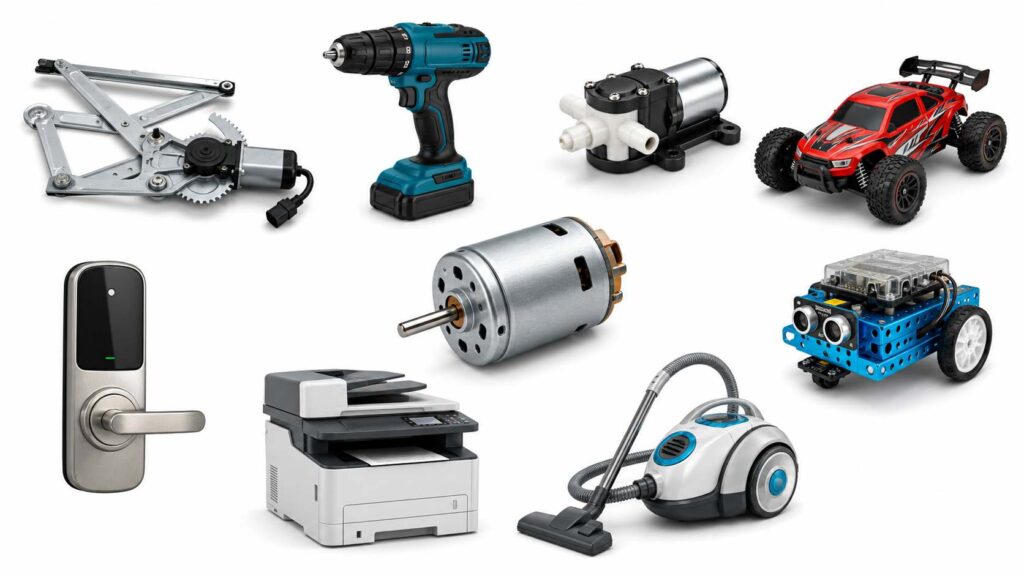
(Illustration: Product collage showing common brushed DC motor applications.)
No.
Although brushless motors have become increasingly popular, brushed DC motors remain an important part of modern electromechanical systems.
They continue to be selected for products where:
For many consumer and automotive products, brushed motors remain the most practical solution.
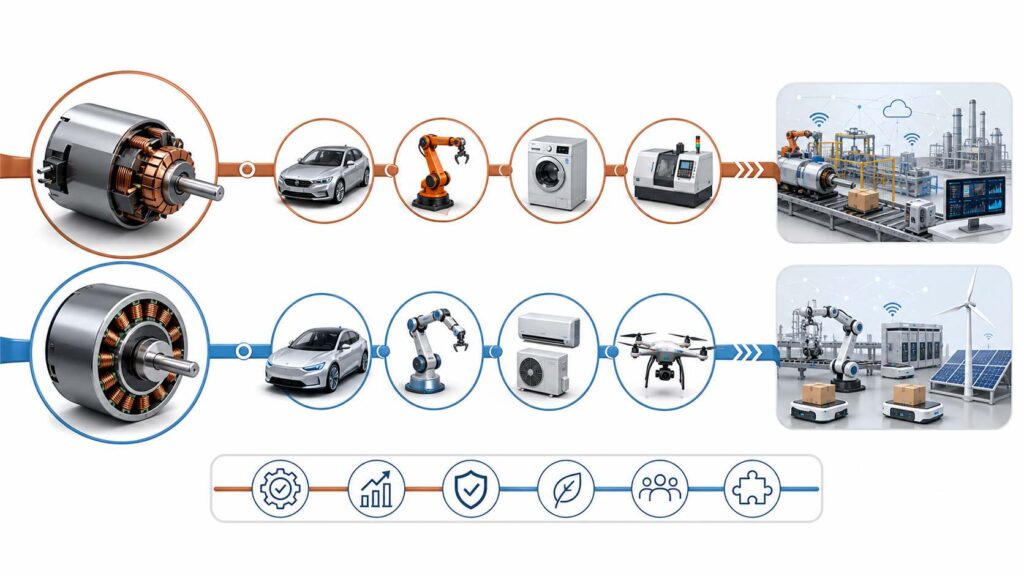
(Illustration: Timeline showing brushed and brushless motors coexisting in modern industries.)
Start by defining the application’s requirements.
The following factors should be evaluated:
Comparing complete motor specifications is far more effective than selecting a motor based on a single parameter.
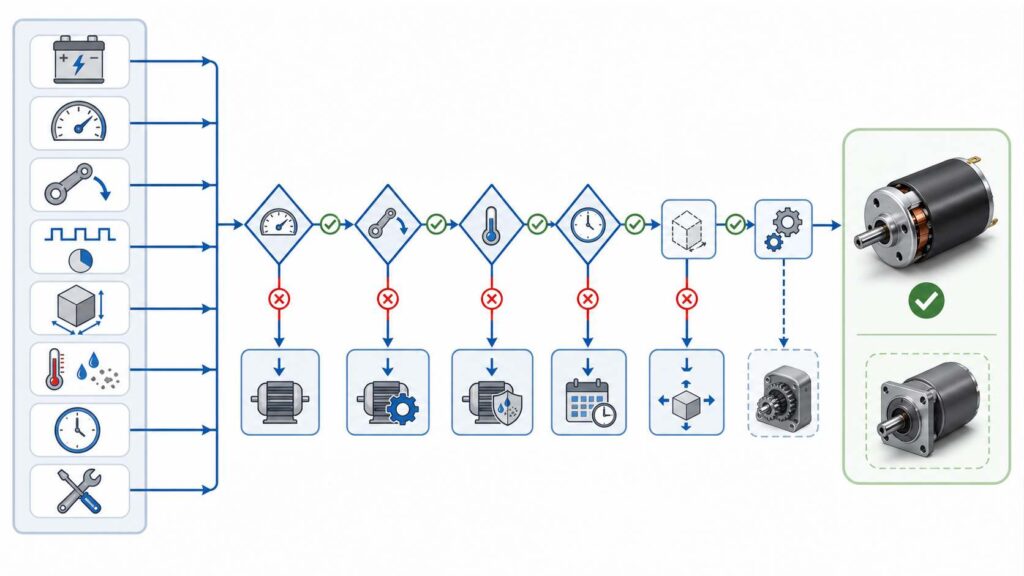
(Illustration: Motor selection flowchart from application requirements to final motor selection.)
There is no such thing as the “best” brushed DC motor.
The most suitable motor depends on the application’s electrical, mechanical, environmental, and economic requirements.
Engineers evaluate motors as part of an entire system rather than focusing on a single specification such as speed, voltage, or power.
Successful motor selection always balances performance, reliability, cost, and expected service life.
Throughout this guide, we have explored every major aspect of brushed DC motors:
Together, these topics provide a comprehensive foundation for understanding, selecting, and applying brushed DC motors in both industrial and commercial environments.
If you would like to continue learning, the following topics are natural next steps:
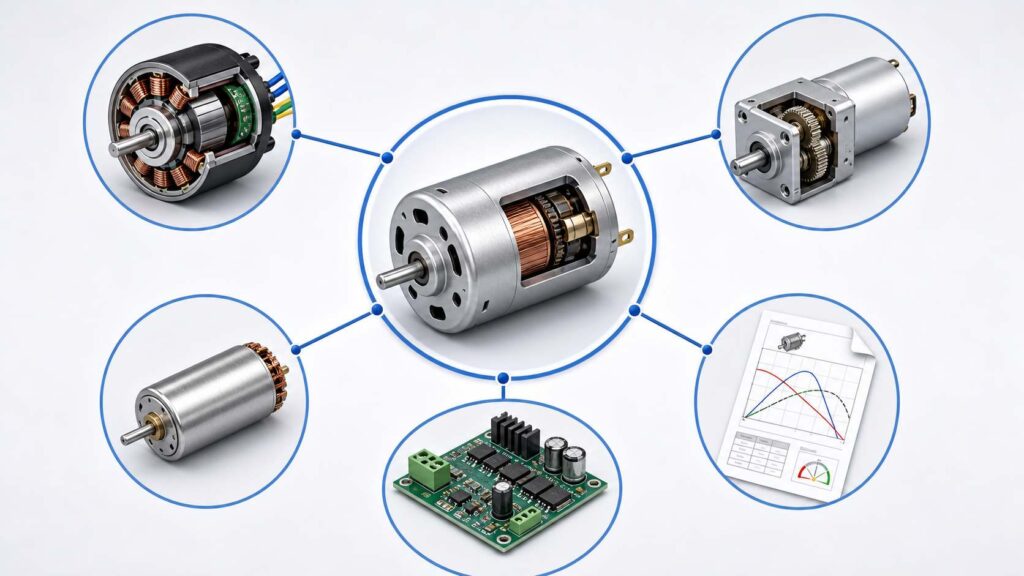
(Illustration: Knowledge map connecting “Brushed DC Motors” to related topics such as BLDC motors, gear motors, coreless motors, motor controllers, and datasheets.)