Our Location
304 North Cardinal St.
Dorchester Center, MA 02124

304 North Cardinal St.
Dorchester Center, MA 02124
Every motor technology has its strengths and limitations.
Although Brushless DC (BLDC) motors have become increasingly popular in recent years, brushed DC motors continue to be widely used across many industries because they offer an excellent balance of simplicity, affordability, and reliable performance.
Rather than asking whether a brushed DC motor is “better” or “worse” than a brushless motor, engineers should ask a more practical question:
Is a brushed DC motor the right choice for this application?
The answer depends on the application’s performance requirements, operating environment, maintenance expectations, and budget.
This chapter examines the major advantages and disadvantages of brushed DC motors and explains where they perform best.
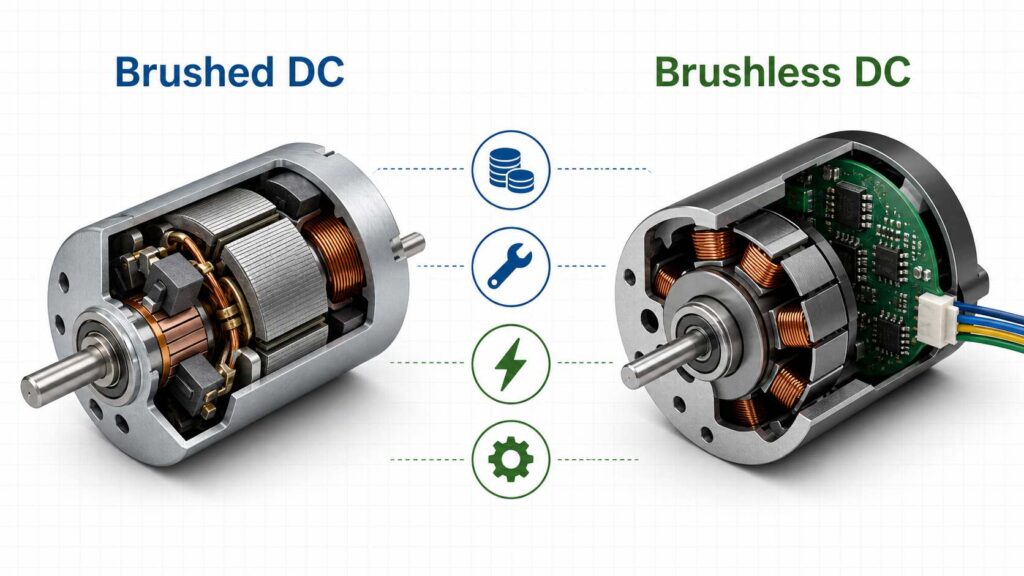
(Illustration: A balanced comparison showing a brushed DC motor on one side and a brushless DC motor on the other, highlighting cost, simplicity, efficiency, and maintenance.)
One of the biggest advantages of brushed DC motors is their simple mechanical and electrical design.
A typical brushed motor consists of:
Unlike BLDC motors, no electronic commutation system is required.
This simplicity makes brushed motors easy to manufacture, install, and maintain.
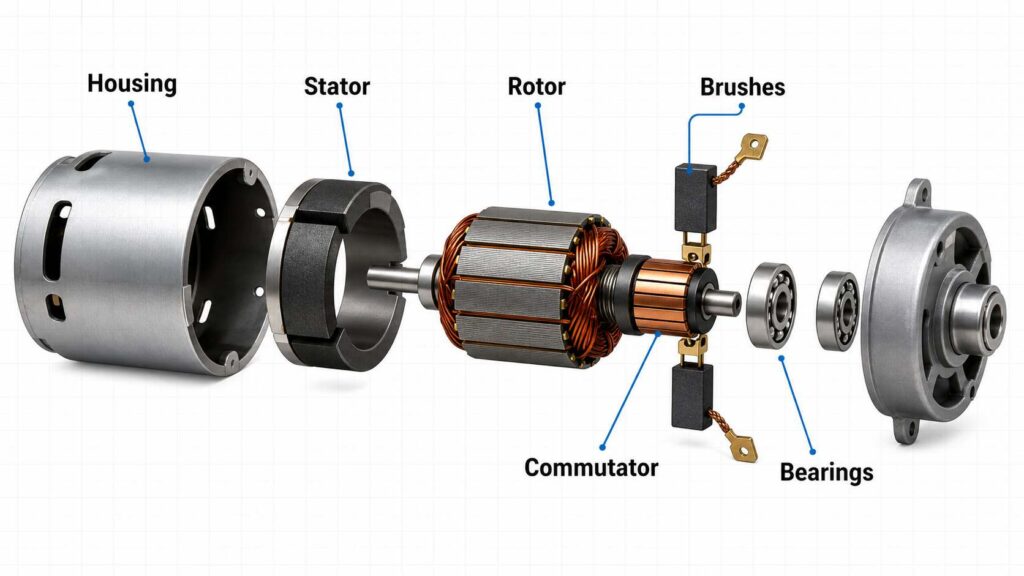
(Illustration: Exploded view of a brushed DC motor with a small number of major components highlighted.)
Motor speed can often be adjusted simply by changing the applied DC voltage.
For many applications, no sophisticated controller is required.
This makes brushed motors particularly suitable for:
In more advanced applications, Pulse Width Modulation (PWM) can also be used to achieve efficient speed control while maintaining good torque characteristics.
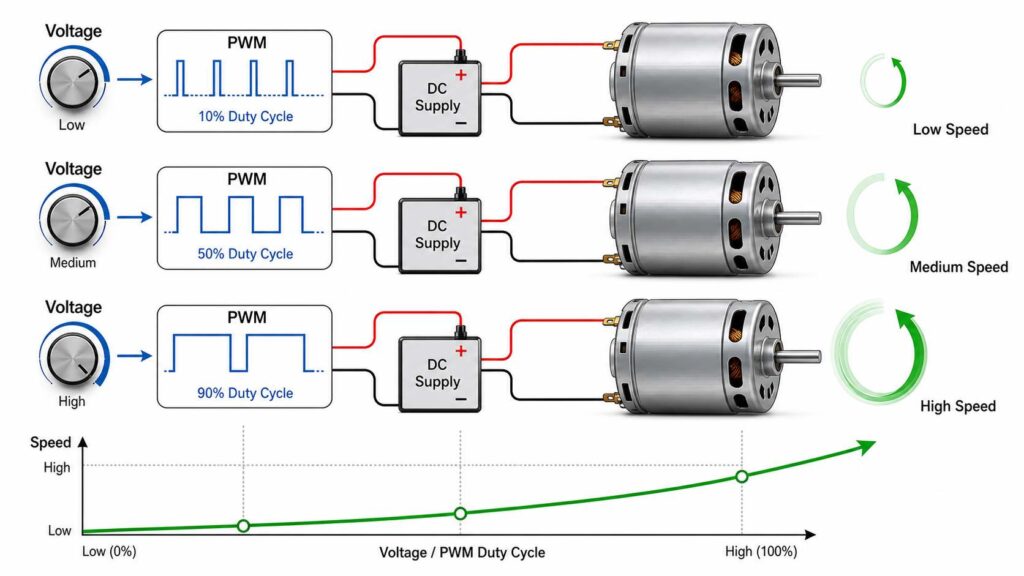
(Illustration: Diagram showing motor speed increasing as supply voltage or PWM duty cycle changes.)
Brushed DC motors generally have lower manufacturing costs than comparable brushless motors.
Reasons include:
For cost-sensitive products, brushed motors often provide the most economical solution.
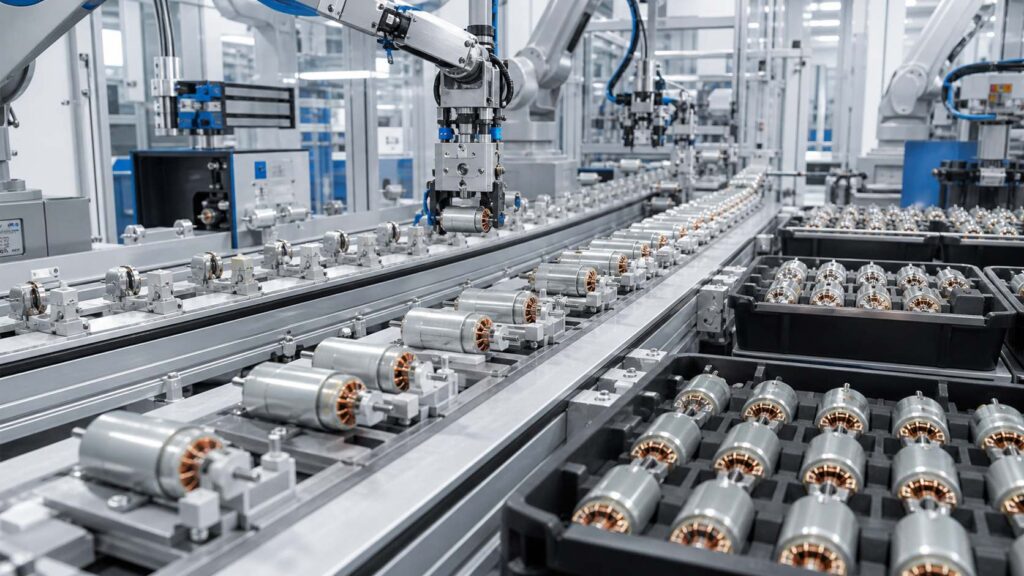
(Illustration: Manufacturing line producing large quantities of miniature brushed DC motors.)
Brushed DC motors naturally produce strong starting torque.
This makes them suitable for applications where loads must be moved immediately after startup.
Typical examples include:
High starting torque is one reason brushed motors remain popular in automotive electromechanical systems.
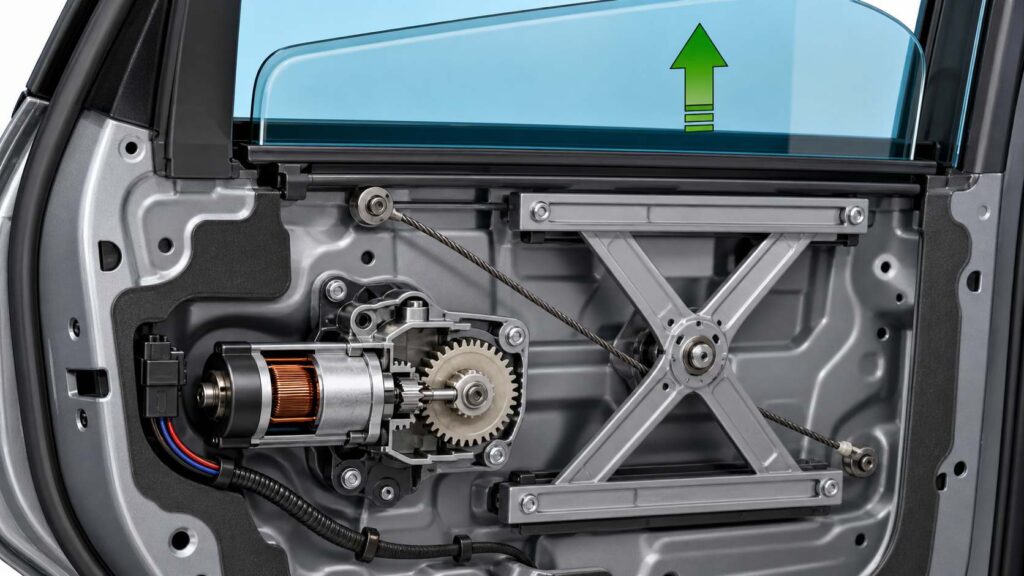
(Illustration: A brushed DC motor driving an automotive power window mechanism.)
Because brushed motors perform commutation mechanically, they can usually operate directly from a DC power supply.
In many systems, the required electronics are limited to:
This reduces system complexity and simplifies product development.
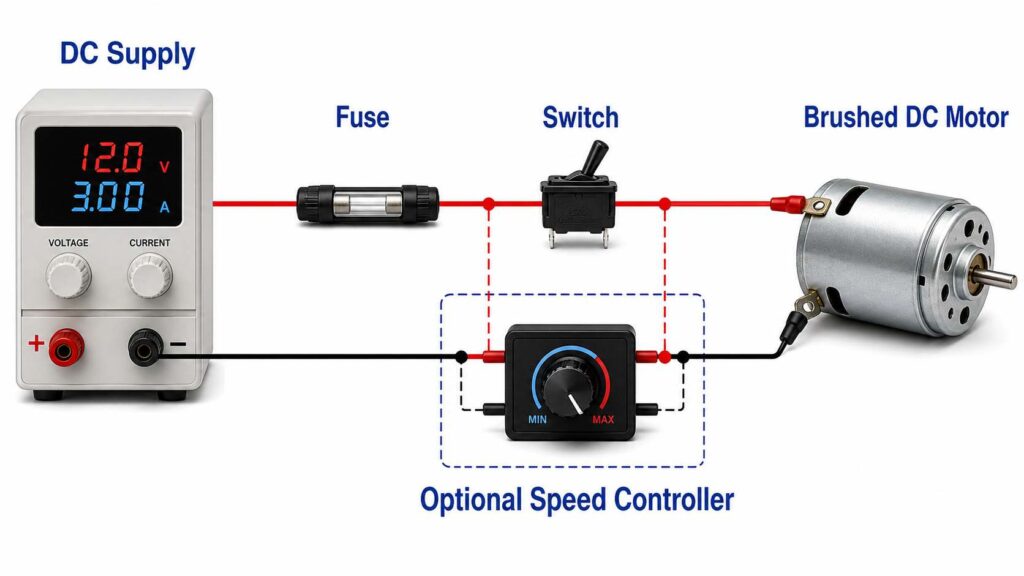
(Illustration: Simple wiring diagram showing a DC power supply connected directly to a brushed DC motor.)
Brushed DC motors have been used commercially for more than a century.
Their characteristics are well understood, manufacturing techniques are highly refined, and replacement parts are widely available.
Millions of brushed motors continue to operate reliably in consumer products, industrial equipment, and automotive systems every day.
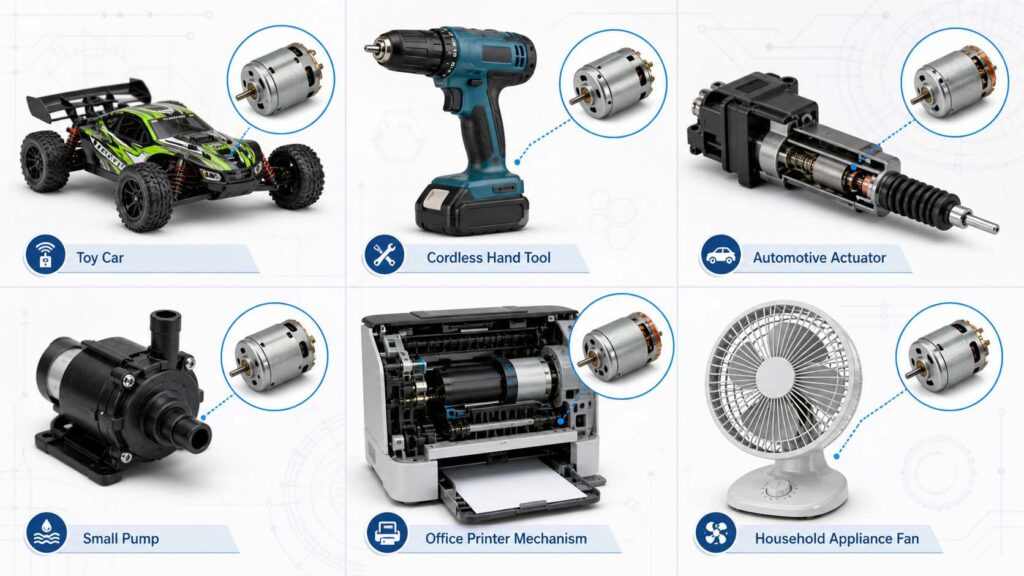
(Illustration: Various products using brushed DC motors across different industries.)
The most significant limitation of brushed motors is the gradual wear of the carbon brushes.
Because the brushes remain in continuous contact with the rotating commutator:
Brush wear is a normal characteristic rather than a manufacturing defect.
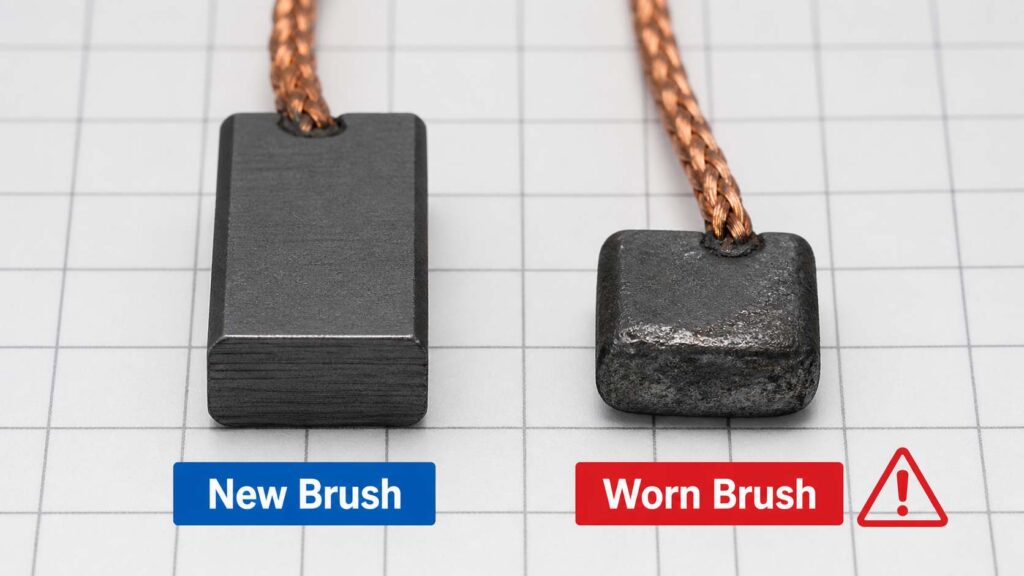
(Illustration: Comparison between a new carbon brush and a worn brush ready for replacement.)
The commutator is also subject to wear.
Over time, repeated sliding contact may cause:
Poor commutator condition can reduce efficiency, increase electrical noise, and shorten motor life.
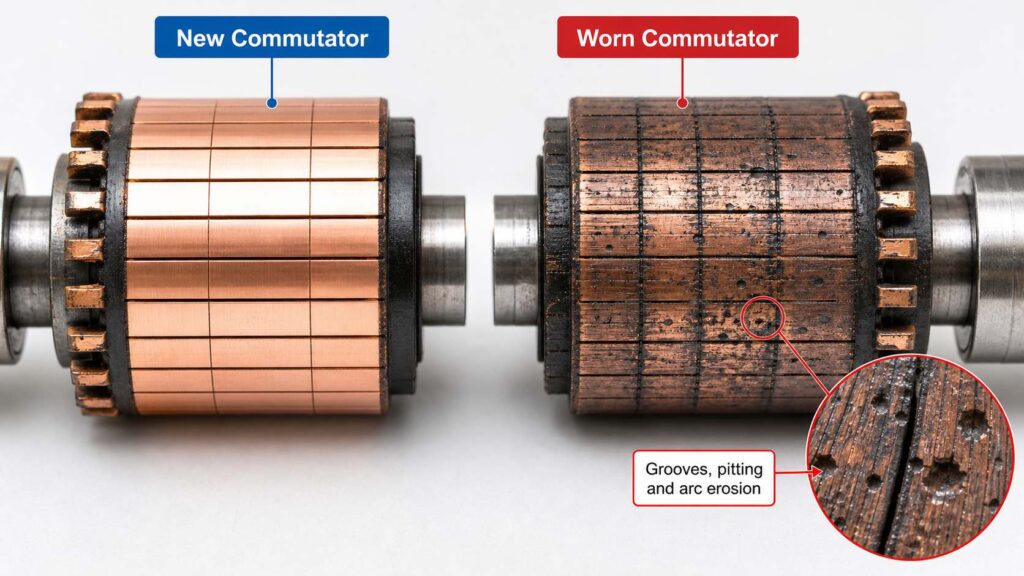
(Illustration: New commutator compared with a worn commutator showing visible wear patterns.)
Mechanical commutation introduces several sources of energy loss, including:
As a result, brushed motors generally have lower efficiency than equivalent BLDC motors.
This difference becomes more significant in applications requiring continuous operation or high energy efficiency.
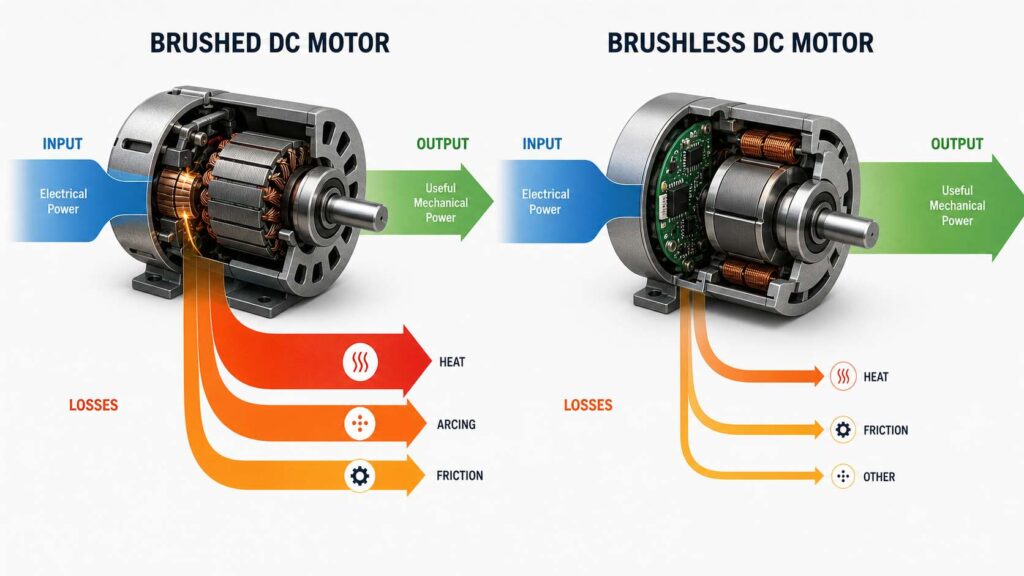
(Illustration: Energy loss comparison between brushed and brushless DC motors.)
Because brushes and commutators wear over time, brushed motors typically have a shorter service life than brushless motors.
Motor life depends on factors such as:
Applications requiring continuous operation for tens of thousands of hours often favor brushless technology.
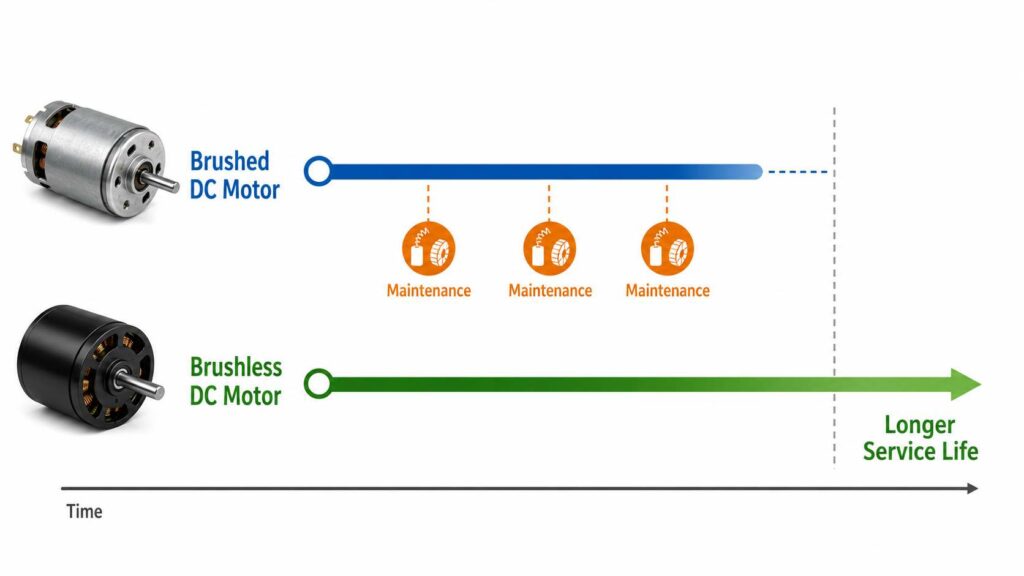
(Illustration: Service life comparison chart between brushed and brushless motors.)
As the brushes move across the commutator segments, small electrical sparks are generated.
These sparks, known as electrical arcing, are a normal result of mechanical commutation.
Excessive arcing may lead to:
Proper motor design and maintenance help minimize these effects.
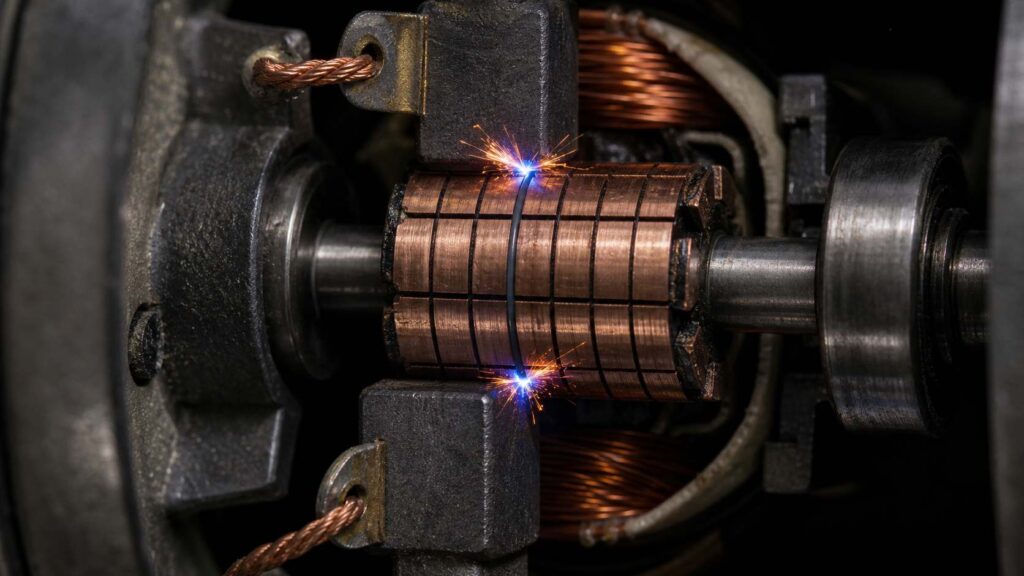
(Illustration: Close-up image of electrical arcing between the carbon brushes and commutator.)
Unlike brushless motors, brushed motors require periodic maintenance.
Typical maintenance tasks include:
Maintenance intervals depend on the operating conditions and motor design.
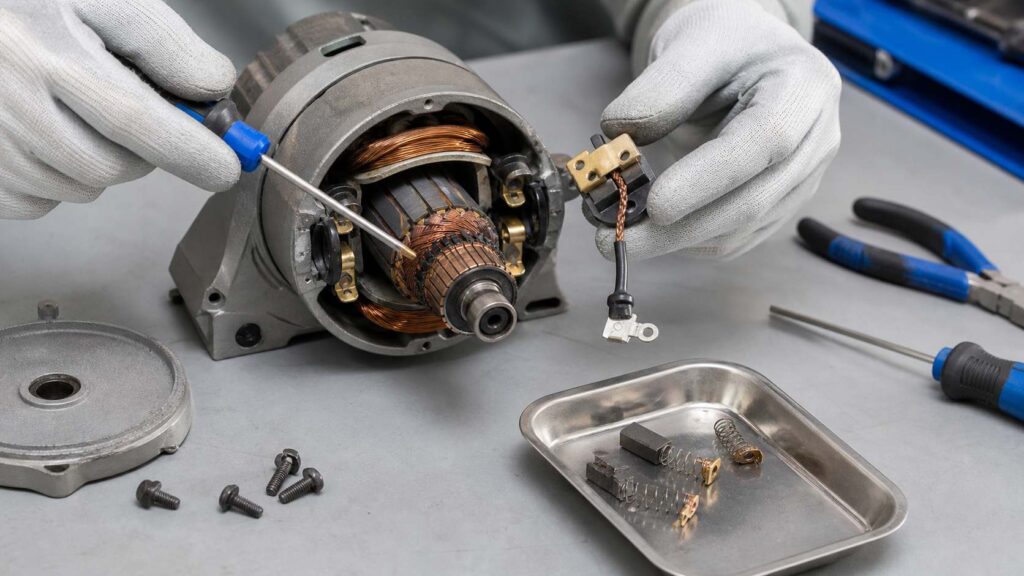
(Illustration: Technician inspecting and replacing carbon brushes in a brushed DC motor.)
The following table summarizes the main differences between the two technologies.
| Feature | Brushed DC Motor | Brushless DC Motor |
|---|---|---|
| Initial Cost | Lower | Higher |
| Controller Required | Usually No | Yes |
| Construction | Simple | More Complex |
| Starting Torque | High | High |
| Efficiency | Moderate | High |
| Noise | Higher | Lower |
| Maintenance | Periodic Brush Replacement | Minimal |
| Service Life | Moderate | Long |
| Reliability | Good | Excellent |
| Best For | Cost-sensitive applications | High-performance applications |
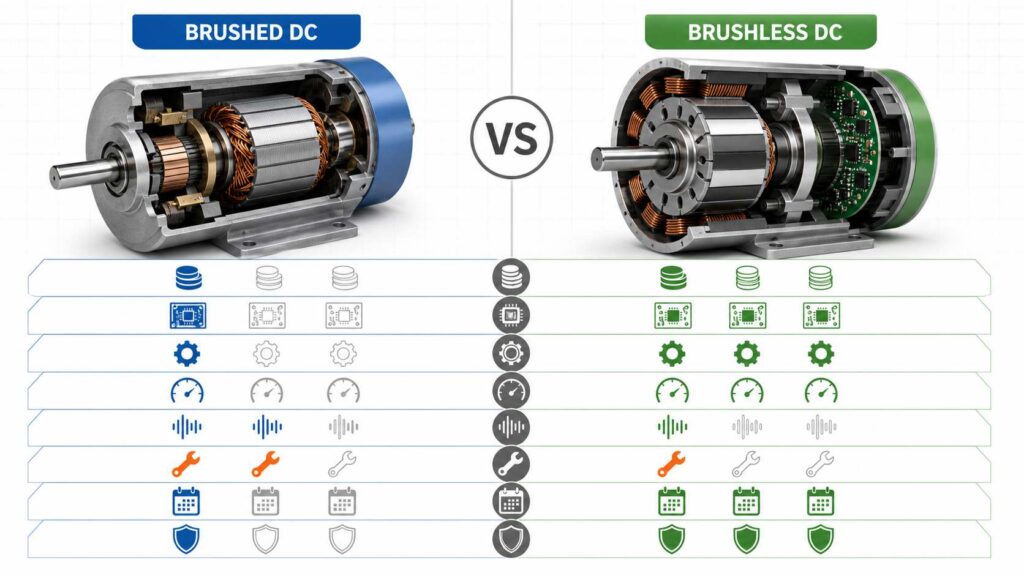
(Illustration: Side-by-side infographic comparing brushed and brushless DC motors across key performance metrics.)
A brushed DC motor is often the best choice when the application requires:
Typical examples include:
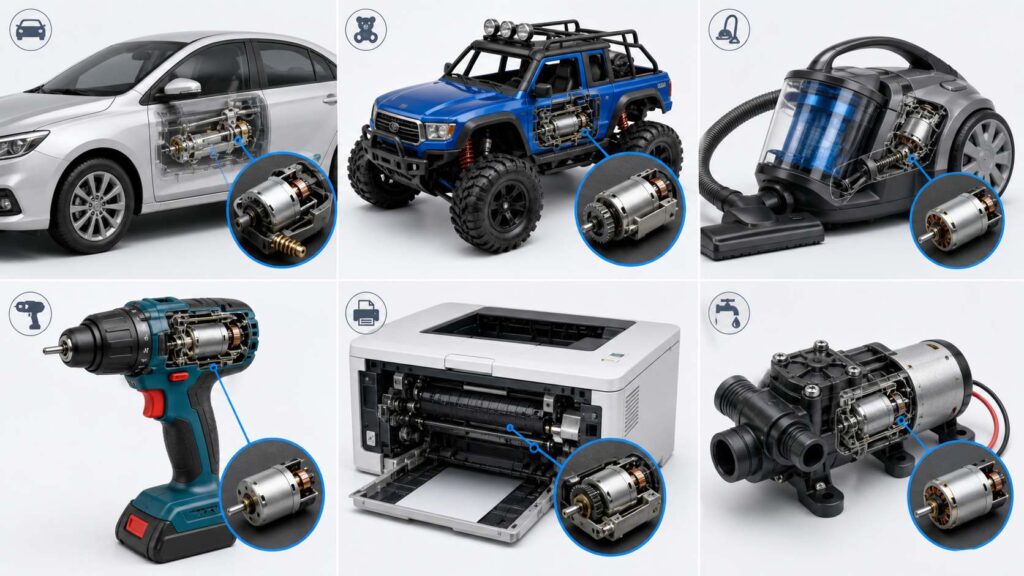
(Illustration: Collage of products where brushed DC motors remain the preferred solution.)
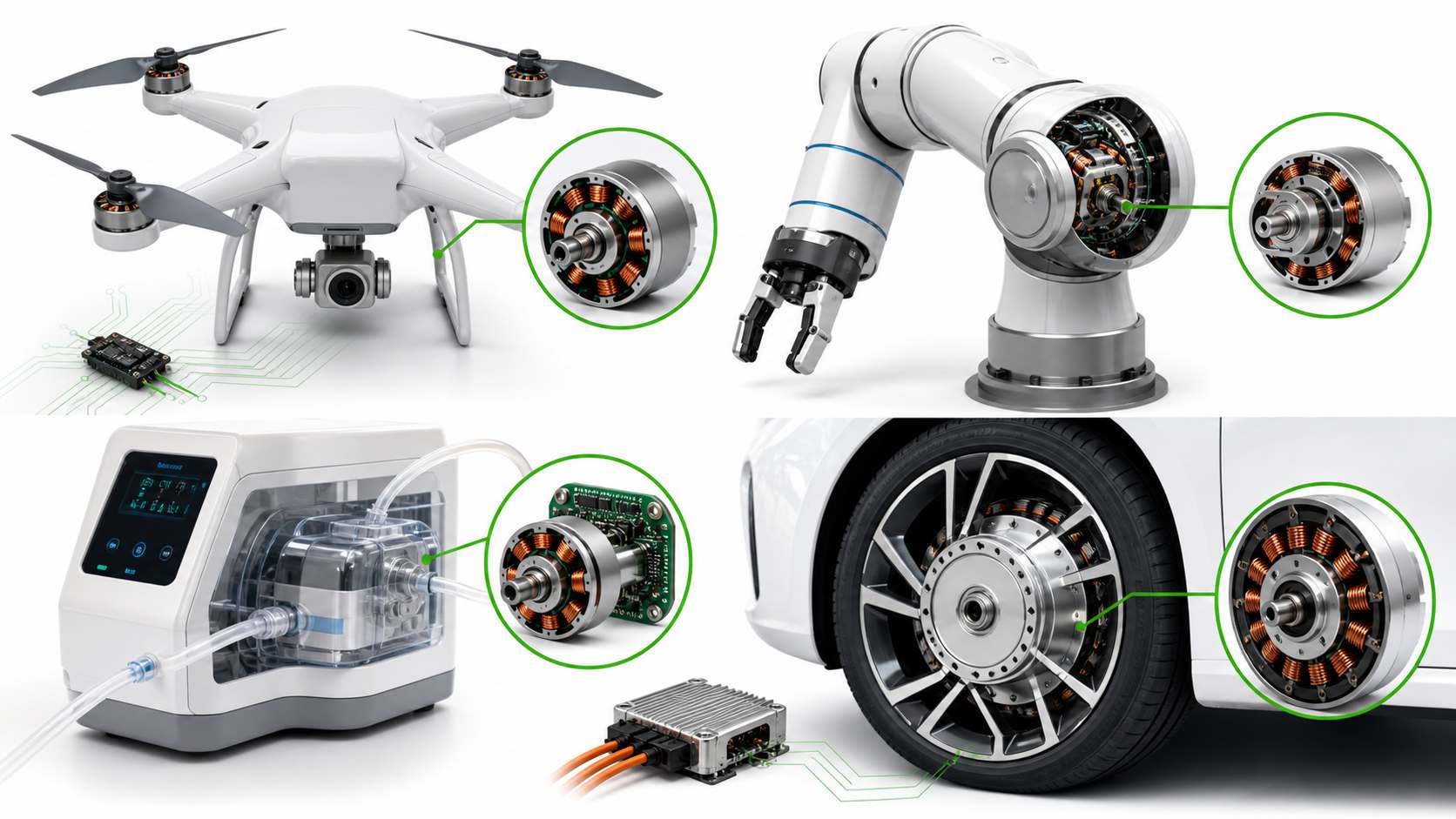
A brushless motor may be a better option if the application requires:
Common examples include:
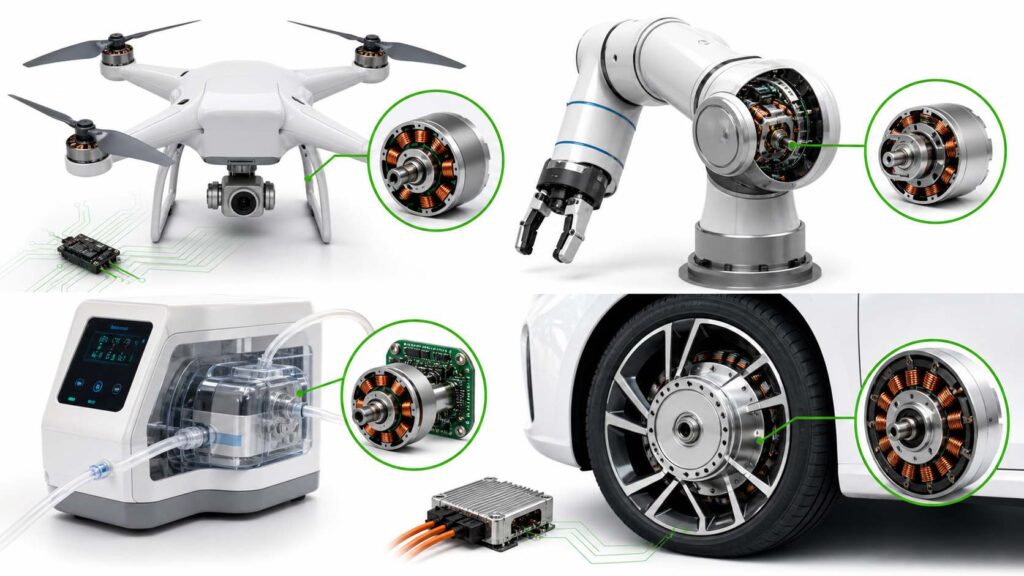
(Illustration: Examples of BLDC motor applications such as drones, collaborative robots, and medical devices.)
A common misconception is that brushless motors have completely replaced brushed motors.
In reality, the two technologies serve different engineering priorities.
Brushless motors excel where efficiency, durability, and advanced control are essential.
Brushed motors remain highly competitive where low cost, simple electronics, high starting torque, and ease of integration are more important.
For many consumer and automotive products, a brushed DC motor continues to provide the most practical and economical solution.