Our Location
304 North Cardinal St.
Dorchester Center, MA 02124

304 North Cardinal St.
Dorchester Center, MA 02124
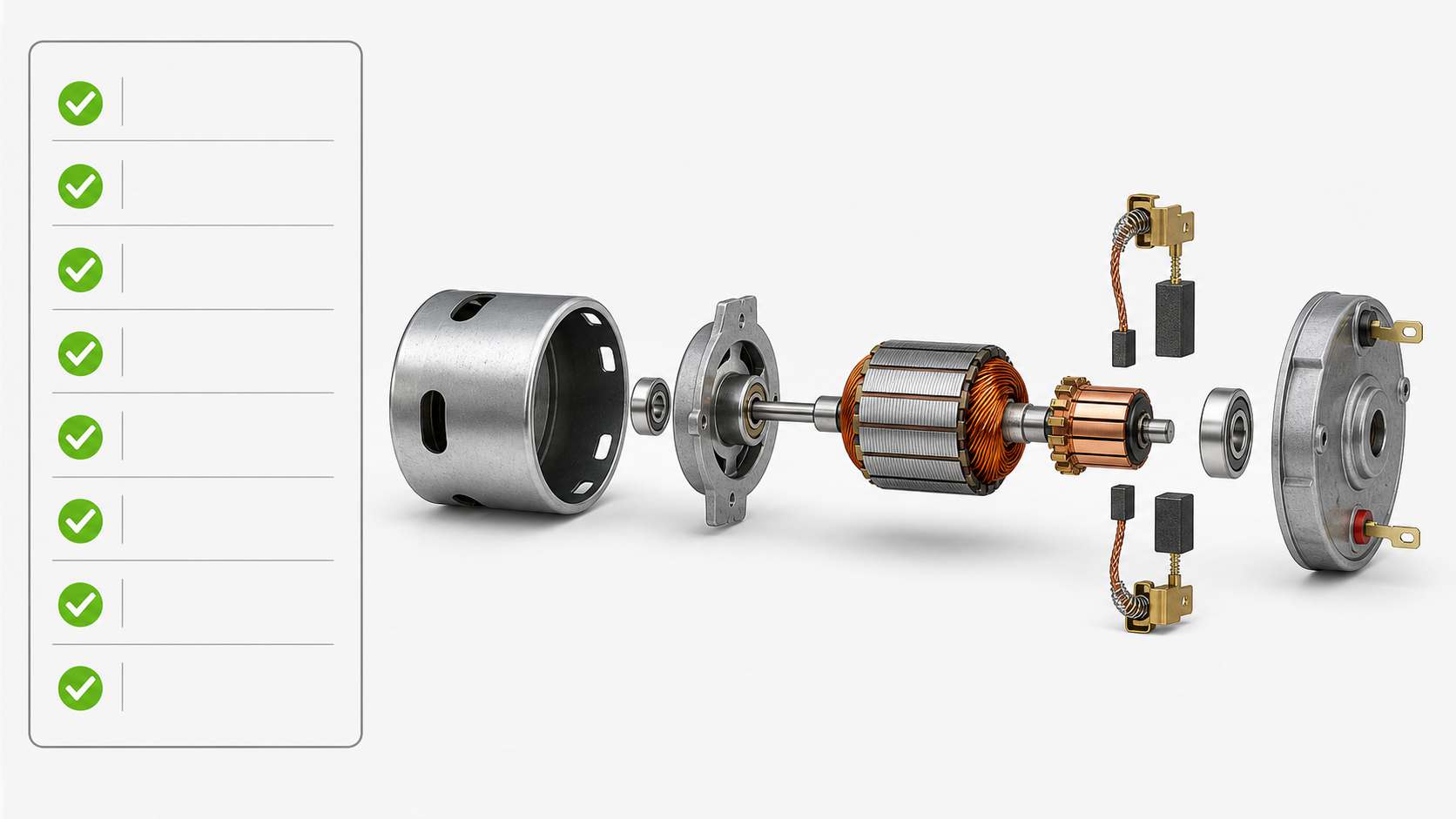
One of the defining characteristics of a brushed DC motor is that it contains mechanical wear components.
Unlike brushless motors, which eliminate physical contact during commutation, brushed DC motors rely on carbon brushes sliding against a rotating commutator. Over time, this contact causes normal wear that eventually requires inspection, maintenance, or replacement.
Fortunately, brushed DC motors are relatively easy to maintain. Regular inspection and proper operating conditions can significantly extend motor life and reduce unexpected downtime.
This chapter explains routine maintenance procedures, common failure modes, troubleshooting methods, and practical recommendations for maximizing the service life of brushed DC motors.
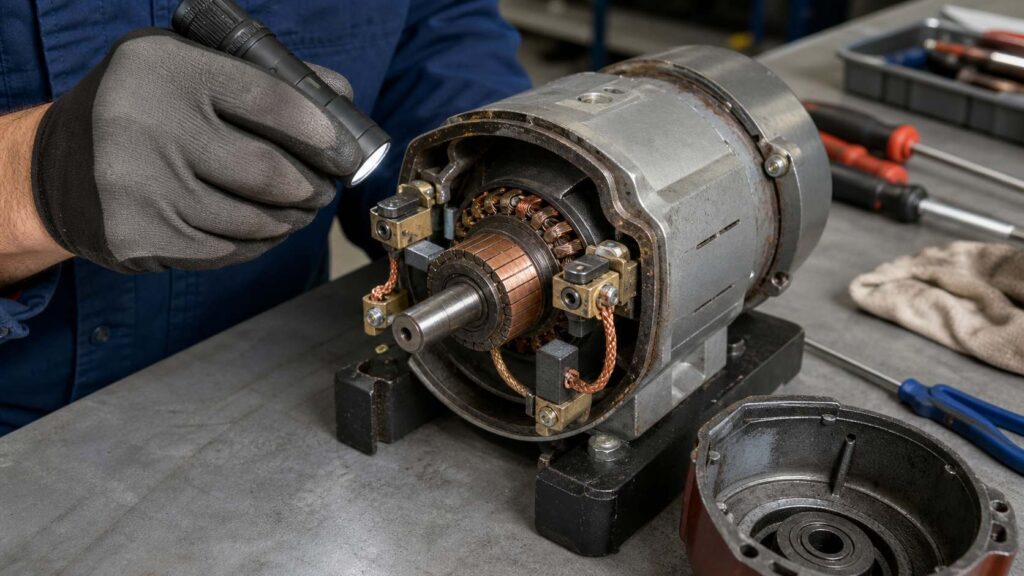
(Illustration: A technician inspecting a brushed DC motor with the brushes and commutator exposed for maintenance.)
The primary reason is mechanical commutation.
During operation:
These are normal operating characteristics—not manufacturing defects.
Regular maintenance helps maintain:
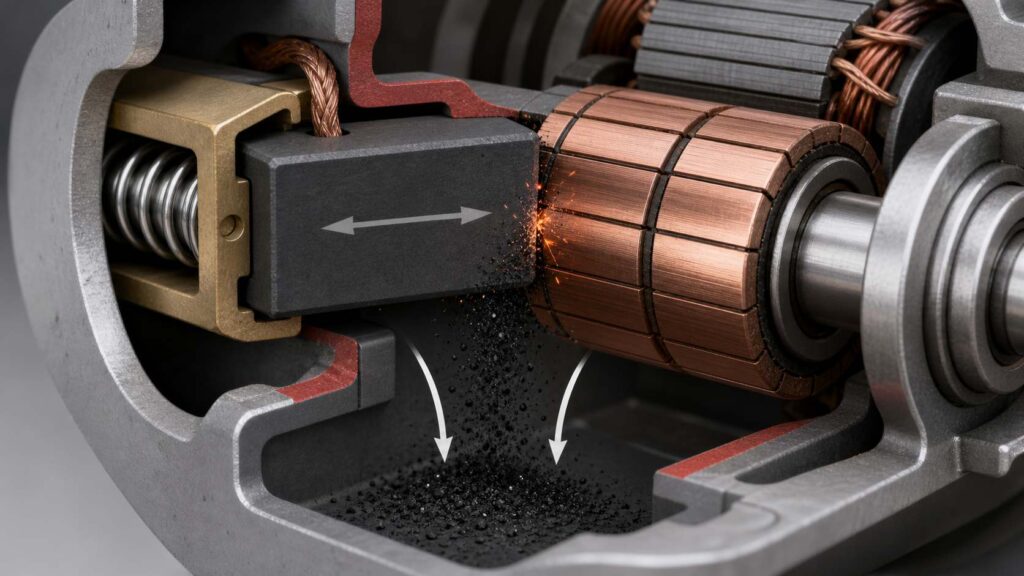
(Illustration: Diagram showing brush wear and carbon dust generation during motor operation.)
Most brushed DC motors require only a few routine inspections.
Recommended inspection items include:
✓ Brush wear
✓ Commutator condition
✓ Bearing condition
✓ Shaft alignment
✓ Wiring and electrical connections
✓ Motor temperature during operation
✓ Abnormal vibration
✓ Unusual noise
Inspection intervals depend on:
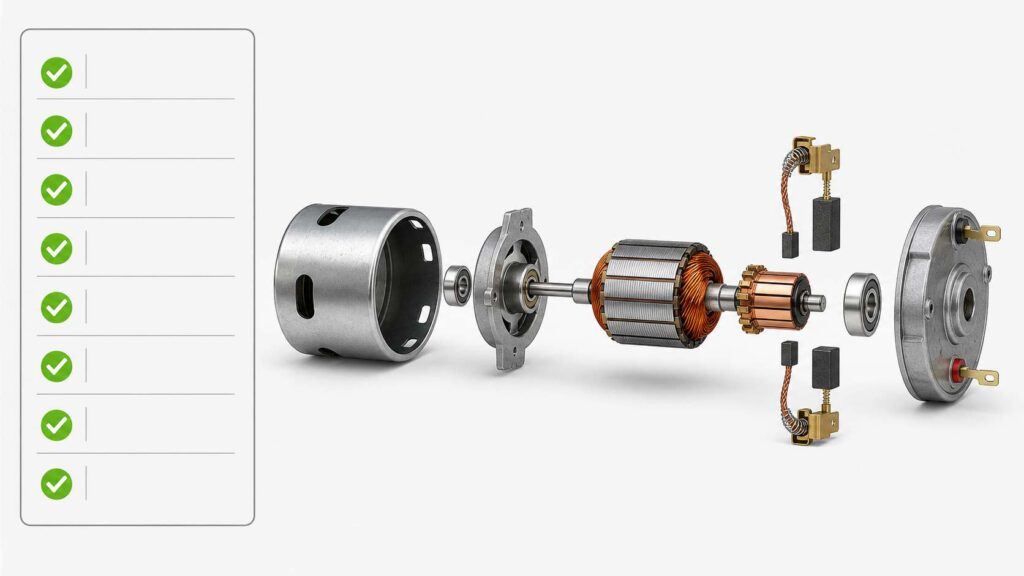
(Illustration: Maintenance checklist beside an exploded-view diagram of a brushed DC motor.)
Carbon brushes are consumable components.
As the motor operates, the brushes gradually become shorter.
Typical inspection points include:
Brushes should generally be replaced before they become excessively worn.
Ignoring worn brushes may damage the commutator.
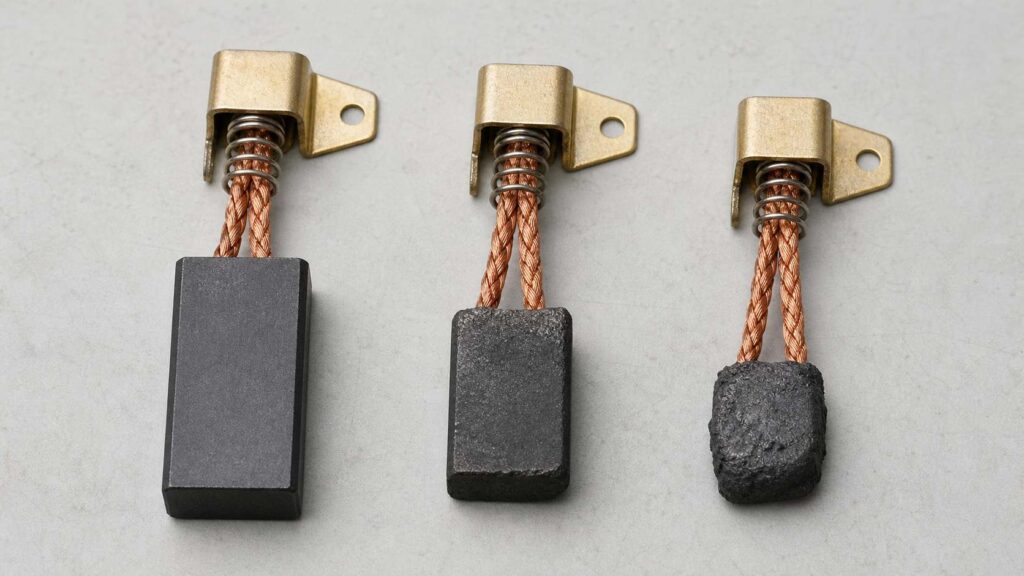
(Illustration: Comparison of new, partially worn, and fully worn carbon brushes.)
The commutator should have a smooth, clean copper surface.
During inspection, look for:
Minor surface discoloration is usually normal.
However, severe pitting or burning may indicate:
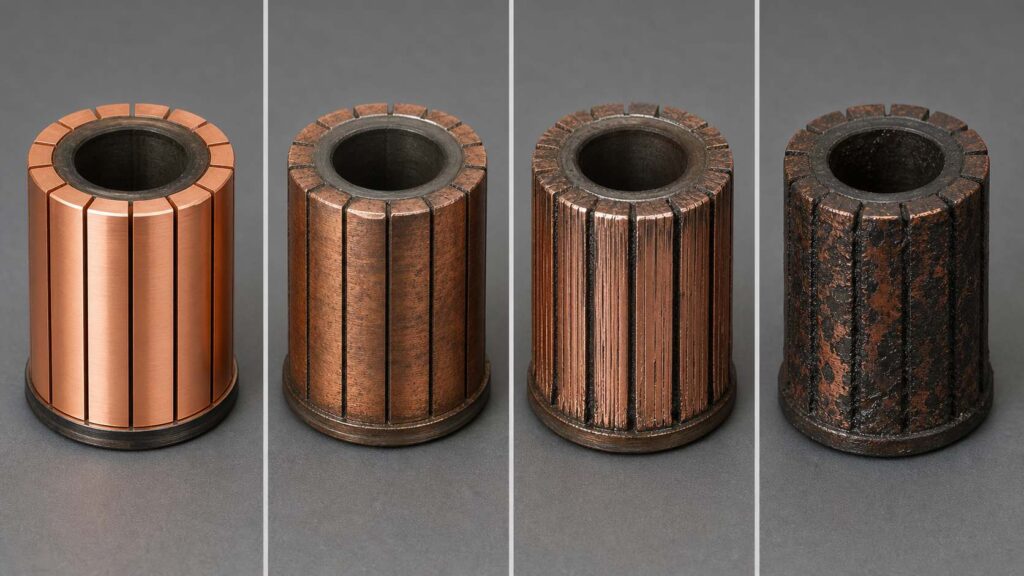
(Illustration: New commutator compared with examples of worn, grooved, and burned commutator surfaces.)
Over time, carbon dust and dirt may accumulate inside the motor.
Cleaning helps maintain good electrical contact and proper cooling.
Typical cleaning methods include:
Avoid introducing excessive moisture or aggressive solvents into the motor unless recommended by the manufacturer.
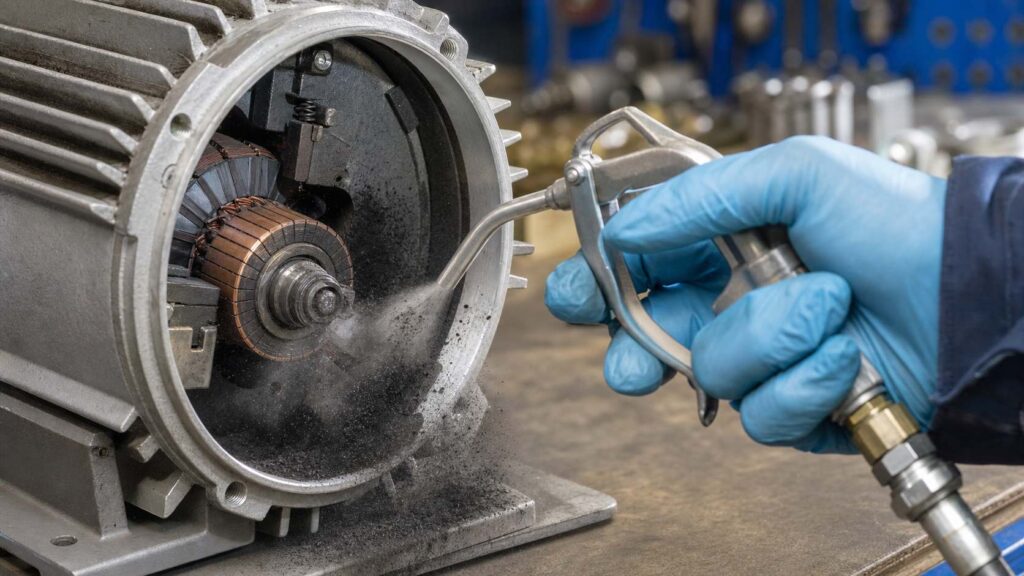
(Illustration: Technician using compressed air to remove carbon dust from the motor interior.)
Bearings should rotate smoothly without excessive noise or vibration.
Typical warning signs include:
Small sealed bearings usually require no lubrication during their service life.
Larger industrial motors may require periodic bearing lubrication according to the manufacturer’s recommendations.
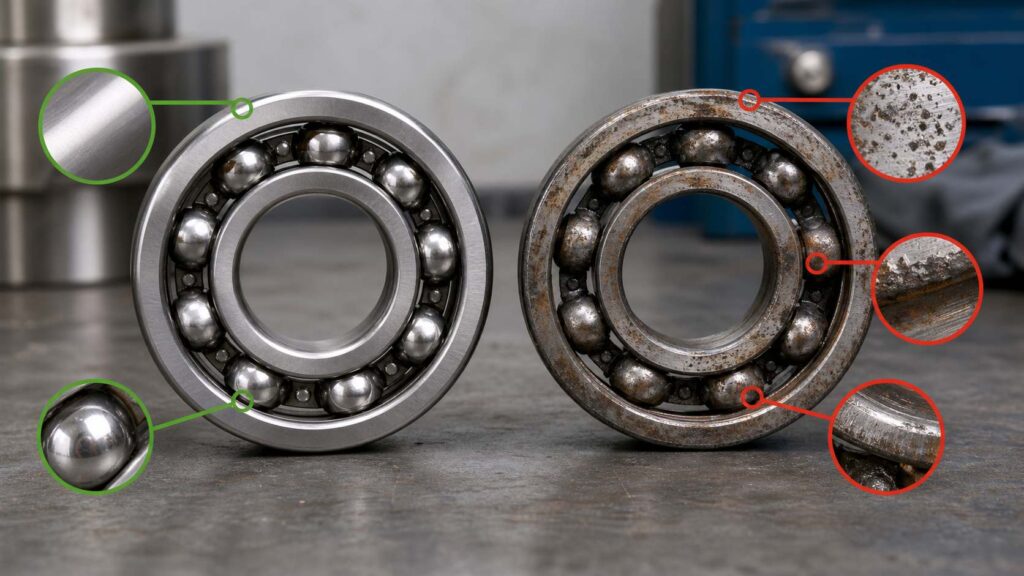
(Illustration: Ball bearing inspection with indicators highlighting smooth and damaged bearings.)
The following table summarizes some of the most common brushed DC motor problems.
| Problem | Possible Causes | Recommended Actions |
|---|---|---|
| Motor will not start | No power supply, worn brushes, loose wiring | Check voltage, wiring, and brush condition |
| Low speed | Low voltage, excessive load, worn brushes | Verify supply voltage and inspect brushes |
| Overheating | Overload, continuous stall, poor ventilation | Reduce load and improve cooling |
| Excessive sparking | Worn brushes, damaged commutator, incorrect brush pressure | Replace brushes and inspect the commutator |
| Excessive noise | Bearing wear, shaft misalignment | Inspect bearings and mechanical alignment |
| Reduced torque | Low voltage, brush wear, armature problems | Check electrical and mechanical components |
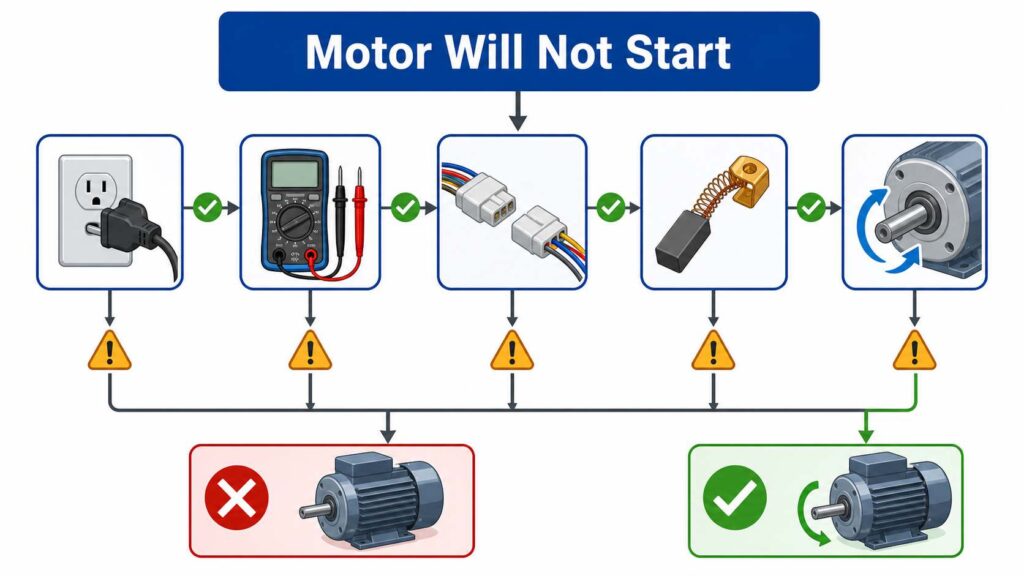
(Illustration: Troubleshooting flowchart beginning with “Motor Will Not Start” and guiding users through diagnostic steps.)
Possible causes include:
Recommended troubleshooting sequence:
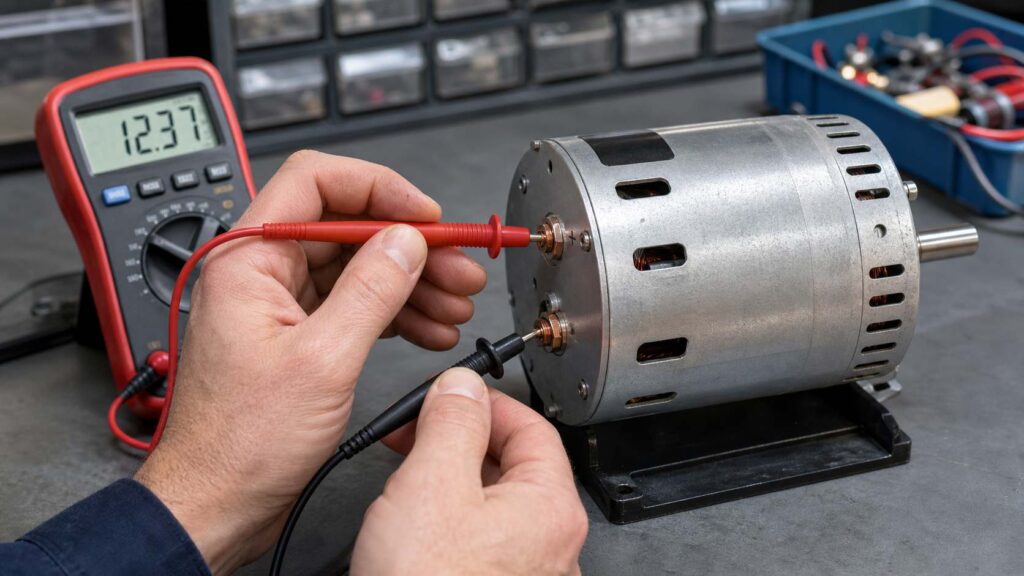
(Illustration: Technician measuring motor terminal voltage with a digital multimeter.)
Small sparks at the brushes are normal.
However, excessive arcing usually indicates a problem.
Possible causes include:
Persistent heavy sparking should be investigated promptly to prevent further damage.
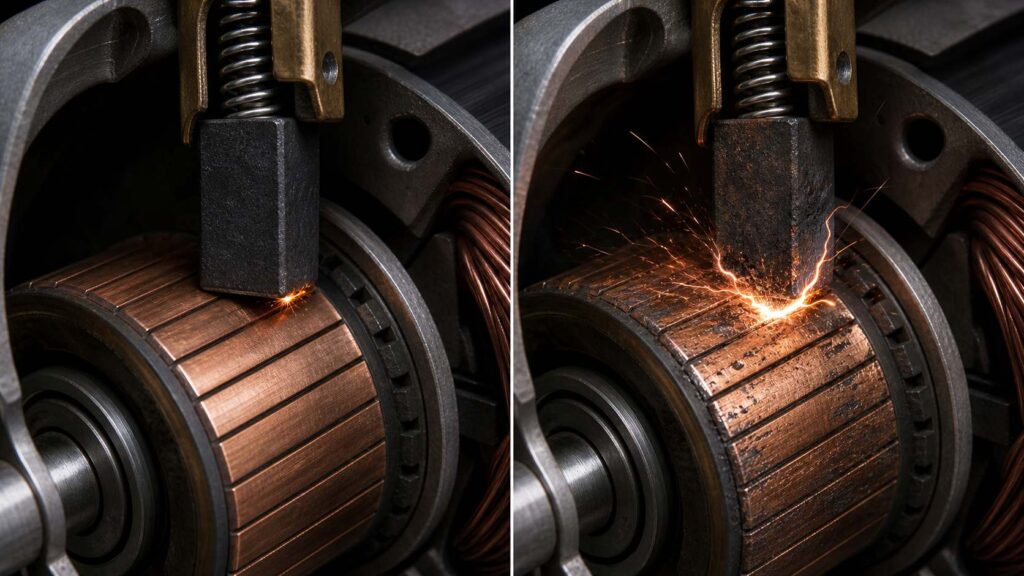
(Illustration: Comparison between normal brush contact and excessive electrical arcing.)
Overheating is one of the most common causes of premature motor failure.
Possible causes include:
Long-term overheating accelerates:
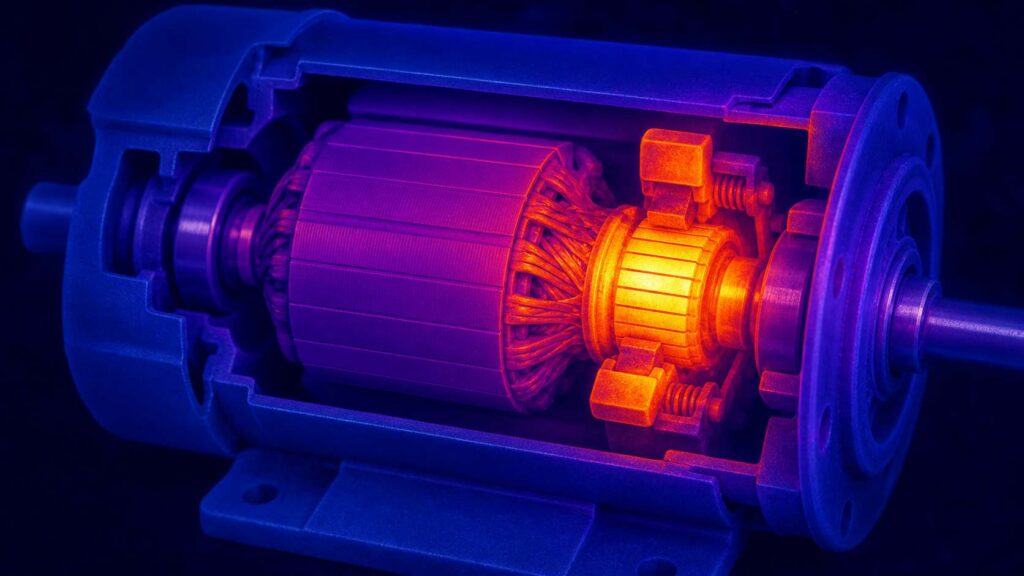
(Illustration: Thermal image showing localized overheating inside a brushed DC motor.)
Unusual noise often indicates a mechanical issue.
Common causes include:
Ignoring vibration may eventually damage bearings, brushes, or the commutator.
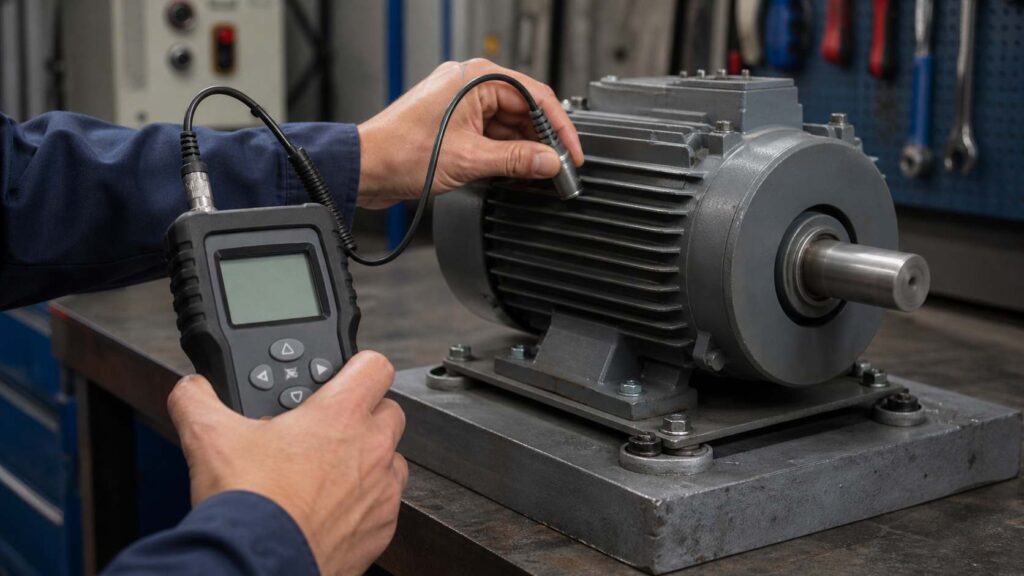
(Illustration: Technician using a vibration meter to inspect a running motor.)
The service life of a brushed DC motor can often be significantly increased through proper operating practices.
Recommended practices include:
These simple measures can greatly improve reliability while reducing maintenance costs.
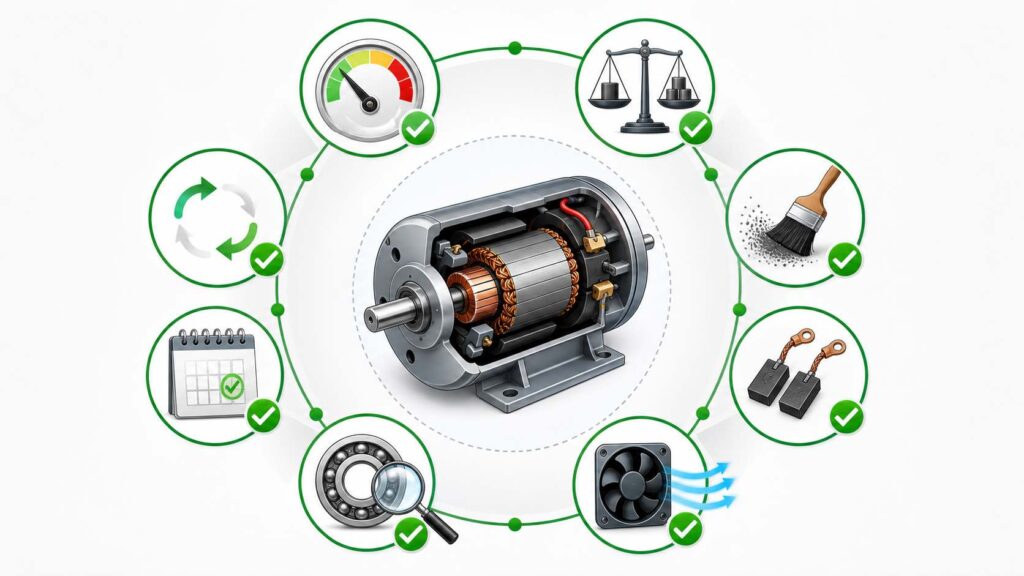
(Illustration: Infographic showing best practices for extending the service life of a brushed DC motor.)
Two maintenance strategies are commonly used.
Maintenance is performed at scheduled intervals before failures occur.
Advantages include:
Maintenance is performed only after a failure occurs.
Although this approach reduces routine maintenance costs, it increases the risk of unexpected equipment downtime.
For industrial applications, preventive maintenance is generally the preferred strategy.
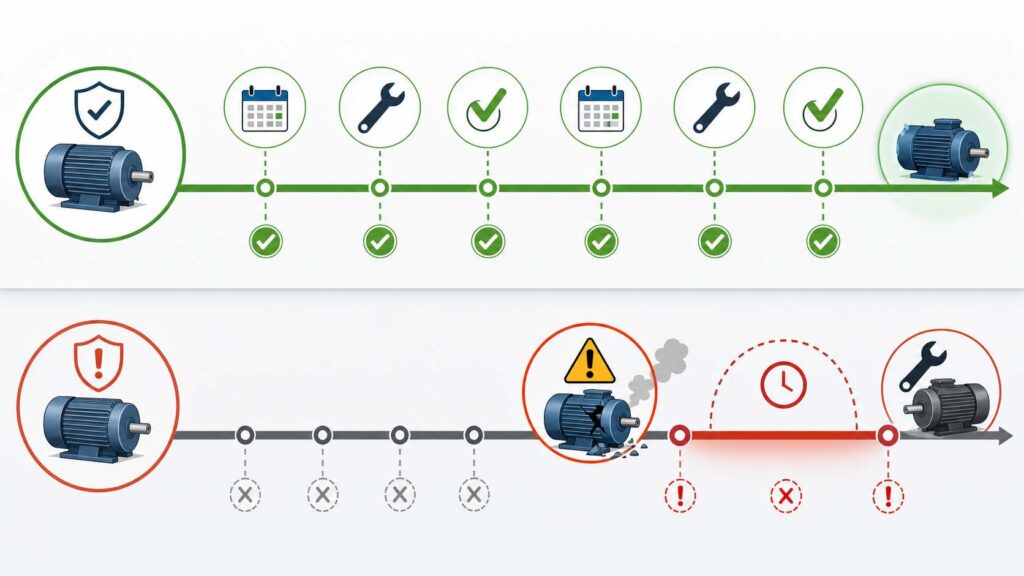
(Illustration: Timeline comparing preventive maintenance with corrective maintenance.)
Many users assume that brush replacement marks the end of a motor’s life.
In fact, replacing worn brushes is a normal maintenance procedure.
If the armature, bearings, and commutator remain in good condition, replacing the brushes can restore normal operation and significantly extend the motor’s usable life.
For this reason, brush wear should be viewed as a routine maintenance item rather than a motor failure.