Our Location
304 North Cardinal St.
Dorchester Center, MA 02124

304 North Cardinal St.
Dorchester Center, MA 02124
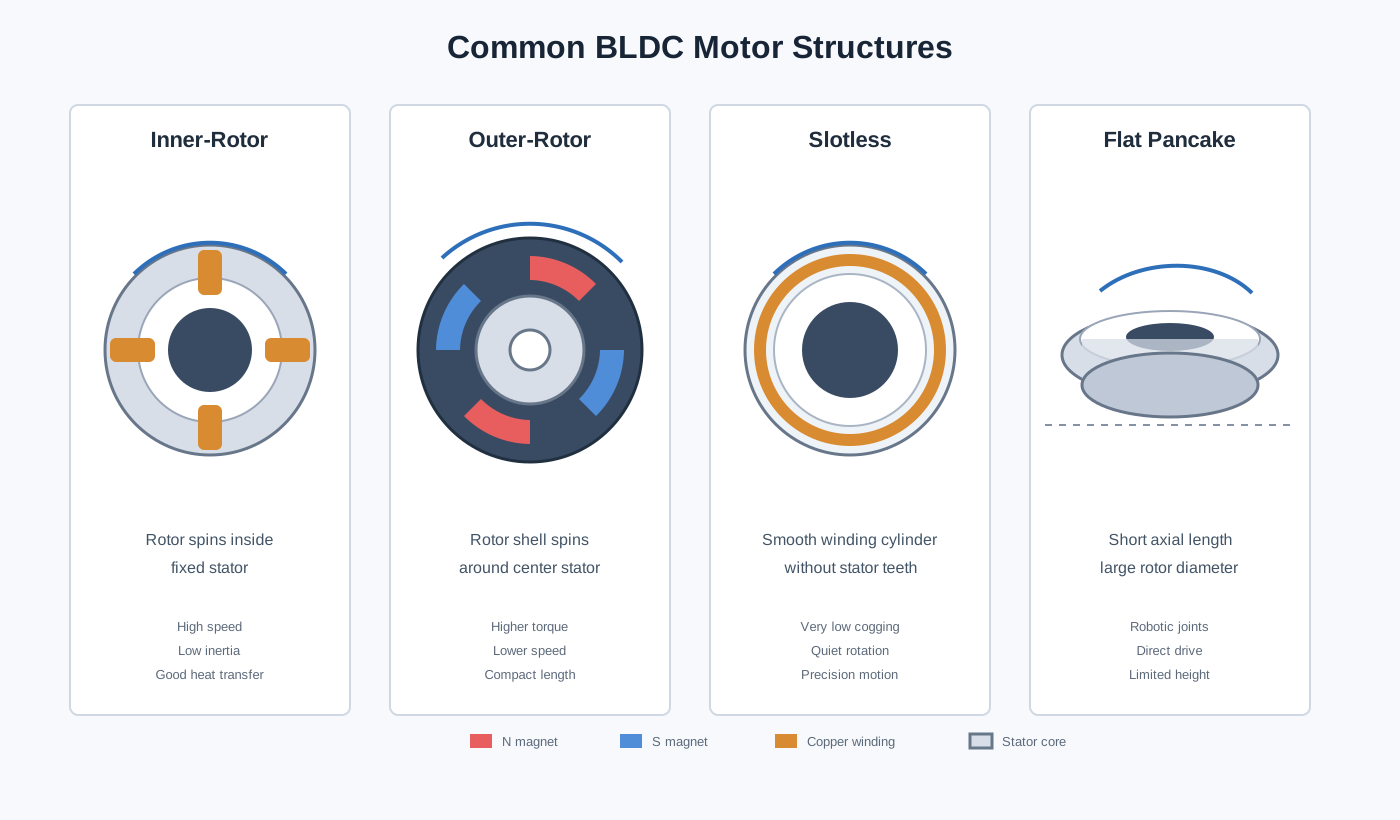
Although all brushless DC motors operate on the same basic principle, their mechanical structures can vary significantly depending on the application. The original article introduces several common motor configurations to help readers understand why different BLDC motors look and perform differently.
(Illustration: Comparison of several common BLDC motor structures, including inner-rotor, outer-rotor, slotless, and flat (pancake) motors.)
As introduced earlier, BLDC motors are generally divided into inner-rotor (inrunner) and outer-rotor (outrunner) designs.
However, the differences extend beyond the location of the rotor—they also affect cooling, inertia, torque characteristics, and application suitability.
In an inner-rotor motor:
These characteristics make inner-rotor motors ideal for applications requiring high speed and precise dynamic control.
Typical examples include:
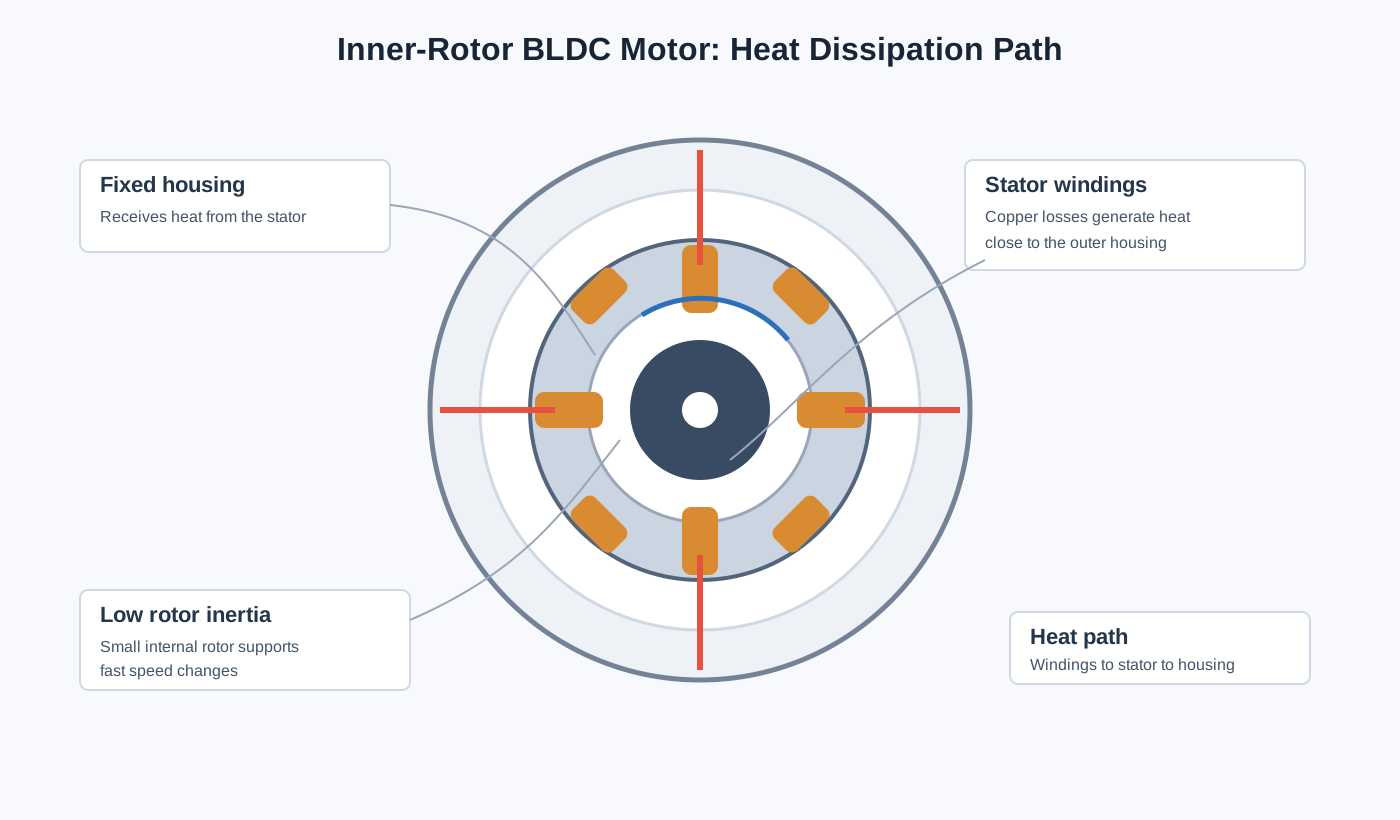
(Illustration: Cross-sectional view of an inner-rotor BLDC motor with arrows indicating the heat dissipation path from the stator to the housing.)
In an outer-rotor motor:
Because the rotor has a larger diameter, the motor naturally produces higher torque.
Advantages include:
Outer-rotor motors are widely used in:
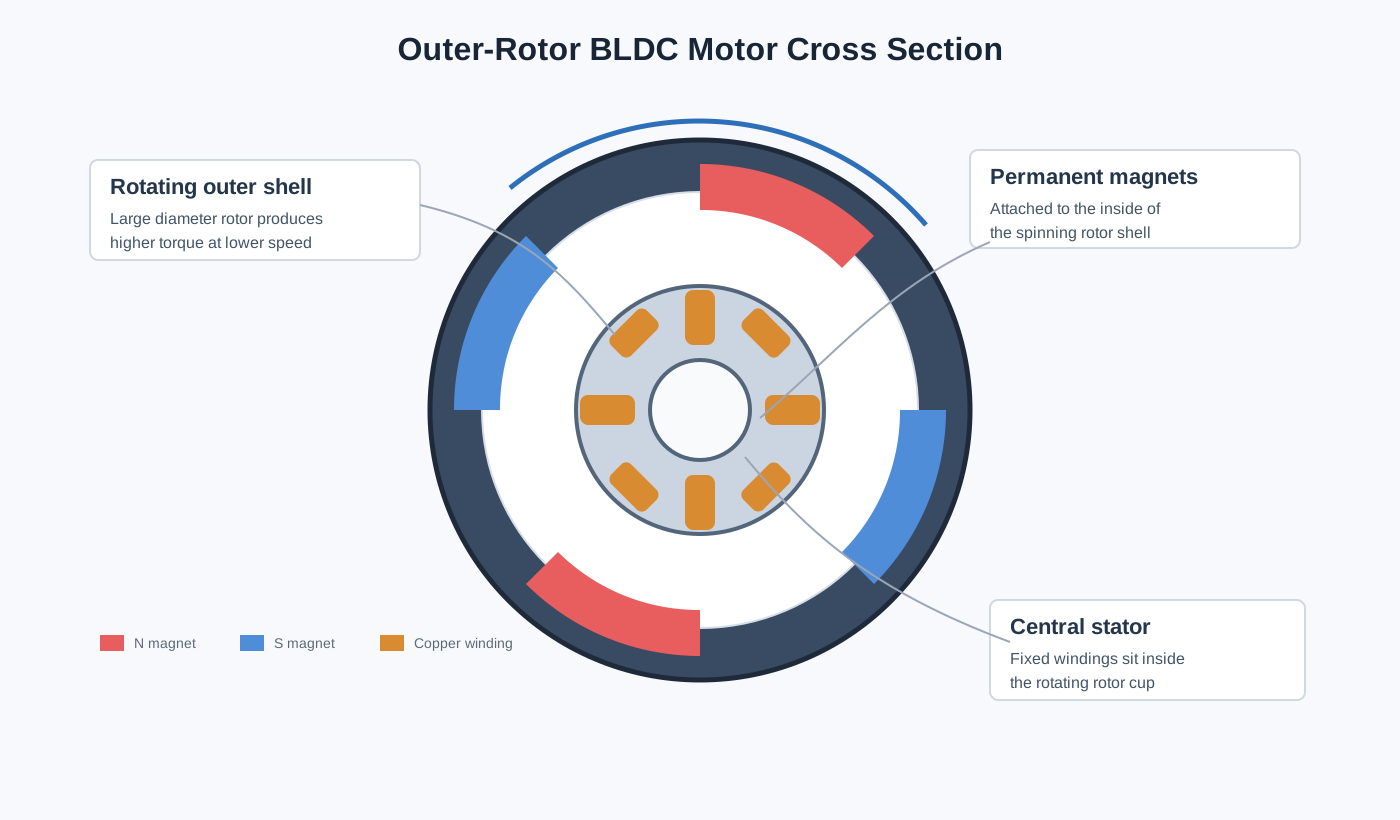
(Illustration: Cross-sectional view of an outer-rotor BLDC motor showing the rotating outer shell and centrally mounted stator.)
Another important structural difference is the design of the stator.
Most commercial BLDC motors use a slotted stator, where copper windings are placed inside slots in the laminated steel core.
Advantages include:
However, the interaction between the rotor magnets and stator teeth can create cogging torque, which may cause slight torque ripple at very low speeds.
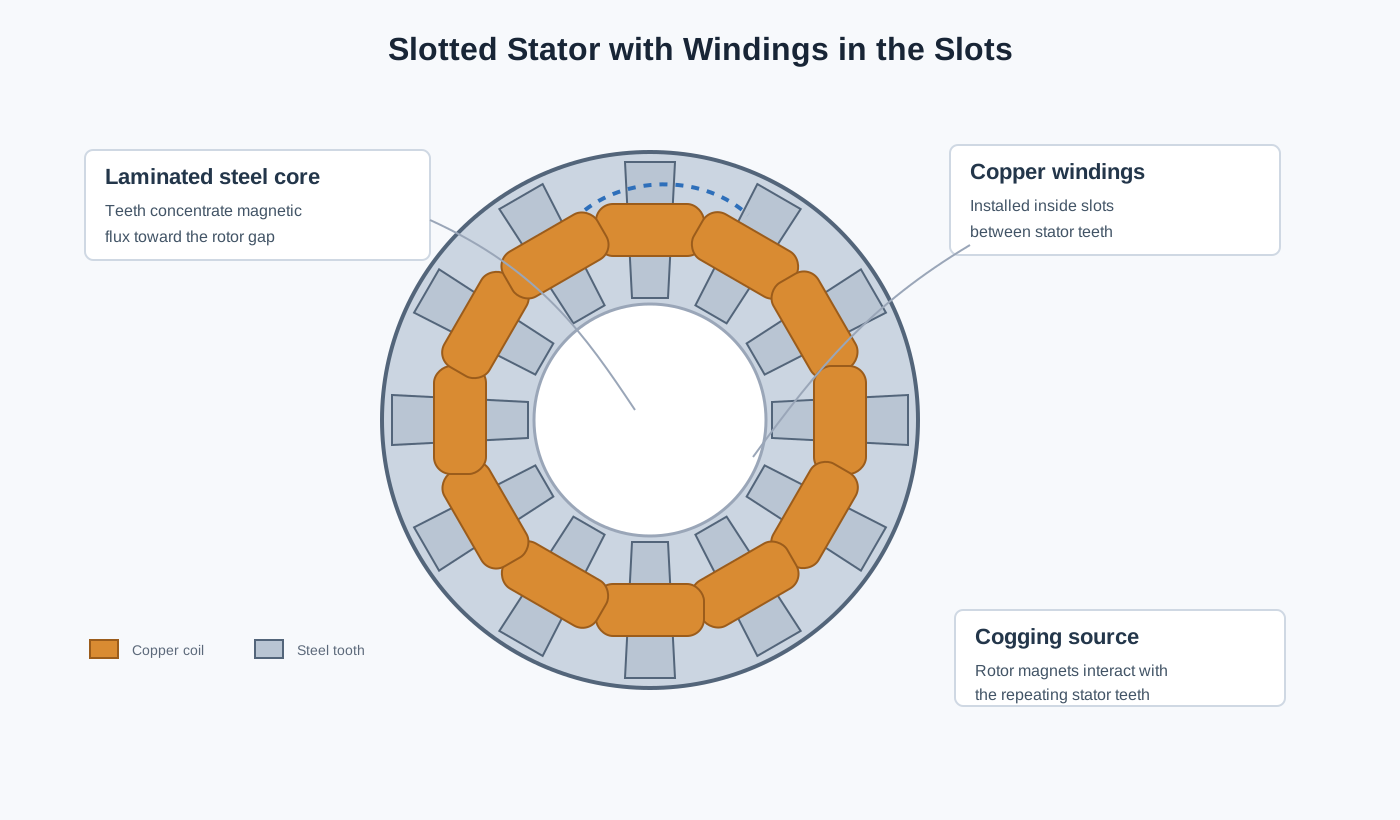
(Illustration: Close-up of a slotted stator with copper windings installed inside the stator slots.)
In a slotless motor, the windings are not placed inside teeth. Instead, they are arranged in a smooth cylindrical structure.
Compared with slotted motors, slotless motors provide:
Their disadvantages include:
For these reasons, slotless motors are commonly used in high-precision applications such as medical instruments, aerospace equipment, and precision motion-control systems.
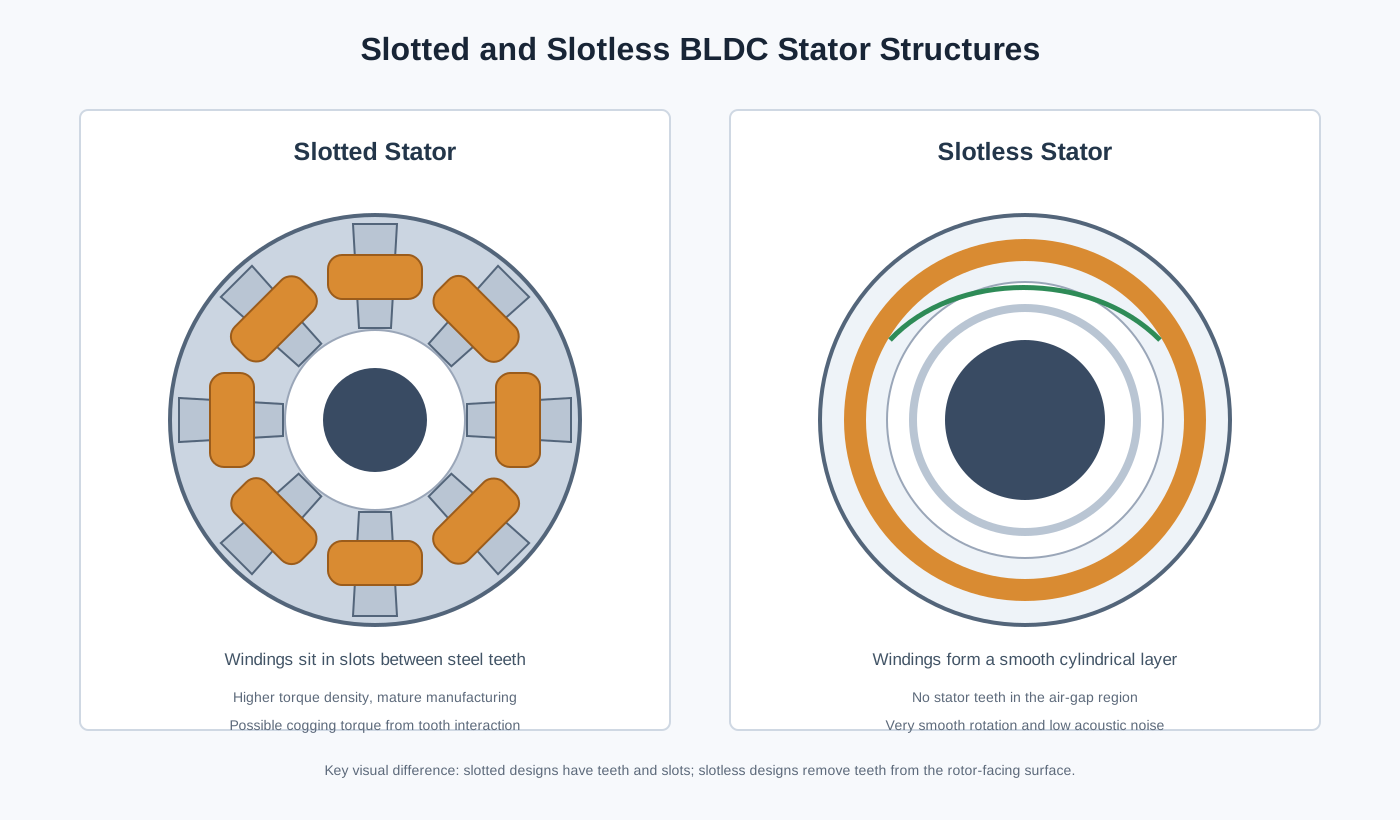
(Illustration: Comparison of slotted and slotless stator structures, highlighting the absence of stator teeth in the slotless design.)
Some applications require a motor with a very short axial length while maintaining a relatively large diameter.
In these cases, engineers often use flat motors, also known as pancake motors.
Compared with conventional cylindrical motors, pancake motors offer:
They are commonly found in:
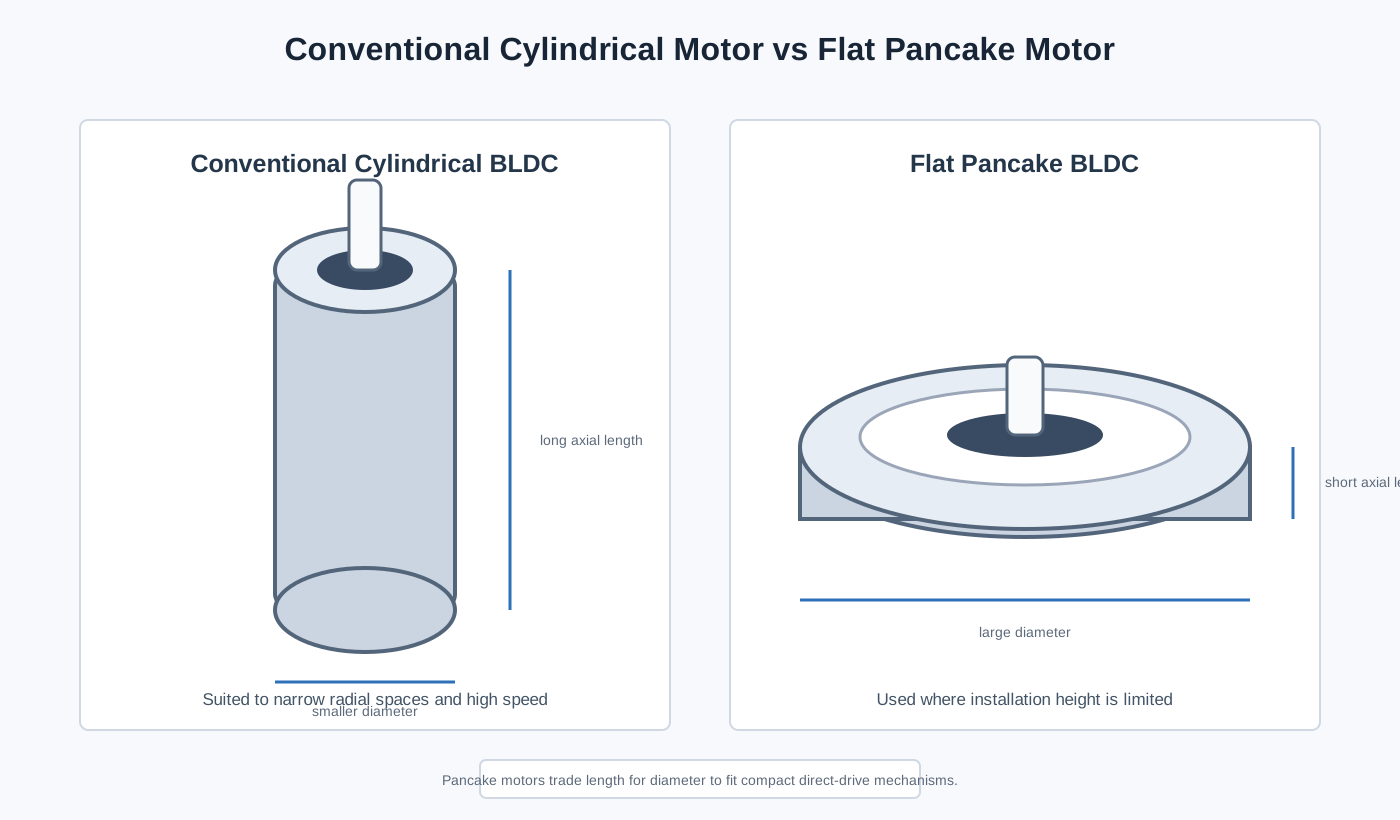
(Illustration: Comparison of a conventional cylindrical BLDC motor and a flat pancake-style BLDC motor.)
Depending on the application, a BLDC motor may be used either directly or together with a gearbox.
In a direct-drive system:
Direct-drive systems are commonly used where smooth motion, low maintenance, and high precision are required.
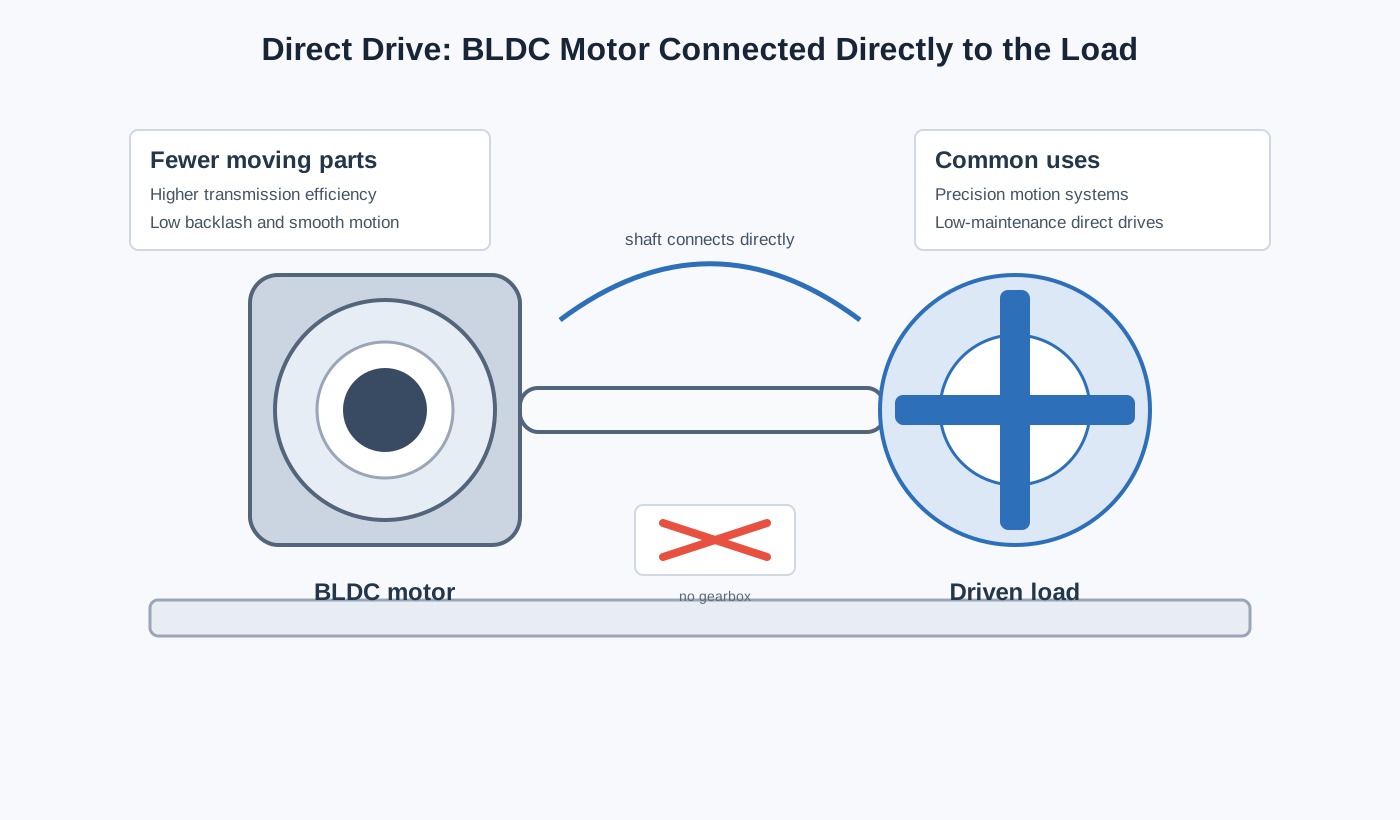
(Illustration: BLDC motor directly connected to a driven load without a gearbox.)
When higher output torque or lower output speed is required, a gearbox can be attached to the motor.
Common gearbox types include:
Adding a gearbox allows:
However, gearboxes also introduce:
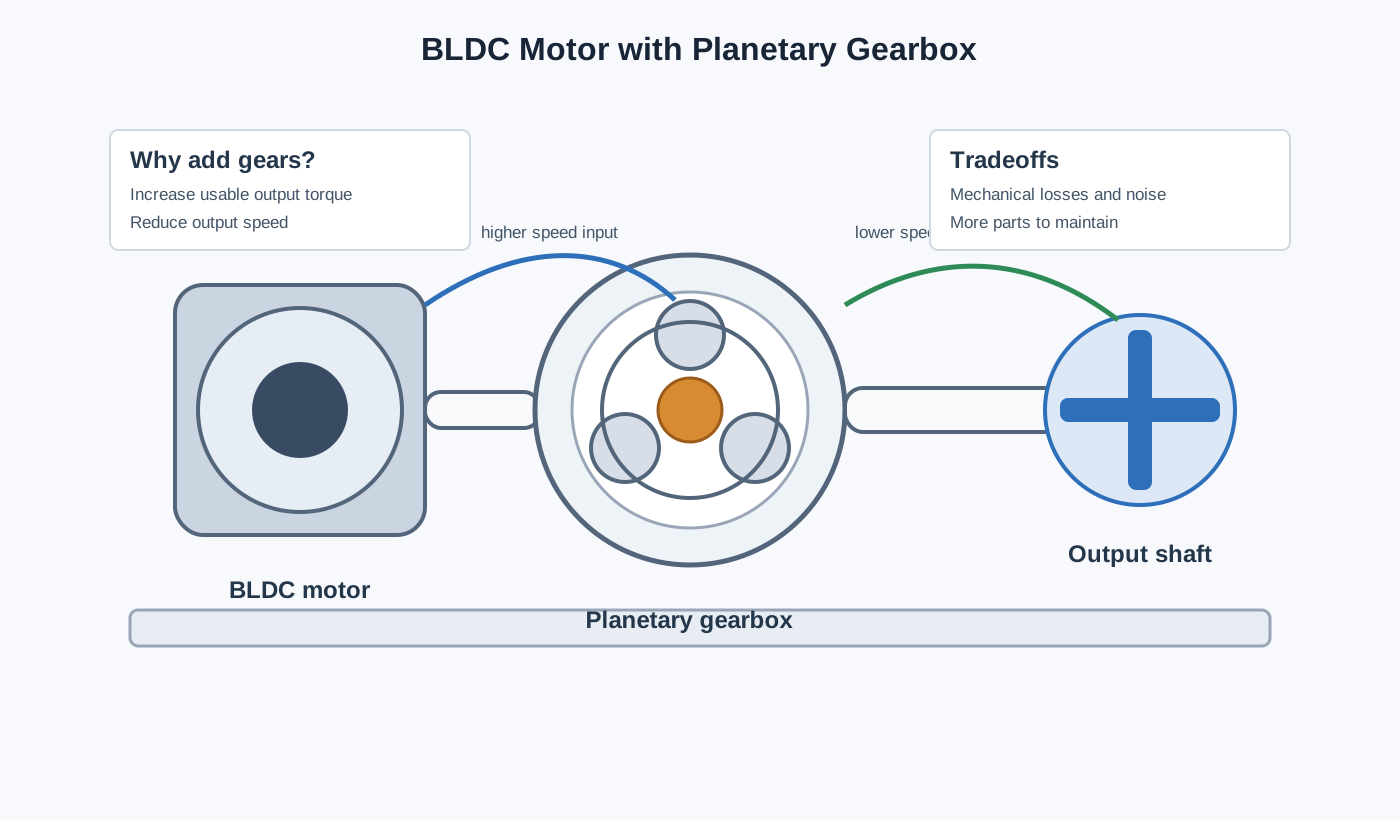
(Illustration: BLDC motor connected to a planetary gearbox driving an output shaft.)
As motor power increases, effective cooling becomes increasingly important.
Common cooling methods include:
Heat is dissipated through the motor housing without additional cooling devices.
Suitable for:
A cooling fan increases airflow around the motor housing, improving heat dissipation.
Suitable for:
High-power motors may use water or other coolant circulating through cooling channels.
Liquid cooling provides:
It is commonly used in electric vehicles and industrial servo systems.
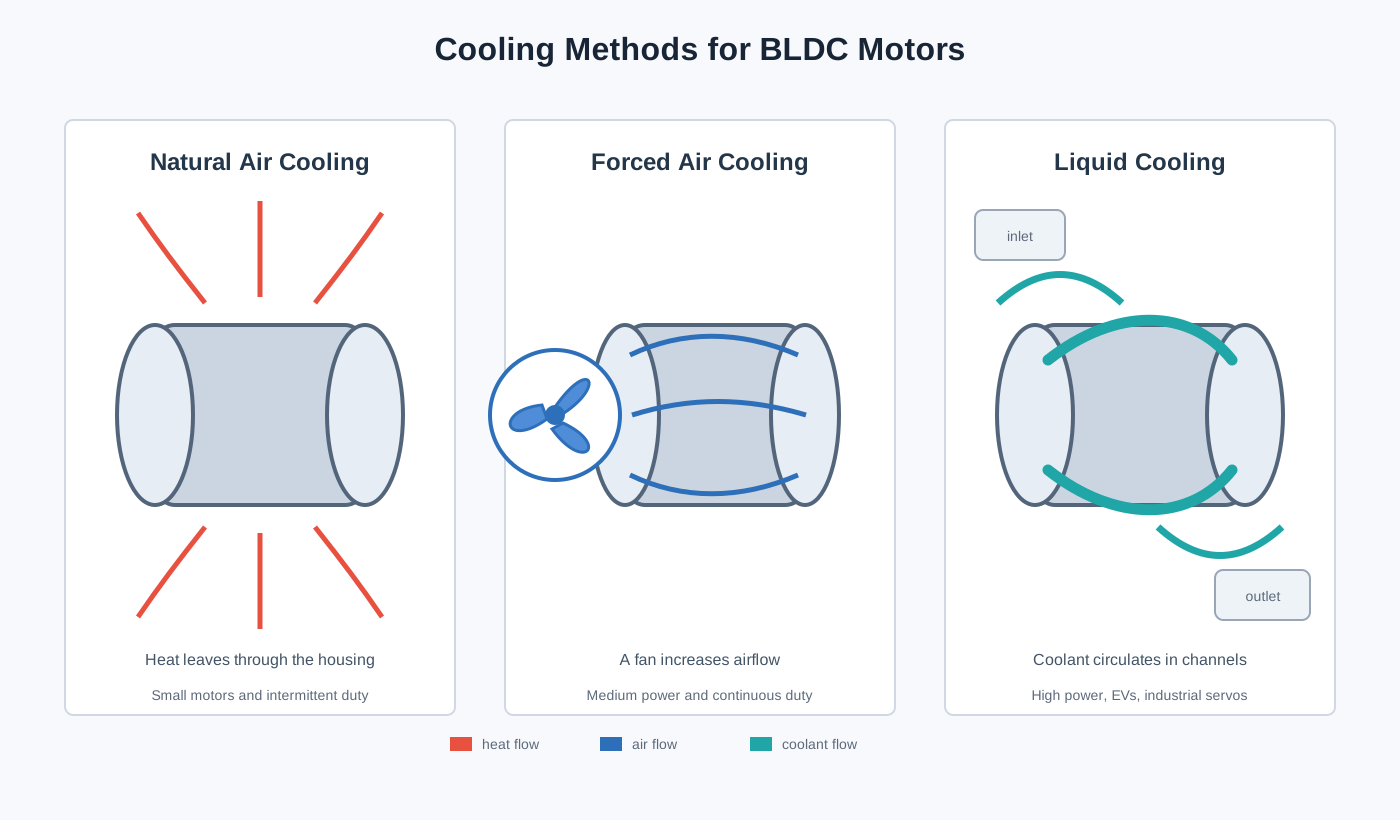
(Illustration: Comparison of natural air cooling, fan-assisted cooling, and liquid cooling for BLDC motors.)