Our Location
304 North Cardinal St.
Dorchester Center, MA 02124

304 North Cardinal St.
Dorchester Center, MA 02124
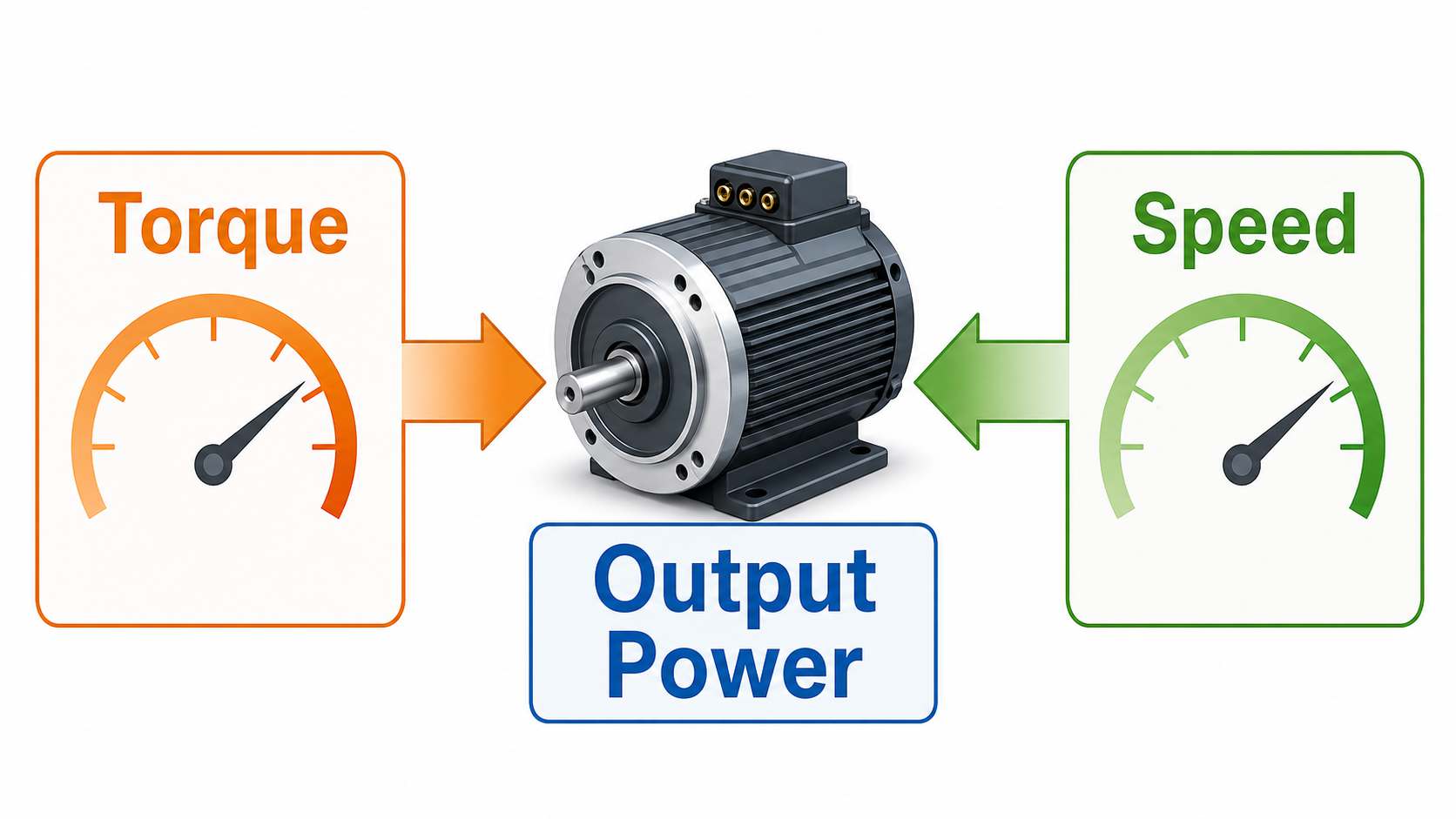
After understanding the construction and operating principle of a BLDC motor, the next step is learning how to read its specifications. Whether you are selecting a motor, comparing products, or evaluating performance, these parameters provide the information needed to determine whether a motor is suitable for a particular application.
The original article introduces many of these parameters separately. In this section, they have been reorganized into a more logical sequence while preserving the original content.
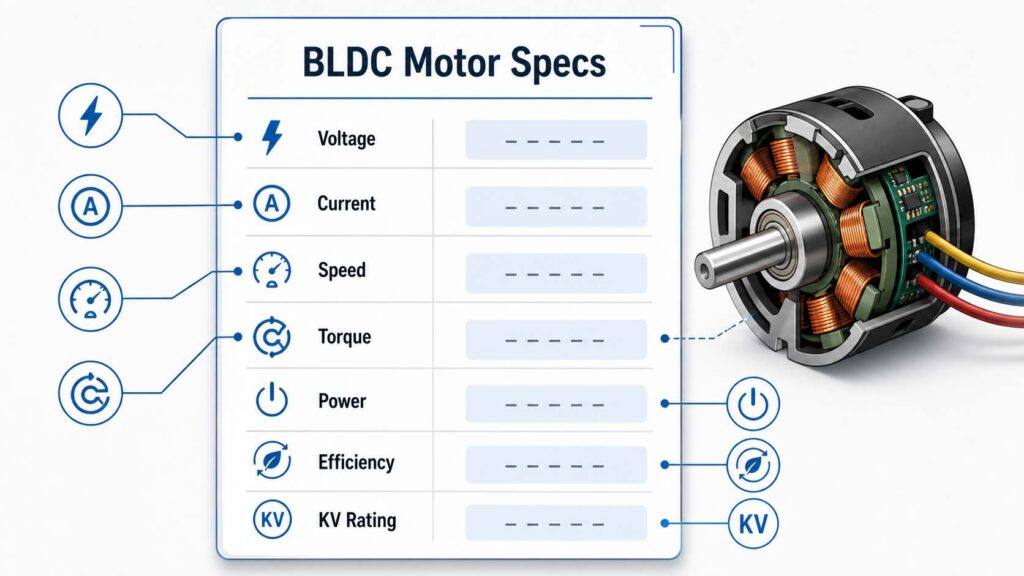
(Illustration: A BLDC motor specification sheet with the major performance parameters labeled, including voltage, current, speed, torque, power, efficiency, and KV rating.)
Rated voltage is the DC supply voltage at which the motor is designed to operate under normal conditions.
Common rated voltages include:
Larger industrial motors may use higher voltages depending on the application.
Operating the motor slightly above or below its rated voltage is often acceptable within the manufacturer’s specified limits. However, excessive voltage may result in:
For the best performance and reliability, the motor should be operated within its recommended voltage range.
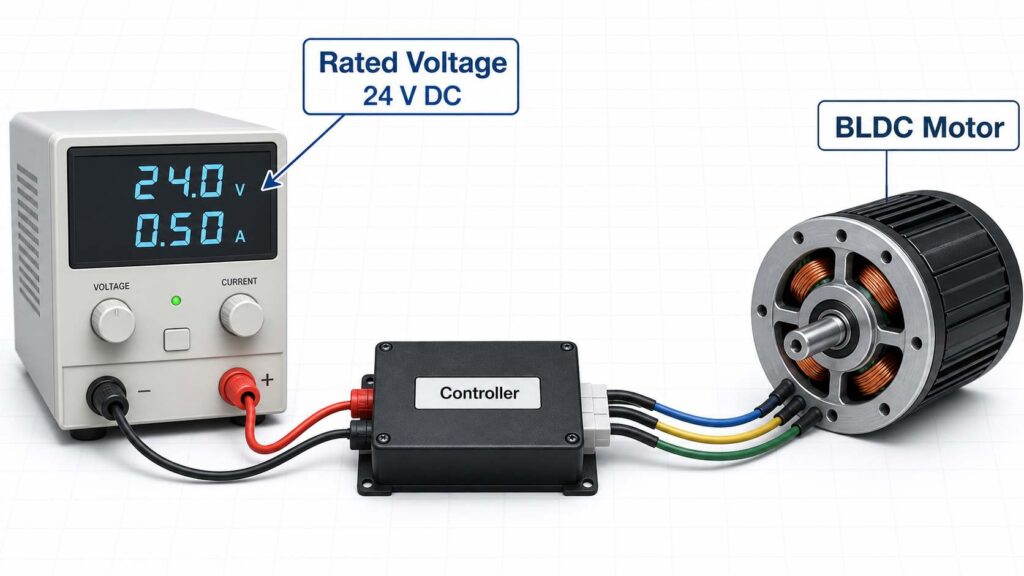
(Illustration: BLDC motor connected to a DC power supply, highlighting the rated operating voltage.)
Rated current is the amount of current the motor draws while operating continuously under its rated load.
It is determined by several factors, including:
Current consumption is not constant. As the load increases, the motor requires more torque, which in turn increases the current drawn from the power supply.
Selecting a power supply and motor controller with sufficient current capacity is essential for reliable operation.
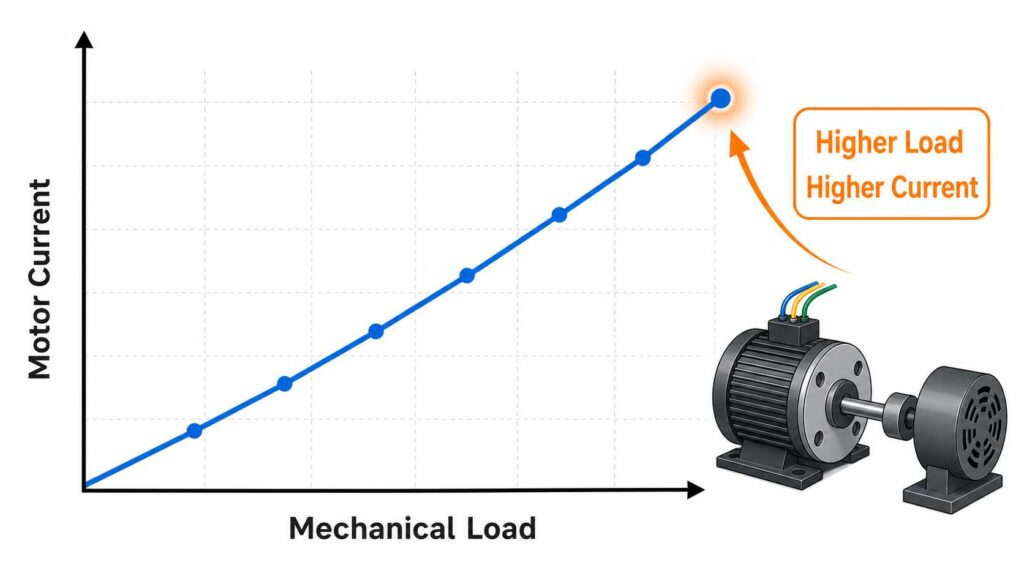
(Illustration: Graph showing motor current increasing as mechanical load increases.)
Motor speed is normally expressed in revolutions per minute (RPM).
Several speed values are commonly specified:
The rotational speed when the motor is running without any external load.
The speed at which the motor operates under its rated load and rated voltage.
The highest speed the motor can safely reach under specified operating conditions.
The actual operating speed depends on:
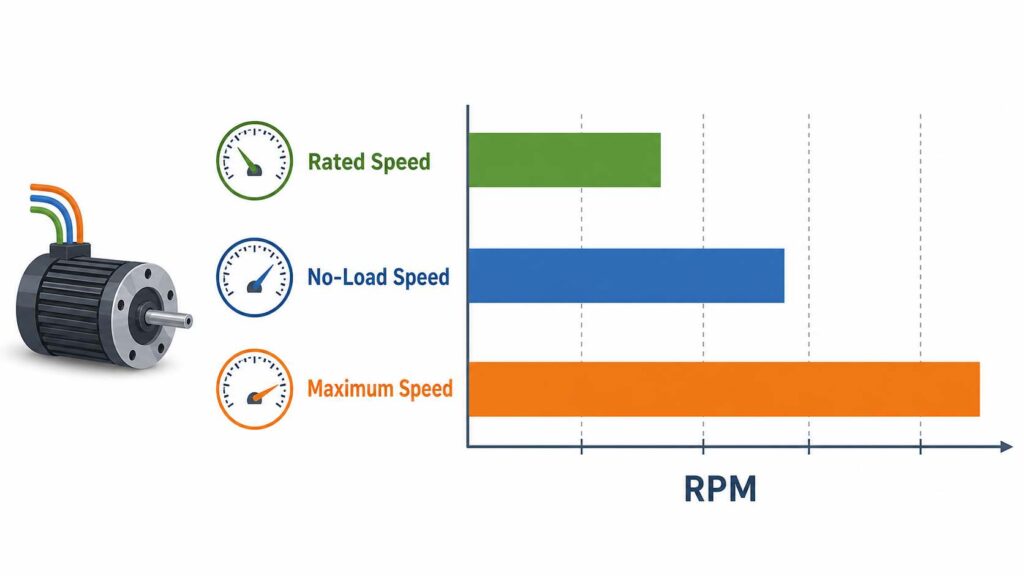
(Illustration: Speed comparison showing no-load speed, rated speed, and maximum speed on a single chart.)
Torque is the rotational force produced by the motor.
It is commonly expressed in:
Several torque values are frequently specified.
The continuous torque the motor can produce without exceeding its design temperature.
The torque produced when the motor starts from rest.
The maximum torque that can be produced for a short period without damaging the motor.
In general, torque increases with current. However, continuous operation at excessive current may cause overheating.
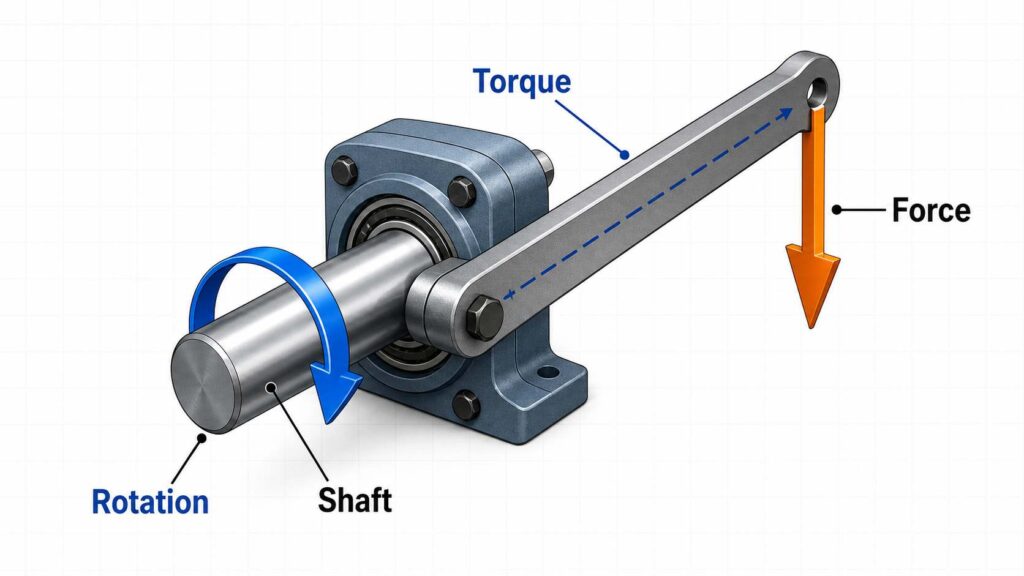
(Illustration: Diagram showing torque applied to a rotating shaft, with the force direction and rotation clearly indicated.)
Mechanical output power represents the useful mechanical energy delivered by the motor.
It depends on both speed and torque.
A motor producing high torque at very low speed may have similar output power to a motor producing lower torque at much higher speed.
Manufacturers usually specify:
These values help users compare motors designed for different applications.
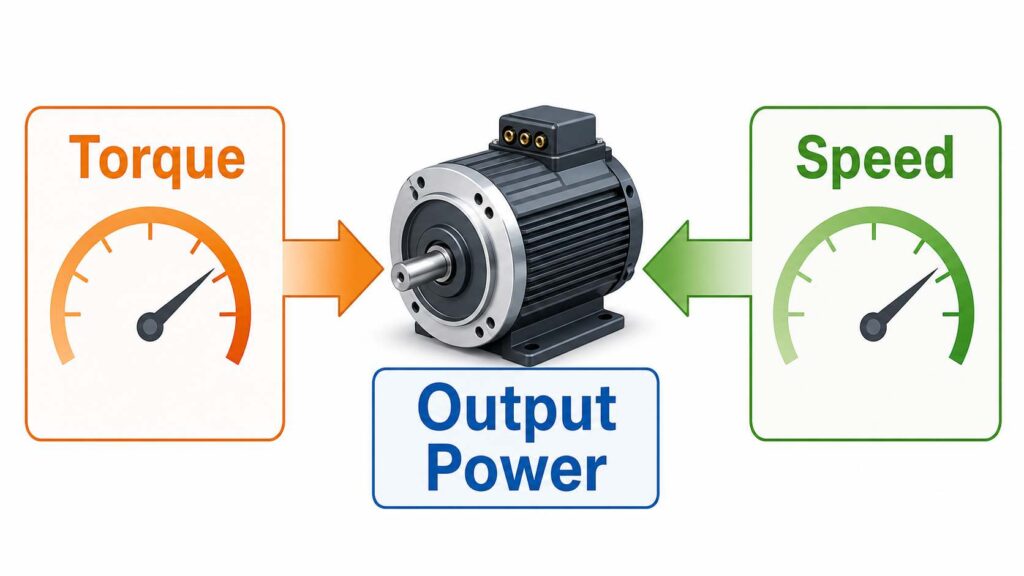
(Illustration: Relationship diagram showing that motor power depends on both torque and rotational speed.)
Motor efficiency describes how effectively electrical energy is converted into mechanical output.
It is defined as the ratio of useful mechanical power to electrical input power.
A higher efficiency means:
Motor efficiency varies with operating conditions and is usually highest near the rated load.
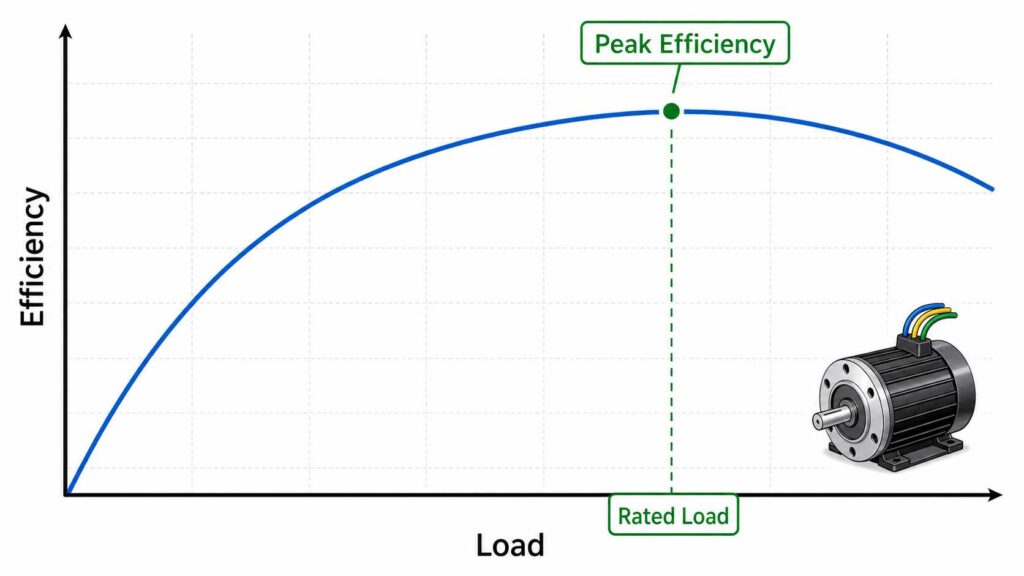
(Illustration: Efficiency curve showing how motor efficiency changes with increasing load.)
The original article spends considerable time explaining KV, which is one of the most misunderstood BLDC motor specifications.
KV represents the motor’s speed constant.
It indicates approximately how many revolutions per minute the motor will rotate for every volt applied under no-load conditions.
For example:
Under ideal no-load conditions:
No-load Speed ≈ KV × Applied Voltage
For example:
Approximate no-load speed:
≈ 12,000 RPM
This relationship is only an approximation because practical operating conditions introduce losses and load effects.
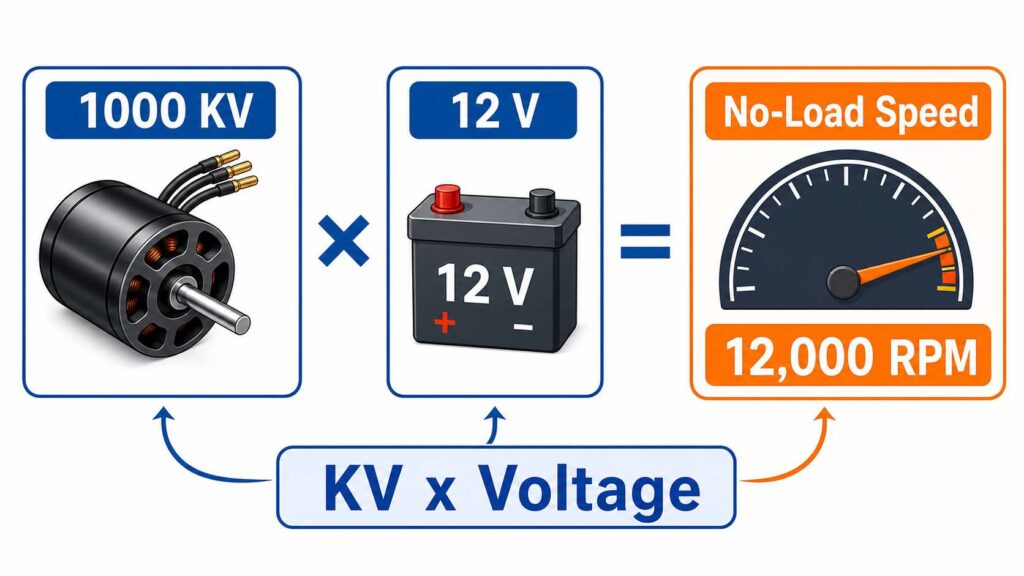
(Illustration: Example calculation showing how KV rating is used to estimate no-load speed.)
The original article correctly points out several misconceptions, which can be stated more clearly.
KV does not indicate motor power.
A higher KV motor is not necessarily more powerful.
KV does not indicate torque.
Motors with lower KV values generally produce higher torque per ampere, while higher KV motors are optimized for higher rotational speeds.
Choosing the appropriate KV value depends entirely on the intended application.
For example:
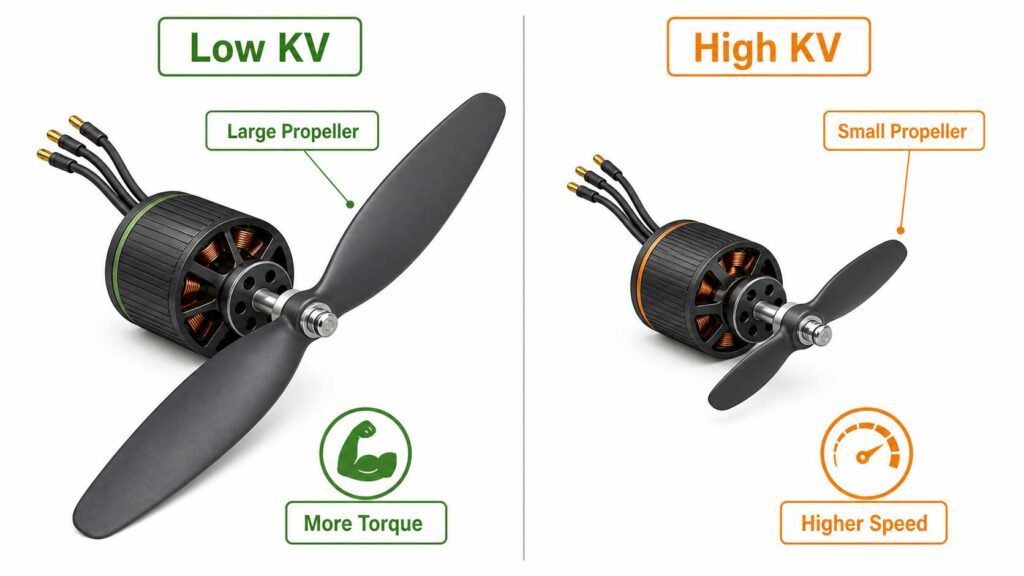
(Illustration: Comparison of two motors with different KV ratings driving different propeller sizes.)
Some applications require continuous operation, while others involve only short operating periods.
Manufacturers often classify motors according to their duty cycle.
Typical duty conditions include:
Operating beyond the intended duty cycle may cause excessive heating and reduce motor life.
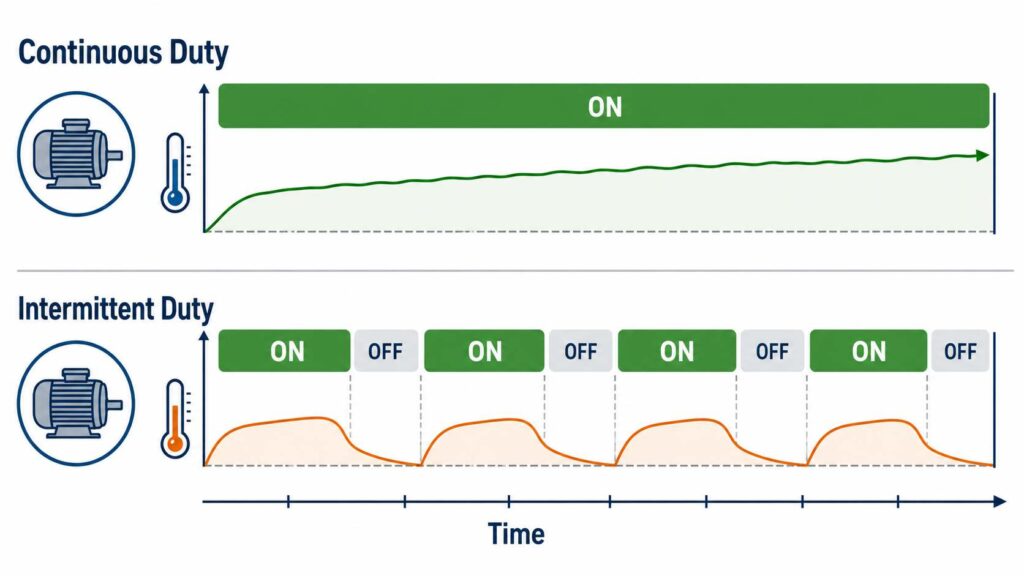
(Illustration: Timeline comparing continuous-duty operation with intermittent-duty operation.)
Whenever a motor operates, some electrical energy is converted into heat.
Temperature rise depends on several factors:
Excessive temperature may lead to:
For this reason, proper thermal management is an important consideration in motor selection.
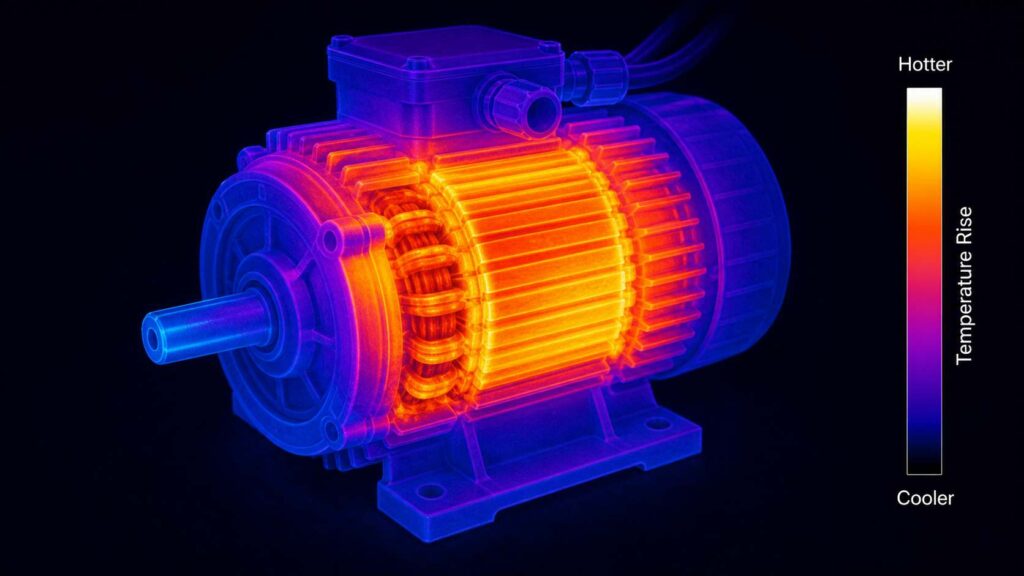
(Illustration: Thermal image of a BLDC motor showing the typical temperature distribution during operation.)