Our Location
304 North Cardinal St.
Dorchester Center, MA 02124

304 North Cardinal St.
Dorchester Center, MA 02124
Selecting the right brushed DC motor requires more than simply choosing a voltage or motor size.
Manufacturers provide a wide range of technical specifications that describe a motor’s electrical, mechanical, and thermal performance. Understanding these parameters is essential for comparing motors, interpreting datasheets, and selecting the best motor for a specific application.
Some specifications, such as voltage, speed, torque, and power, are common to almost all electric motors. Others—such as brush life and commutator wear—are particularly important for brushed DC motors because of their mechanical commutation system.
This chapter explains the most important brushed DC motor specifications and how they influence real-world performance.
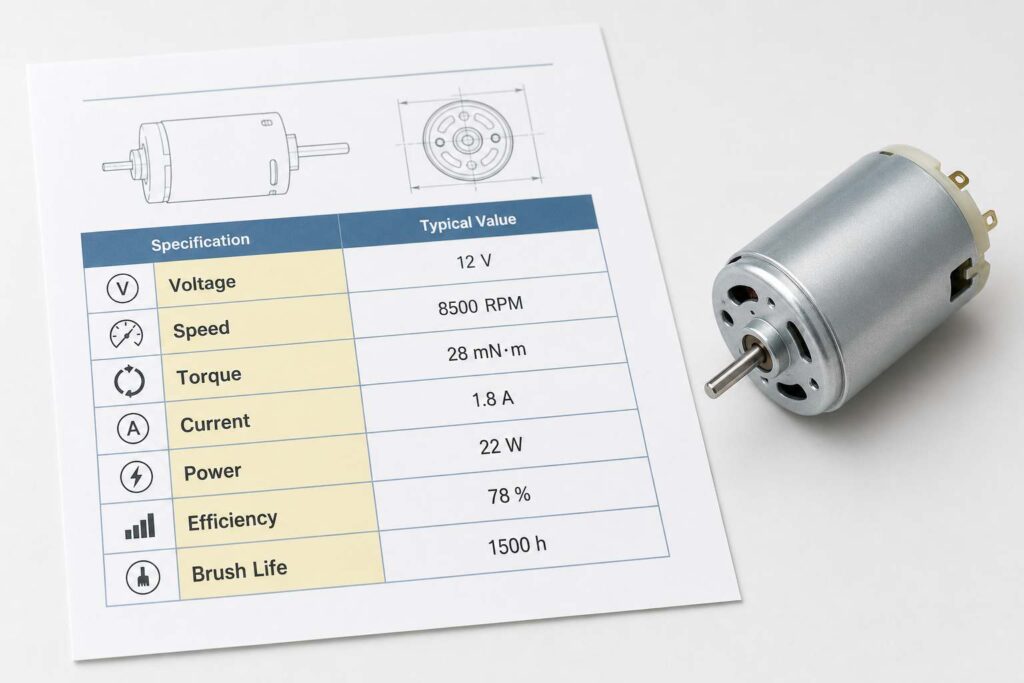
(Illustration: A brushed DC motor datasheet with key specifications such as voltage, speed, torque, current, power, efficiency, and brush life highlighted.)
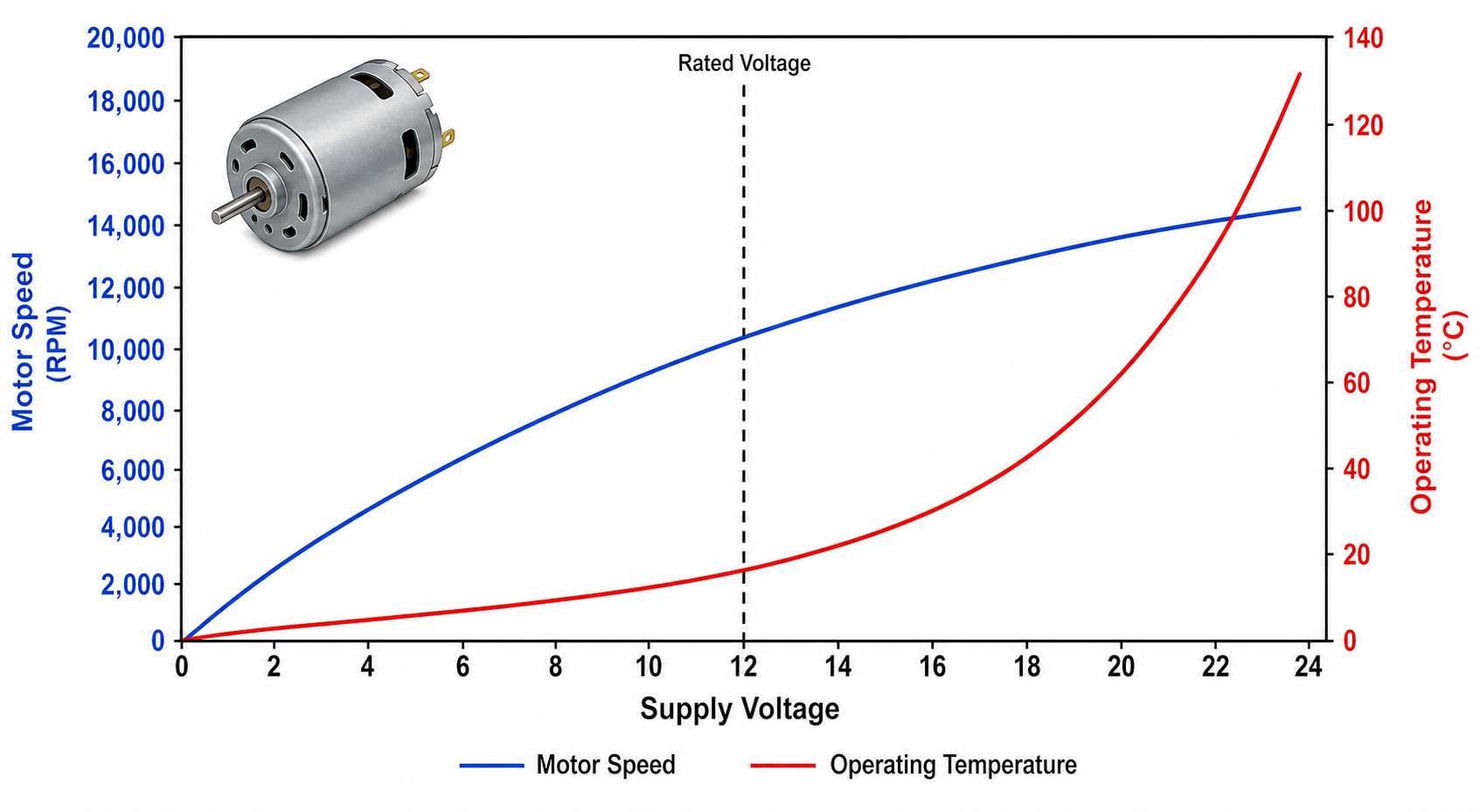
Rated voltage is the DC voltage at which the motor is designed to operate.
Common rated voltages include:
Operating the motor close to its rated voltage generally provides the best balance between performance, efficiency, and service life.
When supplied with a voltage below its rated value, the motor typically:
Excessive voltage may result in:
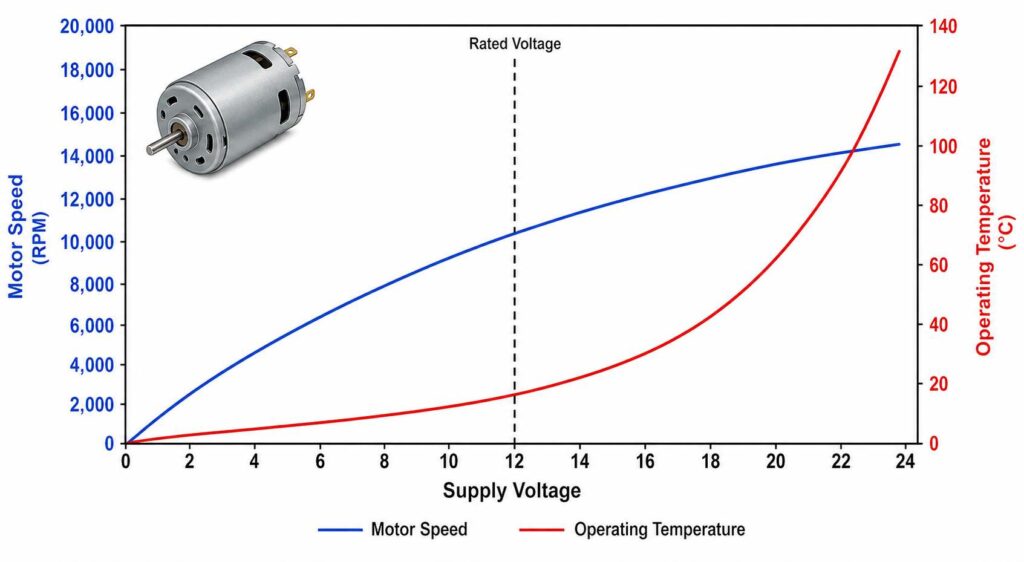
(Illustration: Graph showing the effect of supply voltage on motor speed and operating temperature.)
Motor speed is usually expressed in revolutions per minute (RPM).
Manufacturers commonly specify:
This is the speed when the motor operates without any external mechanical load.
It is typically the highest speed the motor can achieve at its rated voltage.
Rated speed is measured when the motor operates under its specified rated load.
This value better represents normal operating conditions than no-load speed.
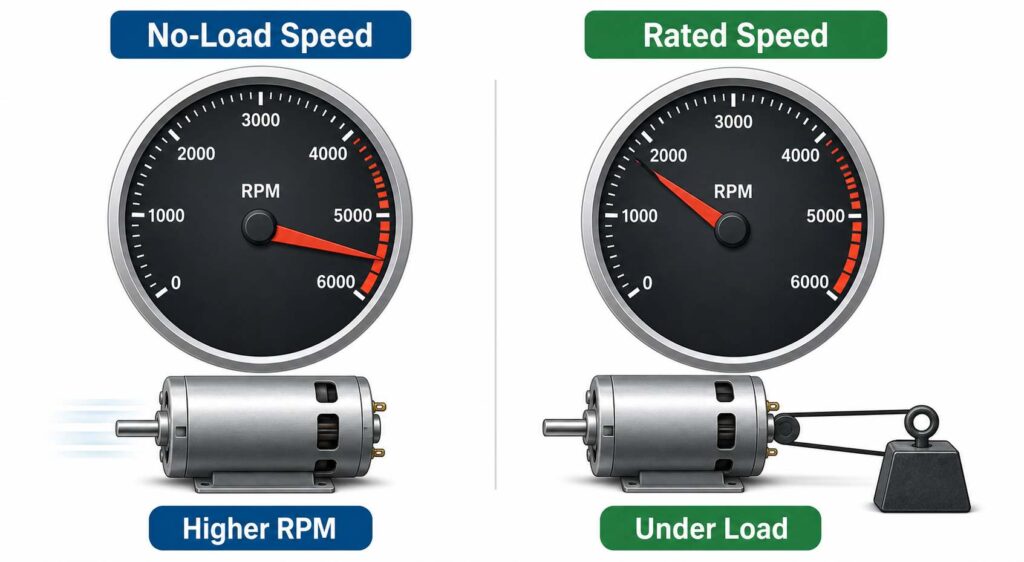
(Illustration: Speed comparison between no-load and rated operating conditions.)
Torque is the motor’s rotational force.
It determines how much load the motor can drive.
Common torque values include:
Also called locked-rotor torque, this is the torque produced when the motor starts from rest.
Brushed DC motors generally provide excellent starting torque.
Rated torque is the continuous torque the motor can deliver safely under normal operating conditions.
This is the most important torque value when selecting a motor.
Stall torque is the maximum torque produced when the shaft is prevented from rotating.
Although stall torque is useful for understanding motor capability, operating a motor in a stalled condition should generally be avoided because it results in extremely high current and rapid heating.
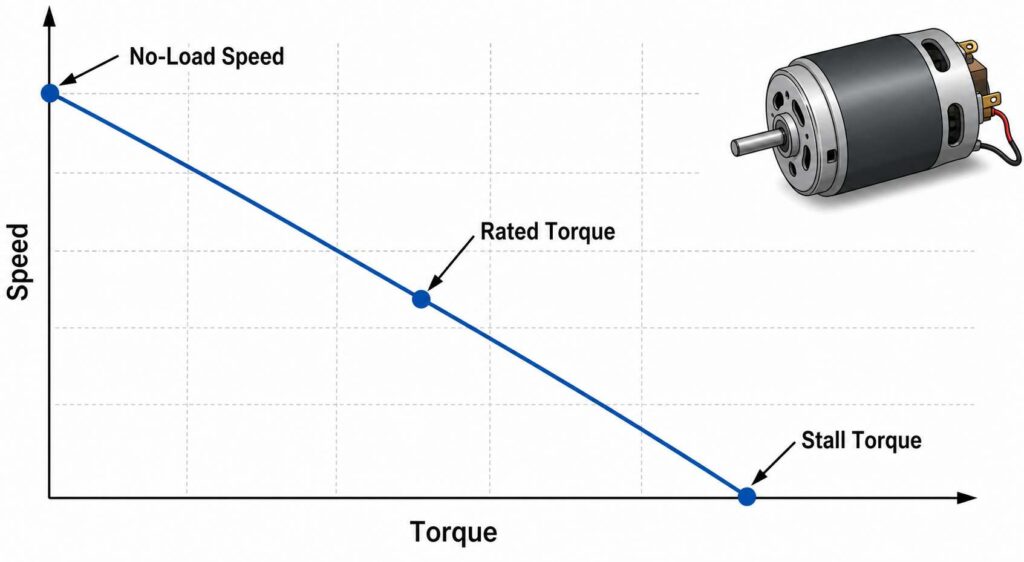
(Illustration: Speed–torque curve highlighting no-load speed, rated torque, and stall torque.)
Engineering Note:
Manufacturers may use different terminology, such as starting torque, stall torque, or locked-rotor torque. Always check the datasheet definitions before comparing motors.
Current represents the electrical current drawn by the motor.
Several current values are commonly specified.
The current consumed when the motor operates without an external load.
This current mainly overcomes:
The current drawn during normal operation under rated load.
The current drawn when the motor is prevented from rotating.
This is the highest current the motor can draw and is often several times greater than the rated current.
Continuous stall operation can quickly damage the motor due to excessive heat.
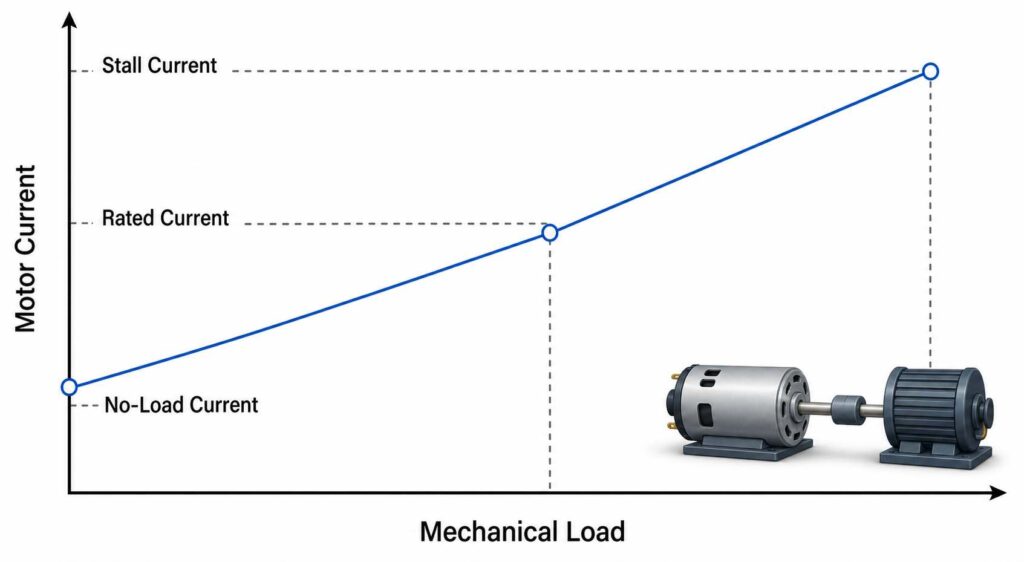
(Illustration: Graph showing current increasing as mechanical load increases.)
Motor output power describes the rate at which useful mechanical work is performed.
Mechanical output power depends on both:
A motor producing high torque at very low speed may deliver less power than a motor producing moderate torque at high speed.
For this reason, torque and speed should always be considered together rather than independently.
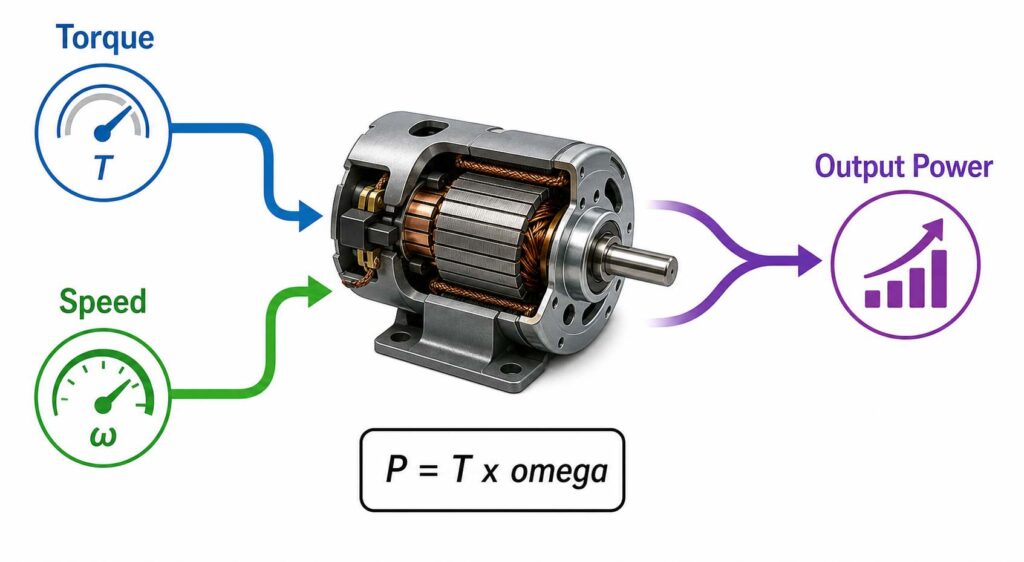
(Illustration: Diagram showing the relationship between torque, speed, and mechanical output power.)
Efficiency describes how effectively a motor converts electrical energy into mechanical output.
Some electrical energy is inevitably lost due to:
Because brushed motors include mechanical commutation, they generally have lower efficiency than comparable brushless motors.
Typical efficiency depends on motor size and design but often falls within the range of 60% to 85%.
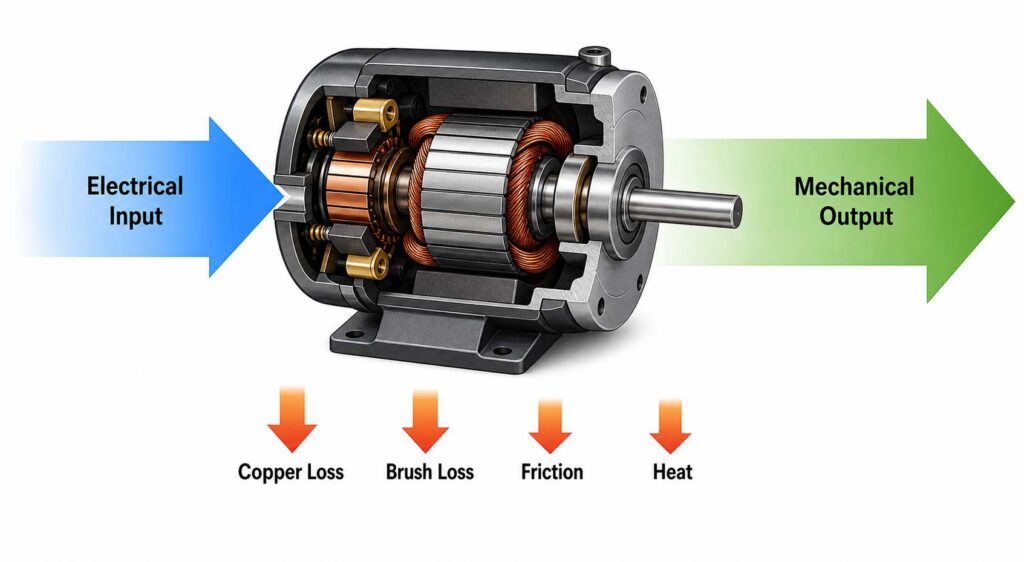
(Illustration: Energy flow diagram comparing electrical input, useful mechanical output, and energy losses.)
Duty cycle describes how long a motor operates relative to its rest period.
Common duty cycles include:
The motor operates continuously without exceeding its allowable temperature.
The motor operates for short periods followed by cooling intervals.
Many brushed DC motors are designed for intermittent operation.
Examples include:
Understanding the duty cycle is essential because overheating is often determined by operating time rather than instantaneous load.
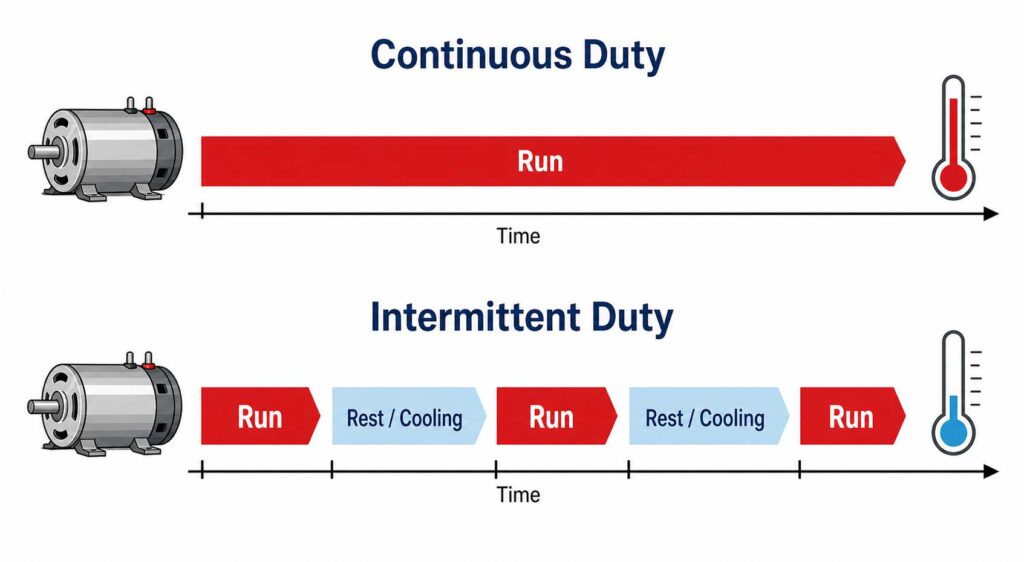
(Illustration: Timeline comparing continuous duty and intermittent duty operation.)
Brush life is a specification unique to brushed motors.
It represents the expected operating life of the carbon brushes before replacement becomes necessary.
Brush life depends on factors such as:
Applications involving frequent starts, stops, or overloads typically shorten brush life.
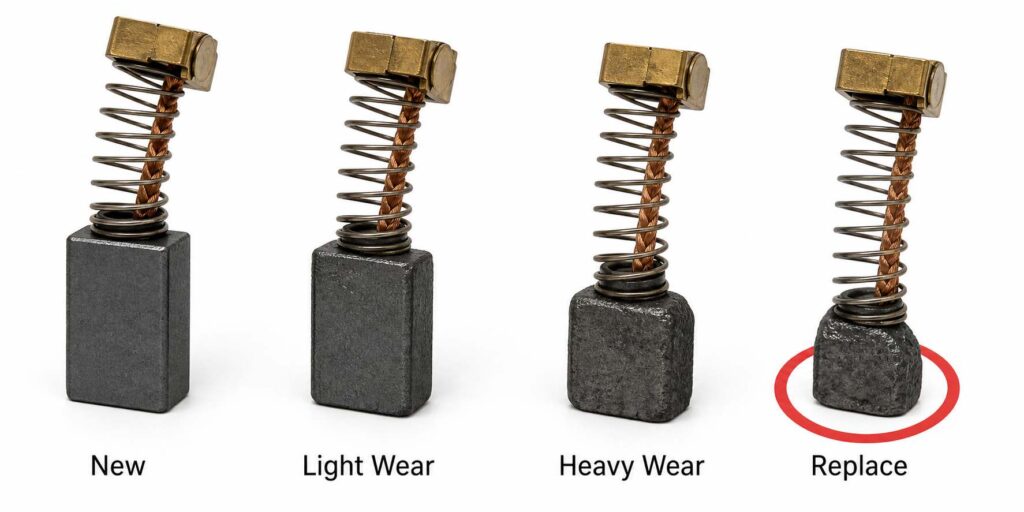
(Illustration: Carbon brushes at different stages of wear, from new to replacement condition.)
The commutator is also a wear component.
Over time, repeated contact with the brushes can result in:
Regular inspection helps ensure reliable motor operation and prolongs service life.
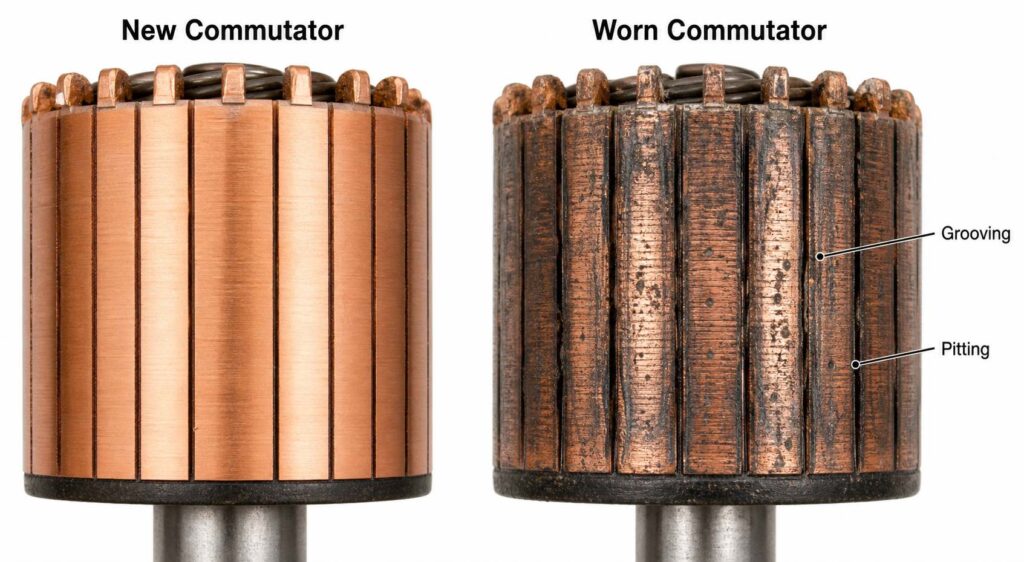
(Illustration: Comparison of a new commutator and a worn commutator surface.)
Every brushed DC motor has a recommended operating temperature range.
Excessive temperature can lead to:
Proper cooling and avoiding prolonged overload conditions are important for maintaining reliable operation.
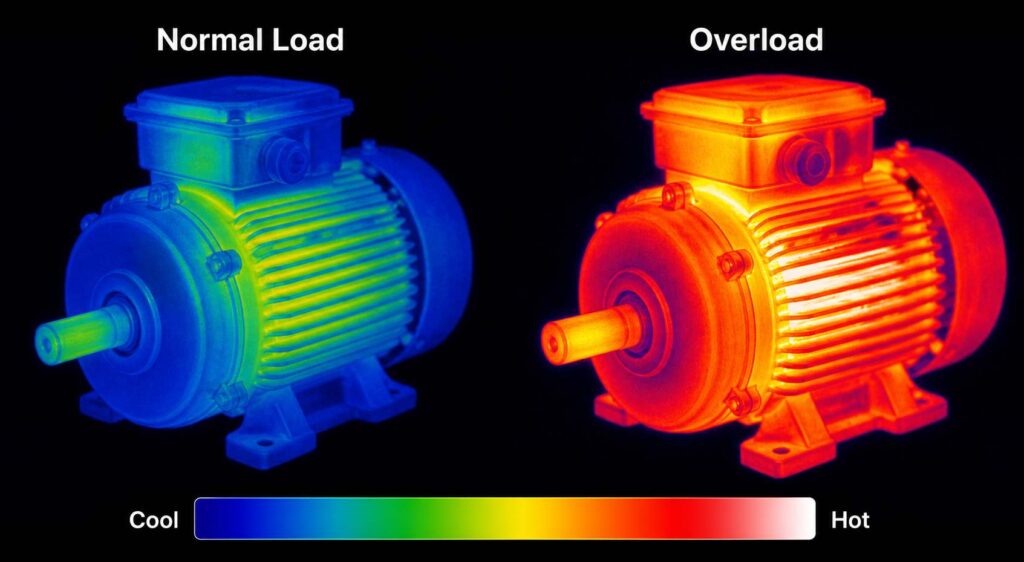
(Illustration: Thermal image of a brushed DC motor under normal and overloaded operating conditions.)
When evaluating a motor datasheet, focus first on the specifications that directly affect your application.
These typically include:
Comparing motors using only one specification—such as speed or power—can lead to poor selection decisions.
A complete evaluation considers the motor as a system rather than focusing on a single parameter.
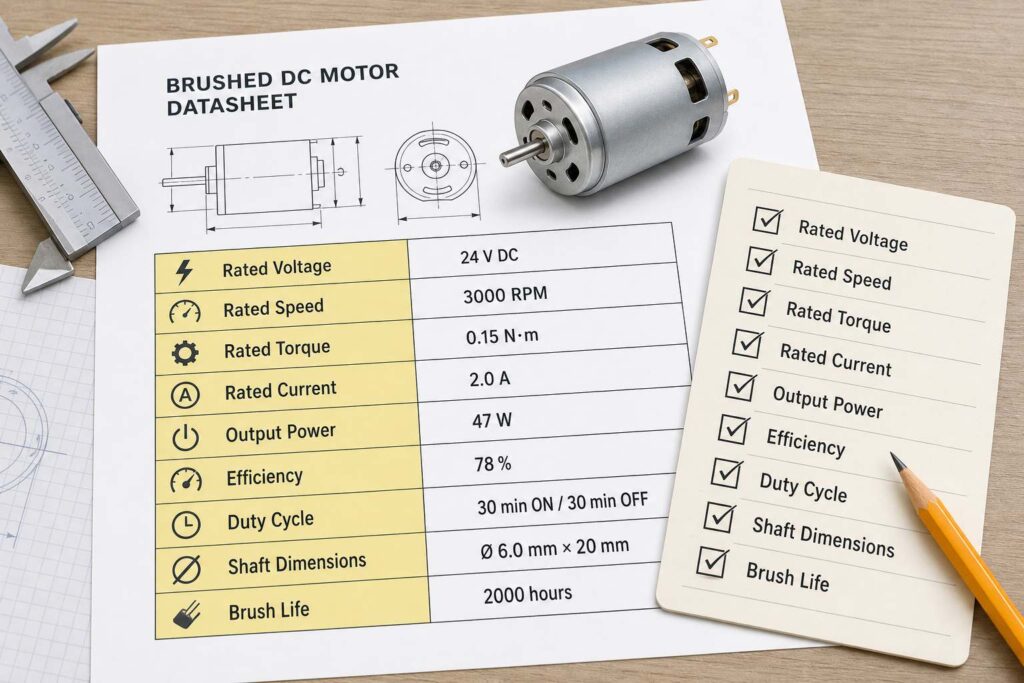
(Illustration: Sample datasheet with the most important specifications highlighted for selection.)
One of the most common mistakes when selecting a brushed DC motor is comparing no-load speed instead of rated operating performance.
A motor may advertise a very high no-load speed, but once connected to a real mechanical load, its speed decreases while current and temperature increase.
For engineering applications, rated operating conditions provide a much more meaningful basis for comparison than maximum or no-load values.