Our Location
304 North Cardinal St.
Dorchester Center, MA 02124

304 North Cardinal St.
Dorchester Center, MA 02124
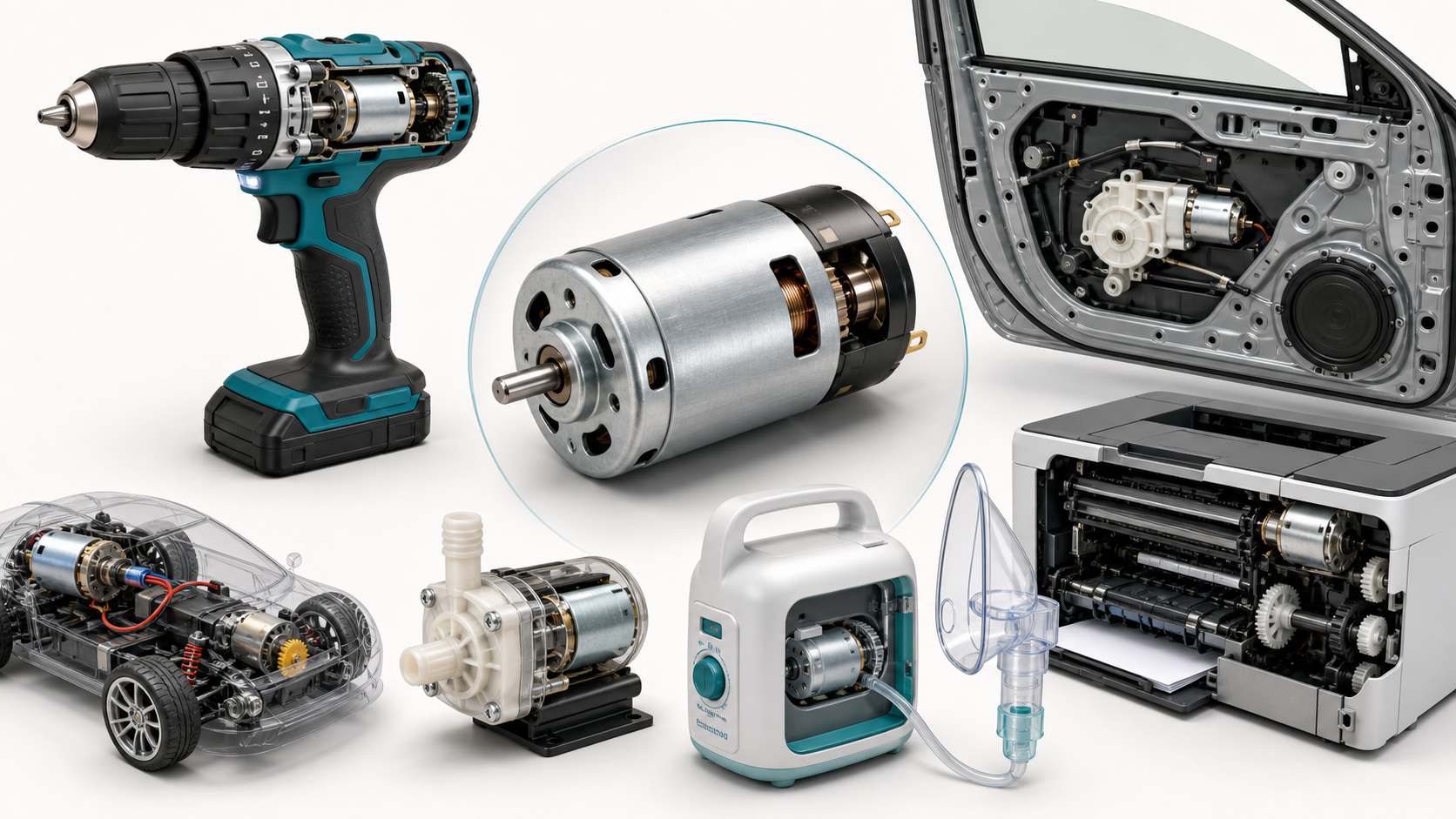
Despite the rapid growth of Brushless DC (BLDC) motors, brushed DC motors remain one of the most widely used motor technologies in the world.
Their combination of low cost, simple control, compact size, and high starting torque makes them an ideal solution for countless electromechanical systems.
Today, brushed DC motors can be found in consumer electronics, automotive systems, industrial equipment, medical devices, office machines, and many other applications.
Rather than replacing brushed motors entirely, modern engineers select the most appropriate motor technology based on application requirements such as operating life, maintenance, efficiency, and system cost.
This chapter explores the most common applications of brushed DC motors and explains why they continue to be chosen across a wide range of industries.
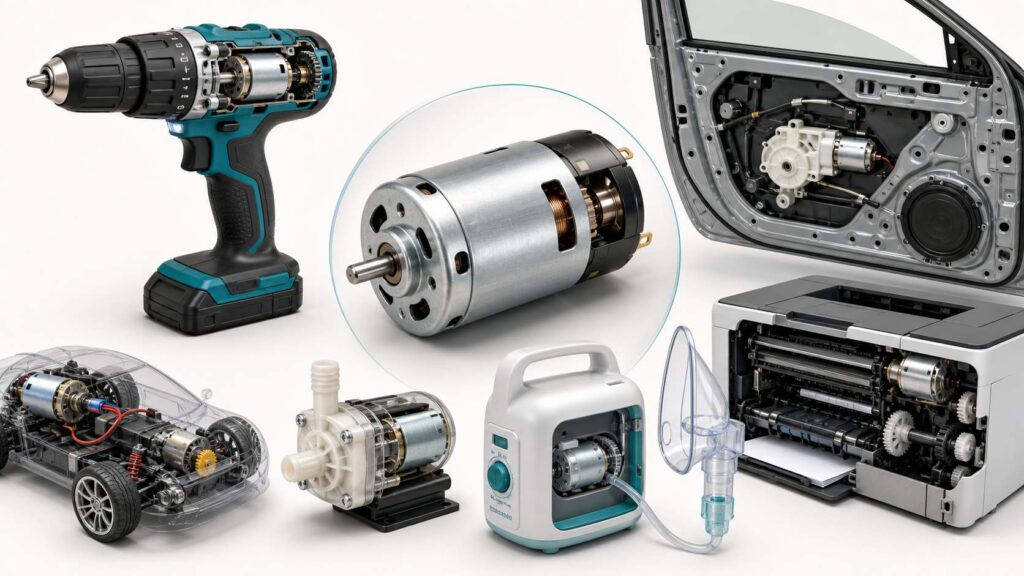
(Illustration: A collage showing various products powered by brushed DC motors, including power tools, automotive systems, toys, pumps, medical devices, and office equipment.)
Brushed DC motors continue to be popular because they offer several practical advantages:
For products that operate intermittently or have moderate service-life requirements, these advantages often outweigh the higher efficiency and longer life offered by brushless motors.
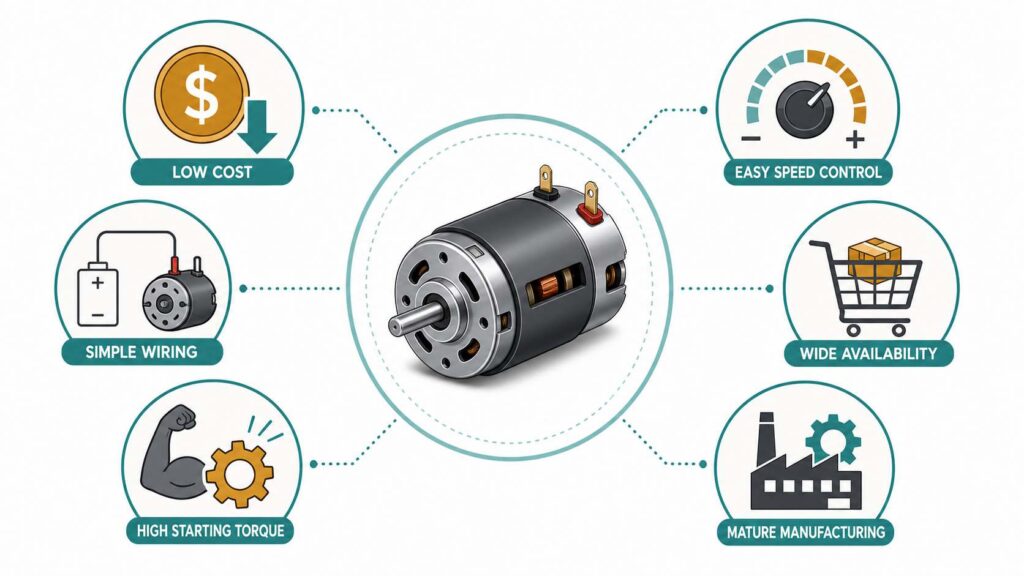
(Illustration: Infographic summarizing the key reasons why brushed DC motors remain widely used.)
The automotive industry is one of the largest users of brushed DC motors.
Many vehicle functions require motors that operate only for a few seconds at a time, making brushed motors an economical and reliable solution.
Common automotive applications include:
Because these systems operate intermittently, brush wear is generally not a major concern over the vehicle’s lifetime.
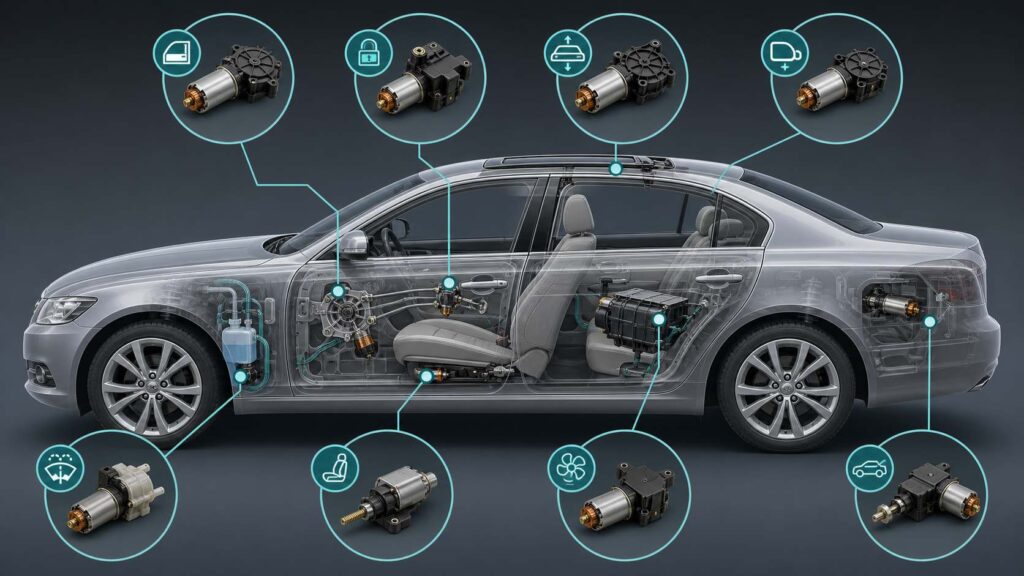
(Illustration: Diagram of a passenger vehicle highlighting locations where brushed DC motors are commonly used.)
Many portable power tools use brushed DC motors because they provide:
Typical products include:
Although premium cordless tools increasingly use brushless motors, brushed motors remain common in entry-level and cost-sensitive products.
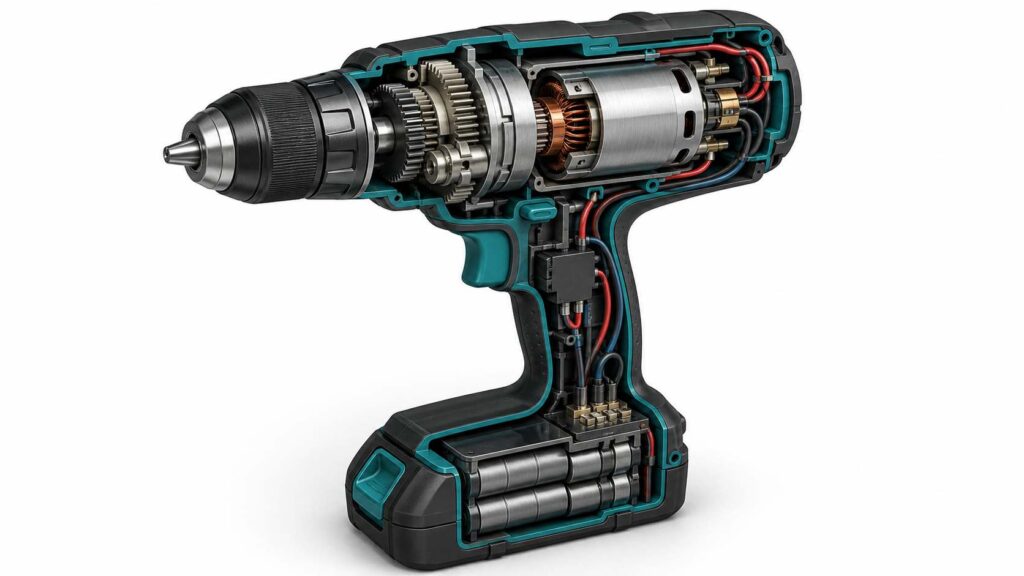
(Illustration: A cordless drill with a cutaway view showing the brushed DC motor inside.)
Brushed DC motors continue to power many household appliances.
Examples include:
These applications generally require compact motors with good speed characteristics and reasonable production costs.
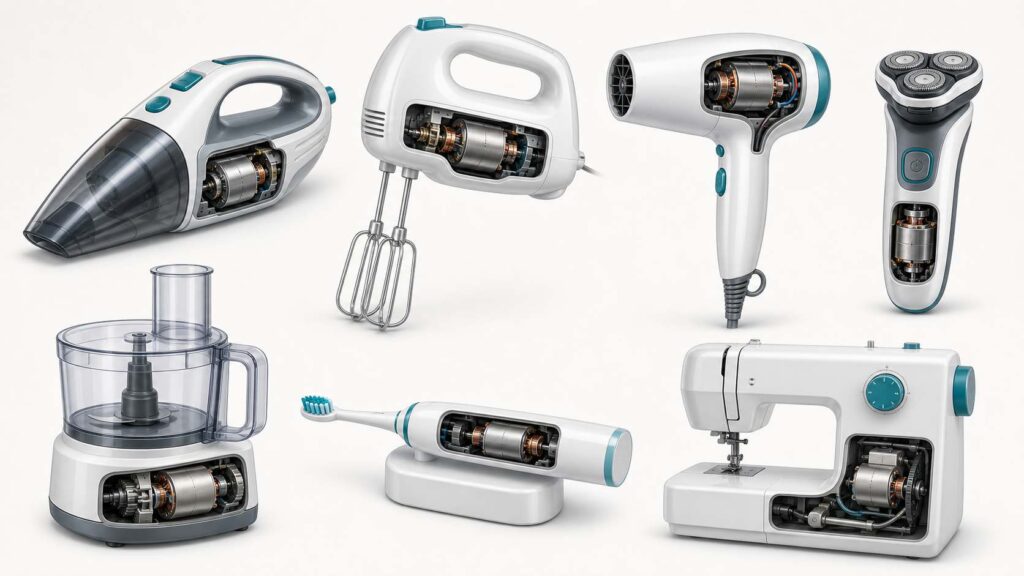
(Illustration: Various household appliances that use brushed DC motors.)
One of the largest markets for miniature brushed DC motors is the toy industry.
Their low cost and simple operation make them ideal for battery-powered products.
Examples include:
Many of these products require only simple forward and reverse control without sophisticated motor controllers.
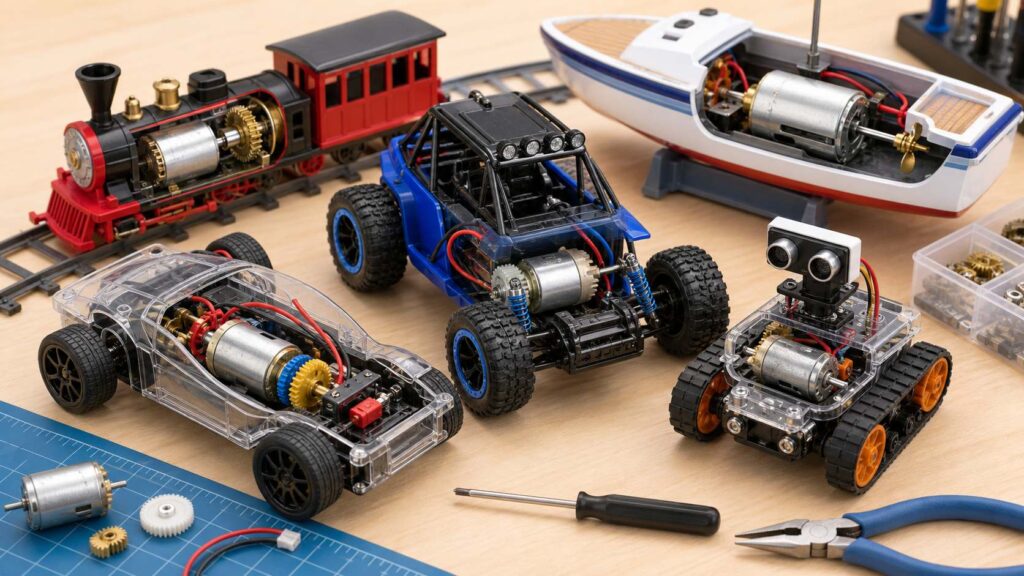
(Illustration: Miniature brushed DC motors installed in toy cars and hobby models.)
Office automation products have relied on brushed DC motors for decades.
Typical applications include:
Brushed motors provide reliable intermittent operation while keeping equipment costs low.
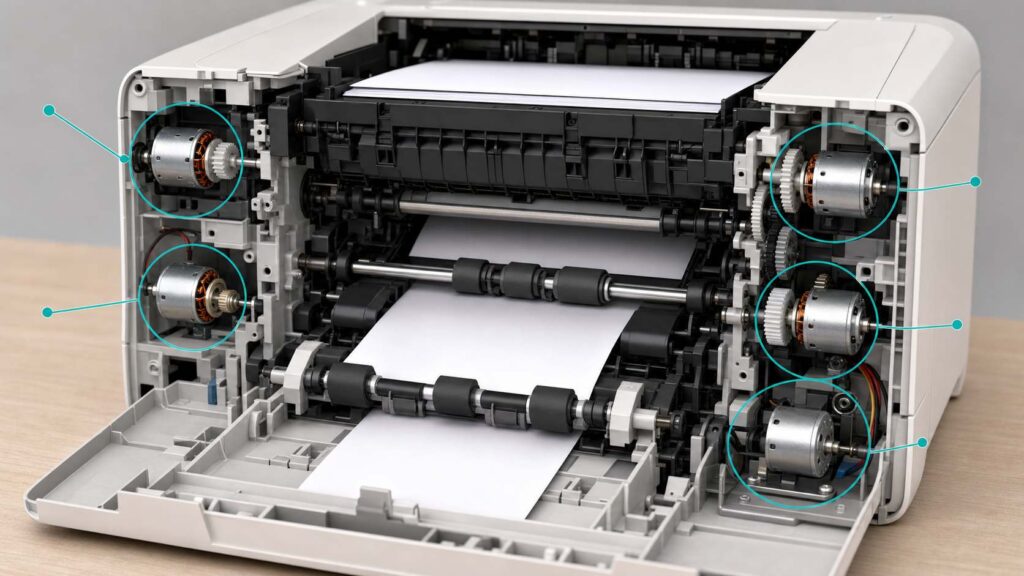
(Illustration: Printer mechanism showing multiple small brushed DC motors driving rollers and paper-feed systems.)
Although many advanced medical systems now use brushless motors, brushed DC motors are still widely used in portable and disposable medical equipment.
Applications include:
Selection depends on factors such as cost, required precision, maintenance intervals, and expected service life.
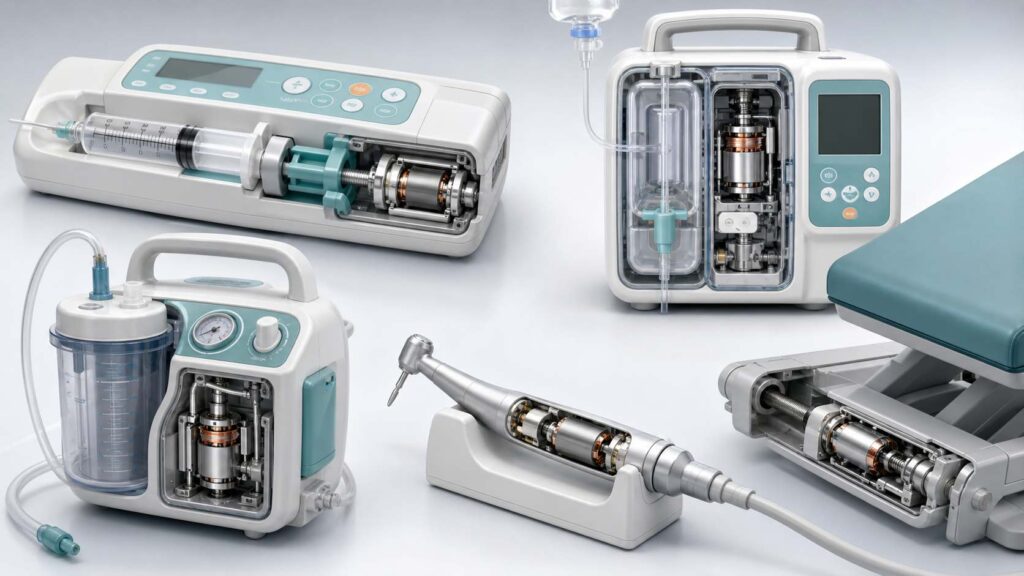
(Illustration: Portable medical equipment containing miniature brushed DC motors.)
Brushed DC motors are frequently combined with small pumps.
Typical applications include:
Because these systems often operate intermittently, brushed motors provide an effective balance between performance and cost.
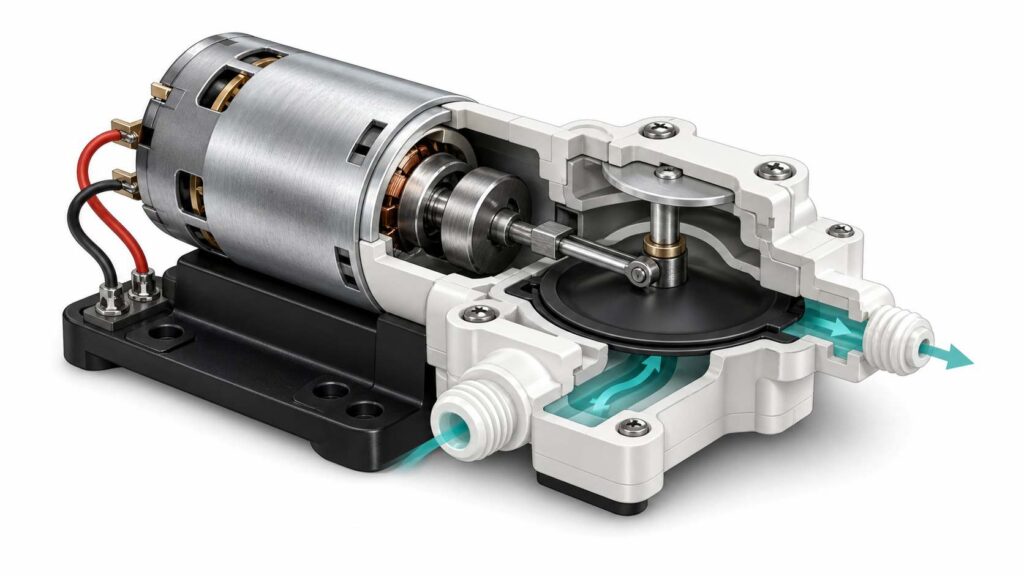
(Illustration: Small diaphragm pump driven by a brushed DC motor.)
Although large industrial automation systems increasingly use brushless servo motors, brushed DC motors remain useful in many industrial applications.
Examples include:
For simple motion tasks that do not require extremely precise positioning, brushed motors remain a practical solution.
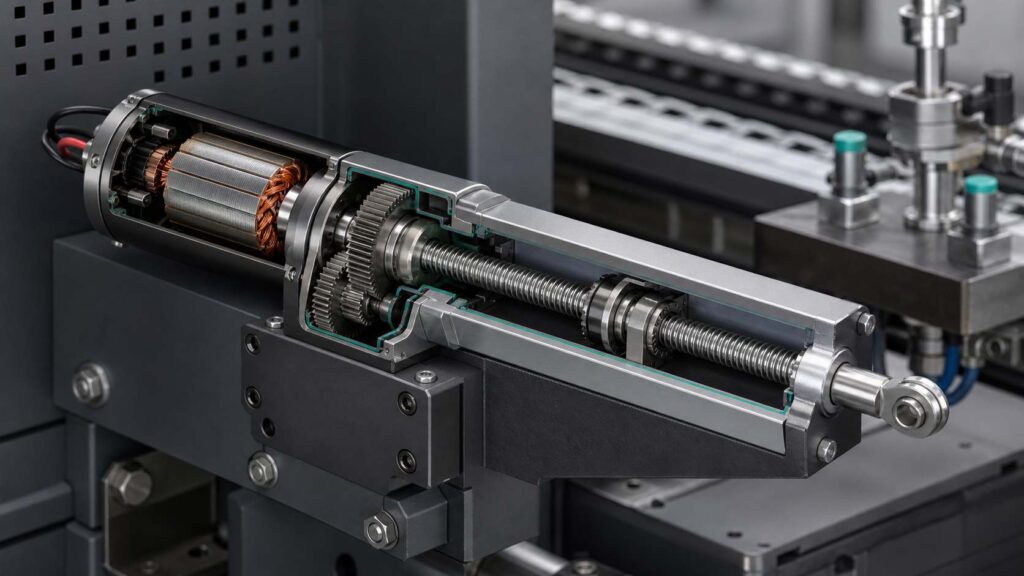
(Illustration: Compact industrial actuator powered by a brushed DC gear motor.)
Modern industrial robots almost exclusively use brushless servo motors.
However, brushed DC motors are still widely used in:
Their simple wiring and control allow beginners to build functional robotic systems without complex motor drivers.
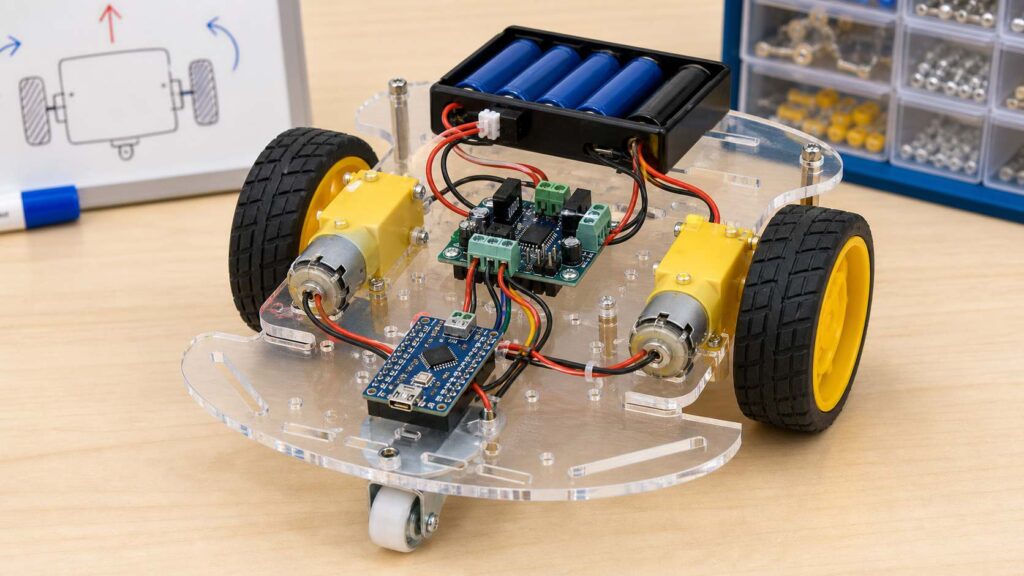
(Illustration: Educational robot chassis using two brushed DC gear motors.)
Engineering Note:
In educational robotics, brushed gear motors are especially common because they provide high torque at low speed and can be controlled using inexpensive H-bridge driver modules.
Many brushed DC motors are integrated with gearboxes to increase output torque.
Typical gear motor applications include:
Planetary gearboxes are particularly popular because they offer high torque in a compact package.
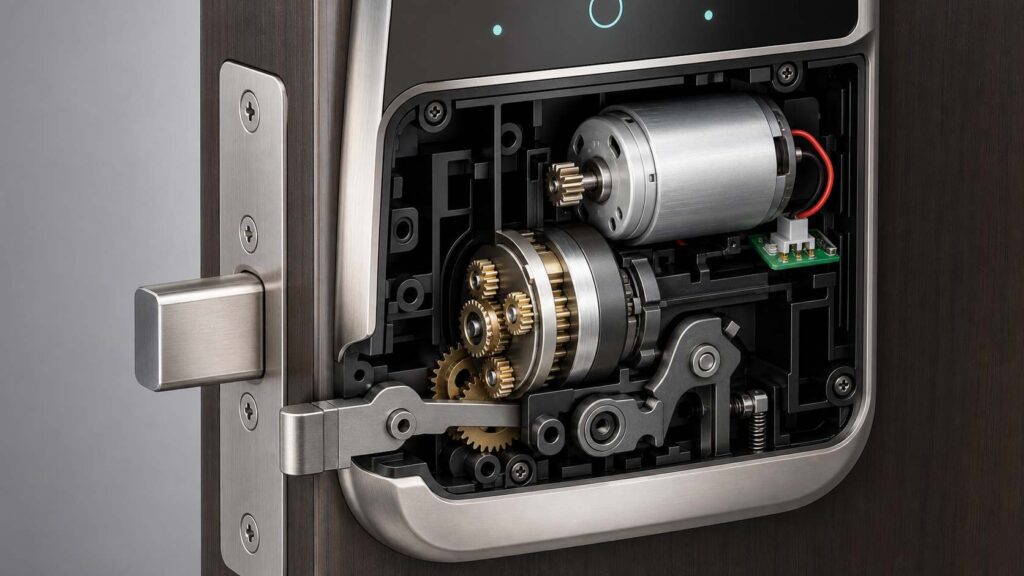
(Illustration: Brushed DC planetary gear motor installed in a smart door lock.)
Different applications prioritize different motor characteristics.
| Application | Key Requirements | Typical Brushed Motor |
|---|---|---|
| Automotive | Reliability, intermittent duty | PMDC Motor |
| Toys | Low cost, simple control | Miniature PMDC Motor |
| Power Tools | High starting torque | High-power PMDC Motor |
| Medical Devices | Compact size, precision | Miniature or Coreless Brushed Motor |
| Pumps | Stable operation | PMDC Motor |
| Office Equipment | Reliable intermittent operation | Miniature PMDC Motor |
| Industrial Actuators | High torque | Geared Brushed DC Motor |
Selecting the right motor depends on balancing performance, cost, expected service life, and maintenance requirements.
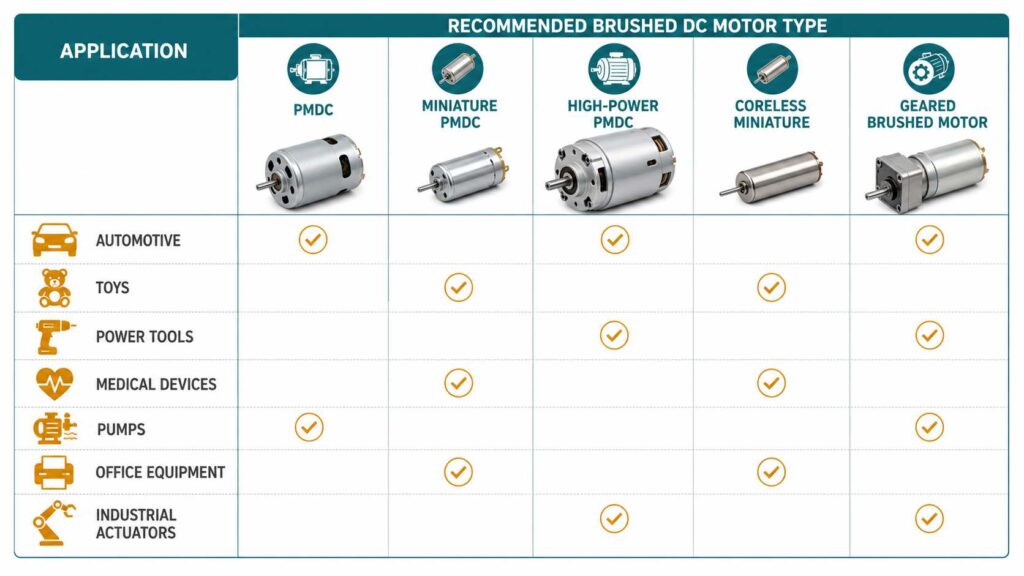
(Illustration: Matrix matching common applications with recommended brushed DC motor types.)
One common misconception is that every new product should use a brushless motor.
In reality, engineers evaluate many factors before selecting a motor technology, including:
For many products that operate intermittently and prioritize affordability, a brushed DC motor remains the most practical engineering choice.